Rybakina’s Tokyo qualification bittersweet with back withdrawal

Elena Rybakina clinched her WTA Finals berth in Tokyo, but a nagging back injury cut short her Pan Pacific Open run, forcing a semifinal exit and spotlighting the season’s physical demands.
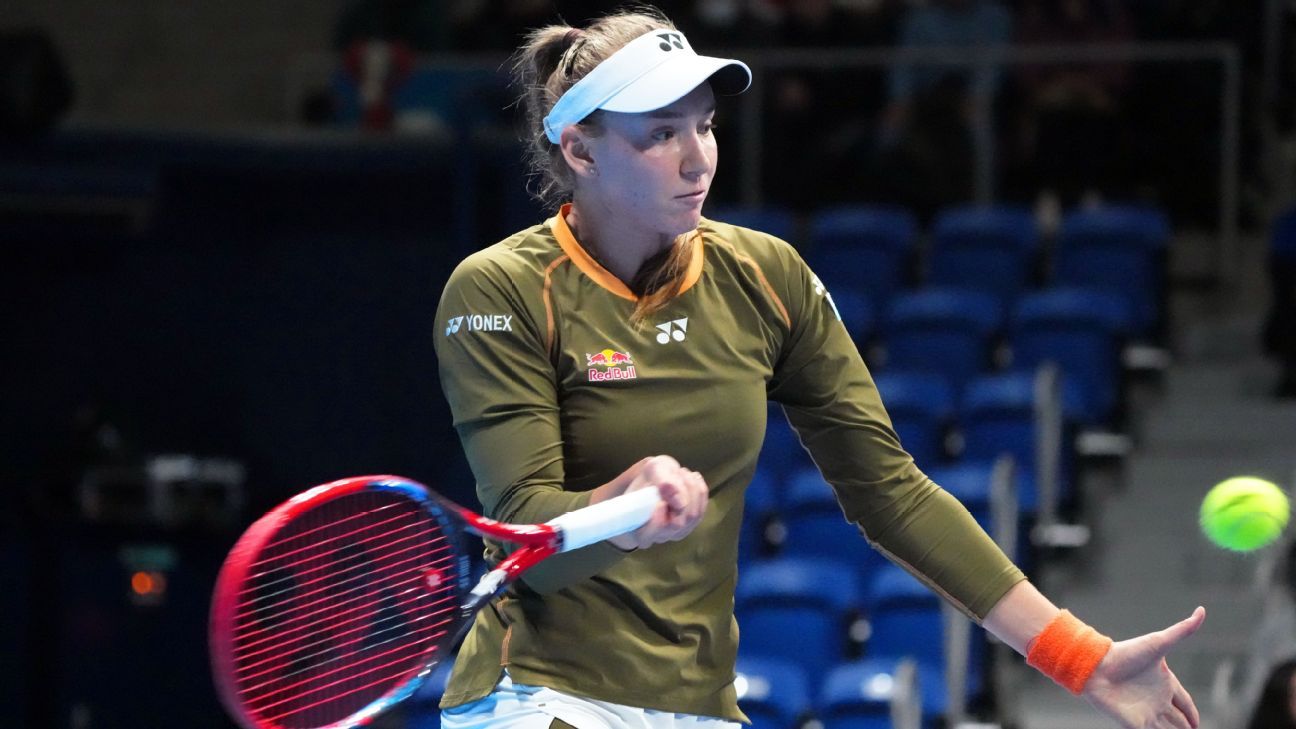
In the echoing halls of Tokyo’s Ariake Coliseum, Elena Rybakina had just etched her name into the WTA’s endgame, her straight-sets quarterfinal win a quiet roar of achievement amid the tournament’s steady hum. The air carried the faint scent of rubber and sweat, as her powerful groundstrokes had dismantled an opponent, securing that elusive eighth spot for the Finals. Yet, less than a day later, the 2022 Wimbledon champion stepped back from the brink, her body whispering limits in a sport that rarely forgives pause.
Quarterfinal push exposes mounting strain
Rybakina’s battle against Victoria Mboko unfolded with calculated precision on the indoor hard courts, her 6-3, 7-6 (4) triumph a blend of flat forehands and deep returns that stretched the Canadian wide. She varied her patterns, dipping into crosscourt redirects to disrupt Mboko’s baseline rhythm while conserving steps amid subtle back twinges that had lingered through the week. This victory not only locked in her Finals qualification but also highlighted her tactical evolution—using the surface’s speed to favor aggression over endurance, even as the physical ledger began to balance against her.
The crowd’s murmurs swelled with each point, sensing the stakes beyond the scoreboard, as Rybakina‘s serve skidded low, pinning her foe deep and minimizing chase. Whispers of discomfort had surfaced earlier, but she pressed on, her composure a shield against the season’s accumulated wear from clay transitions to hard-court grinds.
“I’m very sorry I can’t play today,” Rybakina said in a statement. “I have been having problems with my back this week and can’t play 100%.”
Semifinal promise gives way to recovery
Scheduled to meet Linda Noskova in the semifinals, Rybakina faced a matchup that promised flat-ball fireworks, the Czech’s inside-in backhands poised to test her down-the-line counters on the quick deck. Noskova’s rising power would have demanded more underspin slices to slow rallies and protect her midsection, but the Kazakh chose retreat, prioritizing the healing needed for Riyadh’s unforgiving format. This decision robbed Tokyo of a tense duel, yet it underscored the psychological pivot from conquest to conservation in a calendar that tests resolve as much as racket work.
The withdrawal rippled through the draw, shifting focus to Noskova’s path while Rybakina’s team mapped a careful wind-down, the coliseum’s lights dimming on what could have been another title push.
Finals lineup fuels redemption arc
Now, Rybakina joins top-ranked Aryna Sabalenka, Iga Swiatek, Coco Gauff, Amanda Anisimova, Madison Keys, Jessica Pegula, and Jasmine Paolini at the WTA Finals in Saudi Arabia from November 1-8, an elite round-robin where every exchange carries the weight of legacy and lucre. The Riyadh hard courts, with their true bounce, will amplify her 1–2 punch, allowing inside-out forehands to carve openings against Sabalenka’s thunder or Swiatek’s spin-heavy defenses. Gauff arrives as defending champion, the American who outlasted Olympic gold medalist Zheng Qinwen in last year’s final to claim $4.8 million, her all-surface adaptability a blueprint for the field.
For Rybakina, this interlude in Tokyo becomes a tactical reset, her back’s protest a reminder of vulnerability that could sharpen her edge come Riyadh. As the Pan Pacific Open continues without her steady presence, the Finals loom as a cauldron of rivalries, where rested power might yet turn recent heartache into triumphant cadence.