Rublev grinds out vital win in Paris opener

Andrey Rublev navigates a gritty second-set fightback from qualifier Jacob Fearnley to pocket his first victory since the US Open, balancing his Masters ledger and eyeing deeper runs on indoor hardcourts.
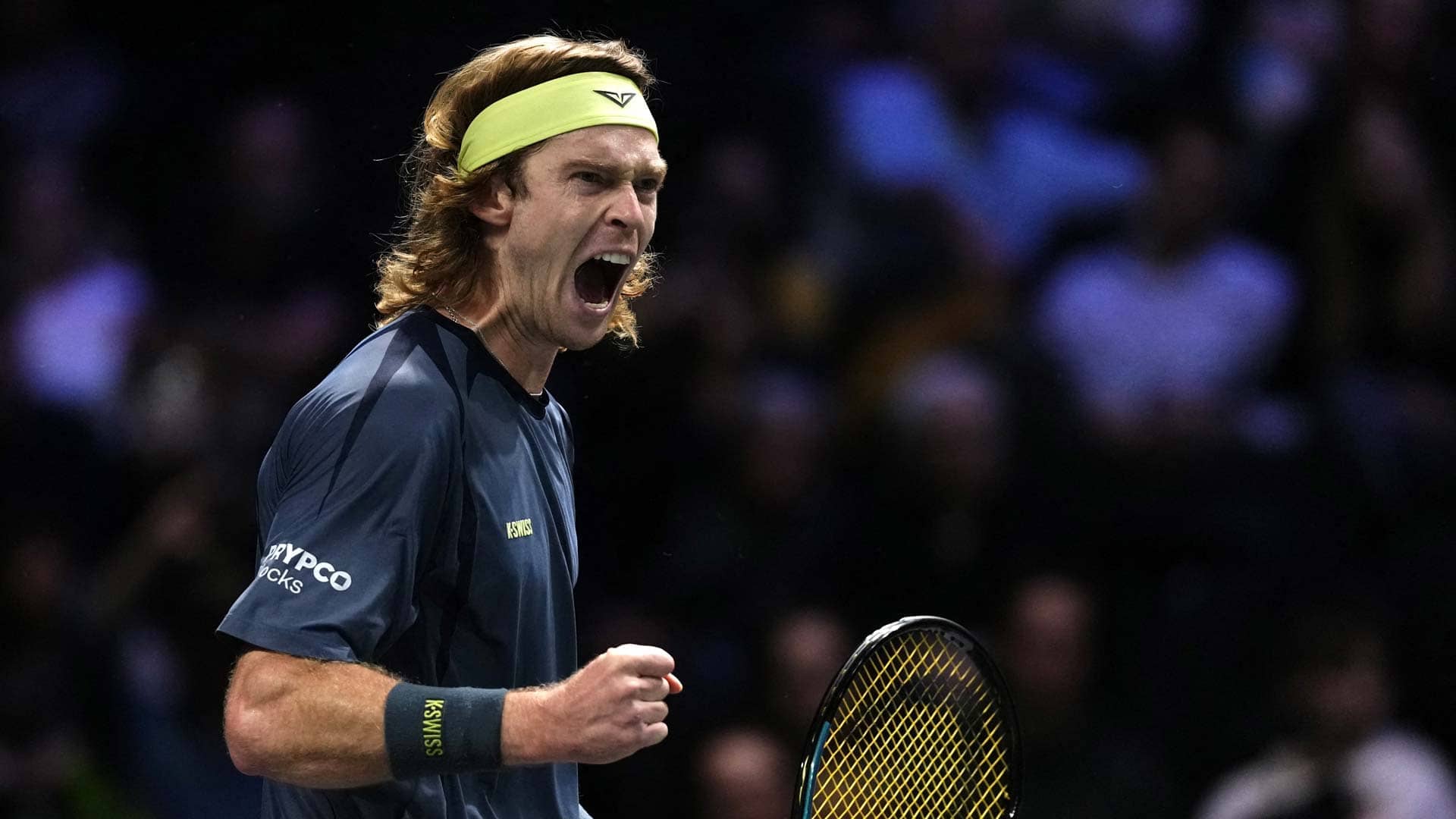
On the opening night inside Accor Arena, Andrey Rublev faced more than just an emerging British talent; he confronted the weight of a season teetering on inconsistency. The 12th seed powered to a 6-1, 6-4 victory over Jacob Fearnley, marking his first match win since reaching the US Open fourth round. This Paris Masters breakthrough came after a 1-5 start at ATP Masters 1000 events, buoyed by recent quarterfinal showings in Toronto and Cincinnati, and lifted his record to 8-8 on the circuit.
Early surge meets stubborn resistance
Rublev dominated from the baseline, breaking Fearnley four times to race to a 6-1, 2-0 lead with punishing crosscourt forehands that pinned the qualifier deep. His flat groundstrokes exploited tentative returns, turning points into one-sided exchanges on the slick indoor surface. Yet the British player, riding qualifier momentum, steadied in the second set, leveling at 2-2 through cleaner serves and occasional underspin slices that disrupted Rublev’s rhythm and drew the crowd’s rising hum.
At 3-2, Rublev missed three break points, his frustration evident in the pacing between points as Fearnley‘s 11 double faults offered openings that demanded precision. The Russian converted five of 10 chances overall in their debut ATP Head2Head, adjusting with more inside-out backhands to stretch the court wide and force errors in longer rallies. This tactical pivot amid the arena’s tension highlighted Rublev’s resolve, transforming a potential stumble into controlled aggression.
“I had a very good opponent today. He can play very well, he’s won good matches this year,” Rublev said post-match. “I was able to step up and play solid tennis. I’ve been struggling for a while with the wins. To win such a match like this on centre court, it’s a good feeling.”
Clutch break seals emotional release
The decisive moment arrived at 5-4 in the second, where Rublev’s next break opportunity doubled as match point; he rifled a deep return to induce a forehand error, clinching the 6-4 set with a crosscourt winner that echoed through the stands. This hard-earned hold on victory exorcised recent doubts, injecting momentum into a schedule strained by year-end pushes and the looming ATP Finals. Rublev’s mid-match reset—blending heavy topspin with varied one–two patterns—underscored his affinity for indoor hardcourts, where pace amplifies his penetrating shots without demanding constant slides.
Ahead awaits Learner Tien, the young American who earlier dispatched Nuno Borges 6-2, 7-6(7) with aggressive net rushes and tiebreak poise that tested the Portuguese player’s baseline steadiness. For Rublev, this next encounter could cement his form, turning Paris into a platform for rankings stability rather than another pressure test. The win’s palpable relief, in his post-match exhale, revealed how such breakthroughs rebuild confidence in tennis’s unforgiving cadence.
Tiebreak tension grips opening day
The Paris opener pulsed with drama beyond Rublev’s court, as Alexander Bublik outmaneuvered Alexei Popyrin 6-4, 6-3 in their second ATP Masters 1000 meeting this season, repeating their Madrid scoreline to even the Head2Head at 2-2. The Kazakhstani’s serve-volley combinations thrived on the surface speed, pressuring the Australian’s returns and limiting counterpunches in efficient straight sets. This flair-infused advance contrasted the grind elsewhere, keeping Bublik’s unpredictable edge sharp for the draw’s progression.
Home fans cheered a pair of French Arthurs advancing by identical margins: Arthur Rinderknech topped Fabian Marozsan 7-6(5), 7-6(4) with deep returns neutralizing the Hungarian’s slice backhand, while Arthur Cazaux edged Luciano Darderi in the same scoreline, leaning on down-the-line passes to survive aggressive tiebreak pressure. These resilient stands, blending high-kick serves and crosscourt defenses, fueled the arena’s electric vibe under packed lights. The motif extended as Miomir Kecmanovic survived Aleksandar Kovacevic 6-4, 1-6, 7-6(2), his versatile shifts from forehand drives to lobs proving key in the decider after a middle-set dip.
These nail-biters amplified Paris’s high-stakes hum, where every point on the unforgiving concrete carried weight, setting an unpredictable tone that Rublev’s grit helped navigate toward potential deeper surges.