Rohan Bopanna retires after decades of quiet resolve

As the 2025 season winds down, India’s enduring doubles specialist closes a career built on persistence, where late triumphs and personal grit outshone early shadows.
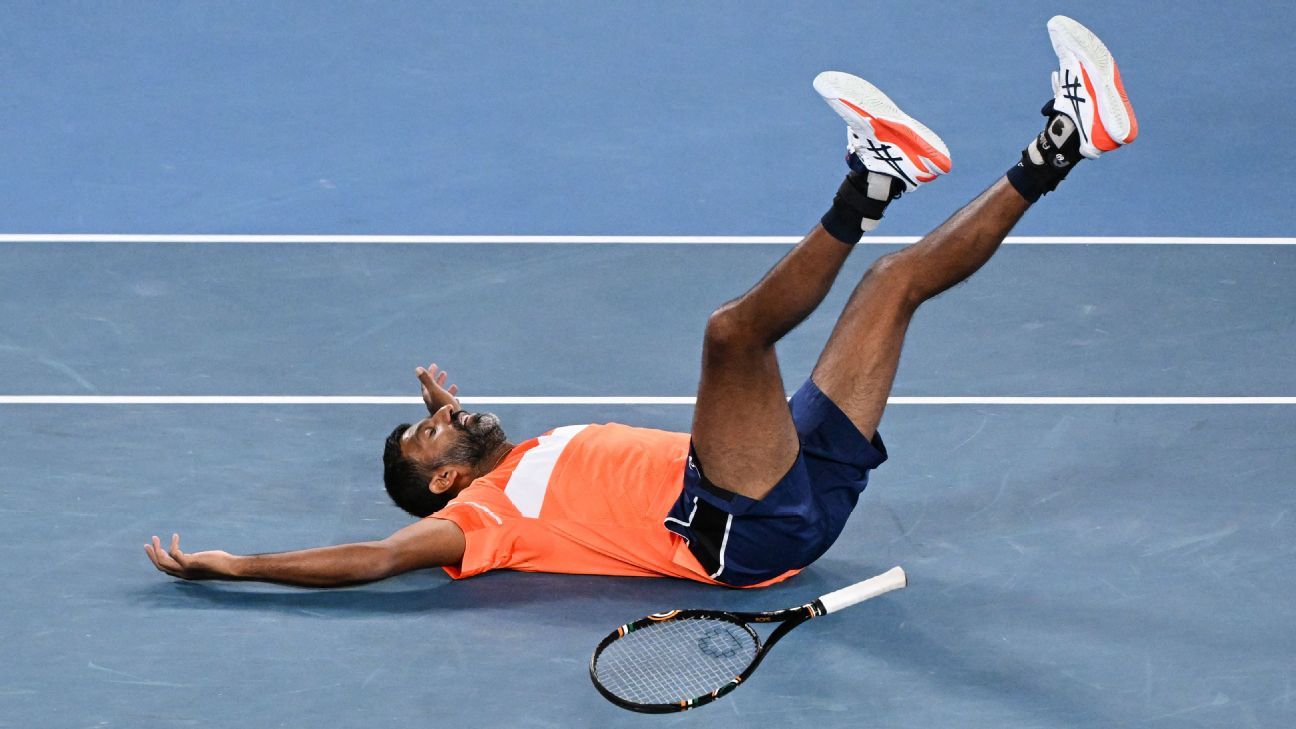
Rohan Bopanna’s retirement at the end of the 2025 season marks the close of a 22-year career defined by unyielding perseverance, a trait that etched his name into Indian tennis history. At 45, he departs with two Grand Slam titles, milestones achieved not through prodigious talent but through a steady psychological fortitude that carried him through factional tensions and physical hardships. His journey, spanning from the fractious Leander Paes-Mahesh Bhupathi era to bridging India’s doubles legacy, unfolds as a testament to making his path in his own way amid administrative chaos and on-court battles.
Bopanna navigated the political undercurrents of Indian tennis with clarity and decency, emerging with dignity intact despite being often sidelined in selection disputes. He competed at the 2012 Olympics alongside Bhupathi and the 2016 Games with Paes, yet his role felt secondary amid the turmoil. This backdrop sharpened his focus, allowing sporadic highs like second-week Slam runs and consistent ATP showings to sustain him through fallow periods post-Sania Mirza’s late-2010s peak.
“Everybody asks why there are no singles players. But I’m saying let’s help the guys who are here already and then maybe the singles will start the journey. We just need to start a structure,” he said.
Peaking late through tactical adaptation
Bopanna’s late-bloomer arc peaked at 43 with the 2024 Australian Open men’s doubles title alongside Matthew Ebden, a run that saw him become the oldest Grand Slam champion and world number 1 after 20 years on tour. On Melbourne’s hard courts, he relied on efficient 1–2 combinations, serving slice to the body before poaching down-the-line on the follow-up volley, conserving energy while disrupting aggressive returns. The grey-bearded veteran’s stooped frame belied a mind attuned to matchup nuances, turning humid night sessions in Rod Laver Arena into gritty holds that crowds sensed as defiant under the floodlights.
Five years earlier, he considered retirement as knee pain and painkiller dependency eroded his drive during grueling practices, yet he reframed those limits into opportunities by shifting to yoga and mobility work. With no knee cartilage curtailing endurance, his game evolved toward shorter points on faster surfaces, favoring crosscourt lobs to pull opponents wide and set up inside-in forehand winners at net. This recalibration fueled his 2023 surge with Ebden, claiming oldest-ever victories at Masters 1000 events and the ATP Finals through precise underspin returns that neutralized second serves.
His first Grand Slam arrived in mixed doubles at the 2017 French Open at age 37, where clay’s slower bounce suited his tactical restraint, mixing inside-out forehands with down-the-line passes to outmaneuver foes. A decade after his initial men’s doubles final in 2013, he reached another, culminating in that 2024 triumph at 43 years and 10 months—a fairytale underdog story that resonated under the Australian sun, each point a psychological victory over creeping fatigue.
Forging independence amid Indian tennis flux
In a landscape where only four Indians have claimed Grand Slam titles—Paes, Bhupathi, Mirza, and now Bopanna—he often lingered under the radar, his achievements measured against pioneers’ benchmarks despite lacking their consistency. Golds at the 2018 and 2023 Asian Games highlighted his resilience, even as an early Arjuna Award snub stemmed from not securing major medals under the national flag. Bopanna’s sporadic peaks, buoyed by a persistent work ethic, filled the void in Indian tennis, his presence a reliable pulse during the search for new stars.
He captured India’s home ATP title three times since 2017 with different partners—all juniors: Jeevan Nedunchezhiyan at 37, Divij Sharan at 39, and Ramkumar Ramanathan at 30—mentoring from the baseline with crosscourt angles that opened poaching lanes. These wins underscored his role as a bridge from the early-2000s golden era to today’s evolving circuit, where he endured as the sole headline act in a post-Mirza drought. On varied surfaces, from grass to hard courts, his adjustments—layering slice serves with one–two punches—kept points economical, the crowd’s murmurs building tension during tight service games.
His 61st attempt at a men’s doubles major finally yielded gold in 2024, a moment of philosophical poise after heartbreaks like the 2016 Olympic bronze-medal loss. Bopanna’s quiet dignity infused every interaction, win or defeat, with balanced reflection that steadied him through the ATP grind’s relentless swings—from Indian Wells’ sunshine to the ATP Finals’ indoor intensity.
Extending impact beyond the court
Bopanna channeled his experiences into the Doubles Dream of India program, launching annual camps to nurture men’s pairs and directly boosting their ATP presence—a deliberate counter to the conflicts he witnessed. Tied to his academy and efforts to introduce UTR Tennis Pro to India, this initiative reflects a perseverance that views retirement as a pivot to mentorship, not closure. As he guides younger players through doubles’ tactical demands, like reading rotations for timely interceptions, the atmosphere shifts from competitive tension to inspirational handover under training lights.
Throughout 2025, from Doha’s openers to potential Davis Cup farewells, each match carries emotional weight, his underspin backhands slicing through doubt as partners feed off his steady tempo. Fans chant in humid Asian swings or high-altitude stops, sensing the veteran’s volleys slowing yet his spirit enduring. His career, often a third pillar in India’s legacy, closes with tributes that will amplify respect, inspiring late bloomers to adapt and persist on their own terms.