American Tennis Eyes 2026 Momentum

With the Australian Open looming, U.S. players from Fritz to Gauff carry 2025’s gains into a season of high stakes and deeper fields. Breakthroughs like Anisimova’s surge signal potential shifts, but the mental edge against Alcaraz and Sinner will define the year.
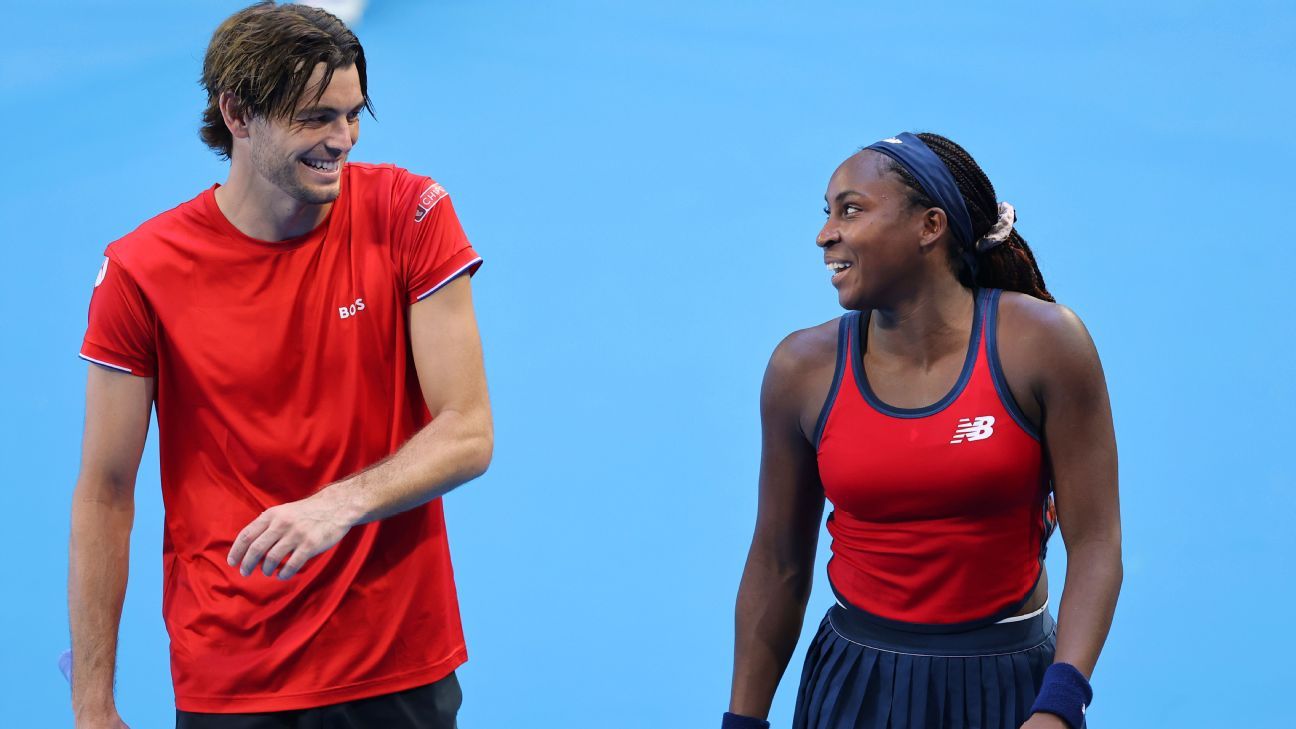
The tennis world resets in early January, and for American players, 2026 arrives with the weight of unfinished business. Taylor Fritz leads the men at No. 9, his steady climb through four straight top-10 seasons a quiet force amid the tour’s chaos. On the women’s side, Coco Gauff’s second major in 2025 cements her at No. 4, yet the path forward brims with tactical refinements and psychological tests as Melbourne’s hard courts beckon.
A year ago, the landscape looked vastly different—Naomi Osaka sat at 57th, still rebuilding post-maternity, while Belinda Bencic lurked at 487th on her comeback trail. Victoria Mboko, just 18, hovered at 336th, dipping toes into pro waters, and Amanda Anisimova lingered at 36th. Now they occupy spots 16th, 11th, 18th, and fourth, proof that rapid ascents rewrite rankings overnight.
A lot can change in a year on the tennis tour.
Men’s surges echoed this volatility, with Felix Auger-Aliassime climbing from 29th to fifth and teenagers Joao Fonseca and Learner Tien rocketing from 145th and 122nd to 24th and 28th. At the pinnacle, Carlos Alcaraz and Jannik Sinner dominate, their 23,550 points from 2025 surpassing the combined haul of Nos. 3 through 7. They clashed in three of four Slam finals last year, securing eight straight majors between them, leaving challengers like Fritz and Ben Shelton to plot interruptions.
Men’s leaders chase elite disruption
Fritz, now 28, has transformed incrementally, shoring up flaws to reach the 2024 US Open final and 2025 Wimbledon semis. His first win over Alcaraz came at the Laver Cup in September, a breakthrough laced with heavy topspin forehands that pinned the Spaniard deep. Against Sinner, he’s 1-4, but his California-honed serve, often dipping low with slice on second delivery, could tilt early hard-court exchanges if he elevates net play.
Shelton, the 23-year-old lefty at No. 8, burst into top-10 territory with his 2025 Australian semifinal, that booming serve echoing through packed arenas. Yet 0-3 against Alcaraz and eight straight losses to Sinner expose rally frailties, especially after a shoulder tweak cost him six of nine late-season matches. Rebounding in Melbourne means weaving more crosscourt backhands to stretch foes, turning his flamboyant energy into sustained pressure.
Tien, 20 and ranked 26th, captivated with a 5-3 mark over top-10s, clinching the Next Gen Finals through precise, depth-driven rallies. At 5-foot-11, his average athleticism yields to adaptable tactics—short angles blending into down-the-line winners—that scream belonging. A serve upgrade, pushing first-serve points toward 70%, unlocks top-15 doors on the hard-court grind ahead.
Tommy Paul, 28 at No. 20, flashed brilliance with a 6-1 opening set over Sinner in Rome, his one–two patterns carving through defenses en route to four Slam quarters and a semifinal. A foot injury sidelined him after Wimbledon, ending outside the top 15 for the first time since 2022, but rest could revive that redline intensity on Adelaide’s pace. His crosscourt precision thrives in neutral balls, a weapon if mobility returns fully.
Sebastian Korda, 25 and No. 46, reignites hope after indoor surges post-US Open retirement, storming to Athens semis with fluid backhands and versatile slices. Since his 2023 Australian quarters, injuries have stalled progress, but a clean bill offers runway for technically sharp games to climb. Indoor transitions suit his touch, yet the full tour—from Miami humidity to Rome clay—tests endurance.
Frances Tiafoe, 27 at No. 30, confronts a make-or-break stretch after slipping outside the top 20 since 2021, his 26-23 record buoyed only by French Open quarters. No top-10 wins and five straight losses closed 2025, prompting a coaching overhaul to sharpen returns against topspin barrages. His explosive forehands demand early breakthroughs, perhaps in challengers, to rebuild momentum.
Jenson Brooksby, 25 and No. 49, rebuilt post-13-month suspension for missed doping tests, notching victories over Auger-Aliassime, Holger Rune, Tiafoe, and Paul while reaching clay and grass finals. His enigmatic counters—deep returns sparking long-point errors—hint at top-40 ceilings, especially with slice variations disrupting hard-court rhythms. Consistency in service games will gauge his higher arc.
Alex Michelsen, 21 at No. 37, edged up from 41st with a top-10 upset over Lorenzo Musetti, plus an Australian fourth round and Canadian quarters. His steady baseline depth suits early hard-court swings, where inside-out forehands force hurried replies. Stagnation risks linger, but checking 1000-level boxes signals quiet potential.
Brandon Nakashima, 24 and No. 33, mirrors Fritz’s grind, rising from 38th despite 3-4 Slam showings and 0-12 against top-20s. Controlled rallies with crosscourt backhands define his Virginia polish, yet upside caps without deeper returns to counter elite power. Steady 500-level quarters could nudge him top 25 by spring.
Ethan Quinn, 21 at No. 76, leverages his 6-foot-3 frame for serve-forehand combos, surging from outside the top 200 with three Slam qualifications and wins at the French and Wimbledon. The former Georgia Bulldog’s grind intensifies on tour, but youth affords time to refine angles against veterans.
Women’s depth sparks bold ascents
Gauff, still just 21, amasses a hall-of-fame ledger—two Slams, five semis, 11 titles including three 1000s and a 2024 Finals triumph—yet her 10% double-fault rate persists amid 75% match wins from 2025 French and Wuhan crowns. Harnessing a cleaner service motion, blending flat power with spin variation, propels her toward No. 1 contention in a field led by Aryna Sabalenka, Iga Swiatek, and herself. The tour’s unprecedented depth, as noted last summer, amplifies every tweak.
Anisimova, 24 at No. 3, owned 2025’s narrative, vaulting from 36th through five finals including Wimbledon and US Open semis revenge over Swiatek after a 6-0, 6-0 final loss. Her backhand carves rallies with laser-flat precision, serve gains adding bite to inside-in setups. Poise under crowd scrutiny sustains this surge amid 20-25 top-10 contenders.
Jessica Pegula, 31 and No. 6, steadied after her 2024 US Open final with six finals, three titles, and a near-miss semi over Sabalenka, plus late beats of her and Gauff. Early Slam hiccups—five wins in the first three—tested her high-floor consistency, but extended points on clay reward her placement. Upside flares in three-setters, a reminder of untapped fire.
Iva Jovic, 18 at No. 35, explodes from ITF ranks to near-top-30 via three Slam wins and the Guadalajara title, going 3-0 against top-50 foes outside four top-20 clashes where she snagged one set from Elena Rybakina and Jasmine Paolini. Her return disrupts serves early, power brewing in forehands; maturity on big stages could accelerate her trajectory.
Madison Keys, 30 at No. 7, dominated early 2025 with an 18-1 streak and Australian Slam over Sabalenka, but form dipped with five losses to sub-top-80 players and injury-fueled four straight defeats to close. Rediscovering focus post-late-career major means channeling that dramatic final’s intensity into consistent one–two patterns across surfaces.
Emma Navarro, 24 at No. 15, weathered a sophomore slump after 2024’s top-10 entry, securing Australian quarters but just four more Slam wins and 2-5 versus top-10s, including a Beijing upset over Swiatek. Three-set battles highlight her precision endurance; rebounding demands sharper transitions from defense to attack on hard courts.
McCartney Kessler, 26 at No. 31, ascended from 67th with Hobart and Nottingham titles, upsets over Gauff in Dubai and Mirra Andreeva in Montreal, plus near-wins against Qinwen Zheng and Karolina Muchova. Longer points favor her construction—topspin loops forcing errors—revealing raw upside in baseline marathons.
Julieta Pareja, 16 at No. 345, stormed WTA debuts with a Bogota semifinal, the youngest since Gauff, her forehand ripping crosscourts and returns pressuring second serves. With 11 tour matches and no top-100 victories yet, her serve evolves, but elite groundstrokes position her as a future disruptor.
Sofia Kenin, 24 at No. 28, embodies match volatility, guessing aggressively to snag top-10s and push Sabalenka in Rome, though she leads WTA aces conceded and trails in return points won, per Ben Rothenberg of the Bounces newsletter in August. Bagels like her 6-0, 6-0 to Gauff underscore the floor, but her ceiling—quick slices ending points—fascinates on varied bounces.
Caty McNally, 24 at No. 63, reemerged from elbow troubles with a Newport grass crown over Tatjana Maria, plus three-set pushes against Swiatek at Wimbledon, Keys in Montreal, and Rybakina in Beijing. Her doubles savvy translates to singles touch, point-building with underspin approaches that invite errors.
Breakout watches fuel U.S. depth
Beyond the top 10, men’s prospects like Reilly Opelka at 60, Emilio Nava at 88, Eliot Spizzirri at 89, Zachary Svajda at 142, Colton Smith at 145, Nishesh Basavareddy at 172, Michael Zheng at 182, and Darwin Blanch at 297 eye leaps through hard-court qualifiers and challenger runs. Their paths converge in Melbourne’s outer courts, where tactical risks—deeper returns, varied spins—can spark upsets against seeded veterans.
Women’s undercurrents pulse with Ann Li at 37, Ashlyn Krueger at 49, Hailey Baptiste at 65, Peyton Stearns at 50, Danielle Collins at 62, Alycia Parks at 101, Taylor Townsend at 116, and Clervie Ngounoue at 192, each honing edges in a tour deeper than ever. From Jovic’s power maturation to Pareja’s precocious returns, these arcs test mental fortitude amid Jelena Ostapenko-like swings, promising fresh rivalries by Indian Wells.
As the Australian Open unfolds in under two weeks, Fritz’s volleys and Gauff’s evolving serve set the tone for American resolve. Tien’s precision and Anisimova’s backhand could ignite early fireworks, turning pressure into propulsion across a season of surface shifts and momentum swings. U.S. tennis thrives on these pivots, where belief bridges the gap to the summit.