Raducanu fades under physical strain in Ningbo opener

A week after dizziness forced her out in Wuhan, Emma Raducanu battles back issues and frustration against Zhu Lin, securing the first set before her body unravels in a three-set defeat that highlights her season’s toll.
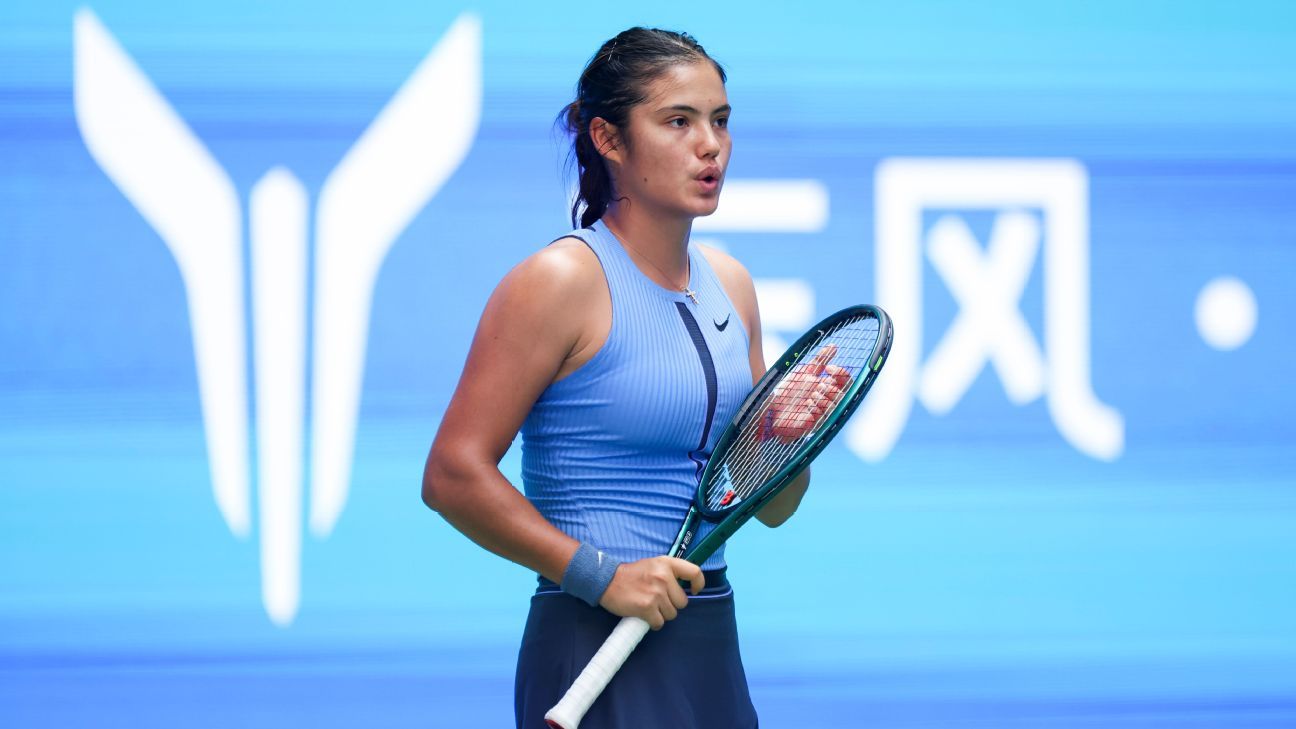
In the measured pace of the Ningbo Open’s hard courts, Emma Raducanu arrived with renewed resolve, just seven days after retiring from her opening match in Wuhan with dizziness amid steamy conditions. The British No. 1, now 22 and carrying the weight of her 2021 US Open triumph, faced China’s Zhu Lin in the first round under cooler skies that promised relief from last week’s ordeal. Yet, as the match unfolded into a 3-6, 6-4, 6-1 loss, her lower back—a persistent foe this season—emerged to overshadow her tactical grit, turning a winnable encounter into a testament to endurance’s limits.
First set won through gritted focus
Raducanu seized control early, her crosscourt forehands pinning Zhu back on the medium-fast surface, where low bounces favored her one–two combinations of deep serves and inside-out replies. Despite dropping serve twice, frustration etching lines on her face from errant shots, she channeled the irritation into sharper movement, edging the set with a mix of underspin backhands to disrupt her opponent’s flat groundstrokes. Without coach Francisco Roig, who opted for a break in Barcelona, she drew steady encouragement from hitting partner Alexis Canter courtside, his voice cutting through the crowd’s building hum as trainer Daniel Pohl monitored her closely.
The cooler temperatures allowed her to maintain rhythm initially, her baseline rallies drawing appreciative murmurs from spectators who recalled her Flushing Meadows run. Zhu, once ranked just outside the top 30 before injuries dropped her below 200, responded with aggressive down-the-line passes, but Raducanu’s adjustments—shortening points with slice approaches—kept her ahead until the final game. This opener hinted at the mental steel that defined her breakthrough, even as subtle lethargy began to cloud her footwork.
I feel better now.
Second set reveals mounting fatigue
As the second set dawned, Raducanu’s steps grew heavier on the hard court’s grip, her replies to Zhu’s inside-in forehands lacking snap as she slipped 2-0 behind, outhit in extended exchanges that tested her recovery. She fought back to 2-2 and later 4-4, summoning the doctor after seven games for a blood pressure check that shifted her expression from annoyance to wary concern, the crowd’s applause turning sympathetic. A netted forehand on set point betrayed the strain, Zhu capitalizing with consistent depth that forced defensive crosscourt loops and hurried slices from the British player.
Post-Wuhan, she had shared optimism from a doctor’s visit, signaling her push to reclaim form amid the Asian swing’s demands. The absence of her usual coach amplified the isolation, though Canter’s tactical nudges toward varied serves helped stem the tide briefly. This frame captured the psychological grind, where bursts of brilliance clashed with the physical fade, echoing the season’s relentless calendar that chips away at even the most resilient competitors.
Decider underscores injury’s grip
Returning from a deliberate bathroom break, Raducanu doubled over repeatedly as her back flared in the third set’s opening games, her mobility reduced to limps while chasing Zhu’s penetrating groundstrokes. She took a medical timeout after three, treatment offering scant relief against the pain that hobbled her pursuit of down-the-line winners, yet she pressed on rather than retire again. Zhu sensed the vulnerability, her power overwhelming the decider at 6-1, the hard court’s speed rewarding direct patterns that Raducanu could no longer counter effectively.
This exit layers onto a narrative of perseverance amid setbacks, complicating her top-10 chase as points from earlier hard-court showings slip away. In British tennis, similar pressures prompt strategic shifts; Jack Draper hires Andy Murray’s former coach Jamie Delgado, a move toward stability for the rising generation. For perspective on young stars’ consistency, how many tennis titles has Coco Gauff won? Her achievements highlight the balance Raducanu seeks, pointing toward off-season refinements in endurance and surface-specific drills to fortify her game against the tour’s unforgiving grind.