Raducanu’s Swift Split Signals Style Reset

Emma Raducanu’s abrupt parting with coach Francis Roig after six months lays bare the tensions of her hard-court revival, as she plots a return to the aggressive baseline fire that defined her early breakthroughs.
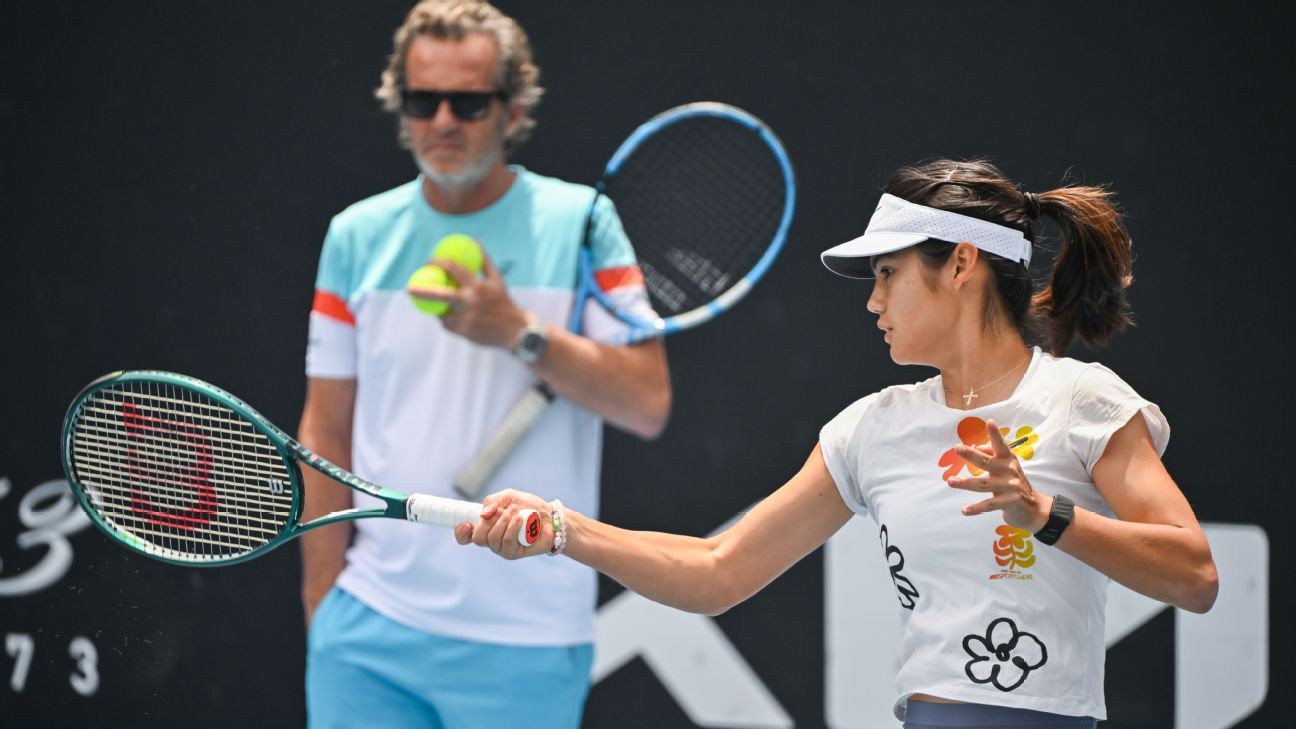
Emma Raducanu has parted ways with her coach Francis Roig after just six months, a decision she confirmed on Instagram amid the fallout from her Australian Open exit. The former US Open champion made the announcement one week after a 7–6(3), 6–2 second-round loss to No. 55 Anastasia Popova in Melbourne, where her attempts at varied shot-making crumbled under pressure on the fast plexicushion. At 23 and ranked No. 29, she entered as the 28th seed with fresh momentum from injury recovery, but the defeat highlighted a growing disconnect between her current game and the raw power she craves.
The Spaniard joined last summer, bringing experience from Rafael Nadal’s camp, yet this marks Raducanu’s ninth coaching change in her brief pro career. Her longest partnership, with Nick Cavaday from 2024 to 2025 over 14 months, provided stability during tough rehabilitation stretches. Roig’s tactical input, focused on grinding patterns like inside-in forehands, clashed with the hard-court demands that favor penetrating strikes over defensive layers.
“Francis, thank you for our time together. You have been more than a coach to me and I will cherish the many good times we spent together on the court. While we have come to the conclusion together that we ought not to move forward, please know that I am very grateful for all you have taught me and fond of our time shared.”
Melbourne’s Heat Exposes Tactical Gaps
On Rod Laver Arena, the afternoon sun baked the court as Raducanu pushed for variety—crosscourt topspin rallies mixed with down-the-line drops—but Popova’s deep returns pinned her deep, turning offense into scramble. The tiebreak slipped away on a misfired 1–2 pattern, her serve-volley try met by a lob that shifted the crowd’s murmur to cheers for the underdog. This mismatch amplified the psychological strain of rebuilding, where every unforced error echoed the isolation of her early departure from a tournament buzzing with deeper runs.
Australian Open as it happened: Women’s final locked in; Djokovic unhappy with reporter’s question captured the event’s shifting tides, from semifinal drama to off-court tensions, while Raducanu’s stumble stood apart. In contrast, Sabalenka bests Svitolina, on to fourth Australian Open final showcased the baseline power that thrives on these surfaces, a model Raducanu now eyes to reclaim her edge. Post-match, her words carried resolve, signaling a break to dissect footage and realign her strokes before the next swing.
Craving Corners Over Complicated Variety
Raducanu spoke of reevaluating her approach, yearning to strip back the flair for harder, corner-bound shots reminiscent of her junior days. The hard courts exposed how her slice backhands and angled attempts lacked penetration, often floating short against Popova’s flat groundstrokes. She plans a brief pause at home, watching replays to bridge the gap between feel and execution, aiming for a game that hits with unyielding intent.
“I think I’m going to take a few days, get back home and try and just re-evaluate my game a bit,” she said. “Watch it back, see where I can improve. What I have been feeling and also what is visually apparent. I definitely want to feel better on certain shots before I start playing again.” This introspection, voiced under Melbourne’s glaring lights, underscores her push for simplification amid a top-30 return that demands consistency on the demanding hard-court circuit.
“I want to be playing a different way, and I think the misalignment with how I’m playing right now and how I want to be playing is something that I just want to work on. At the end of the day, I just want to hit the ball to the corners and hard. I feel like I’m doing all this variety, and it’s not doing what I want it to do. I need to just work on playing in a way more similar to how I was playing when I was younger.”
Ninth Switch Fuels Forward Momentum
Roig’s brief tenure infused sessions with Nadal-inspired depth, like wrong-footing inside-out forehands, but couldn’t mask serve vulnerabilities on faster surfaces. Her forehand, once a laser for inside-in winners, sprayed wide in key moments, while backhand underspin failed to disrupt Popova’s rhythm. This split, mutual and swift, clears space for a coach who can reignite that one–two punch: heavy topspin setting up crosscourt finishes.
The carousel’s toll weighs on her young career, yet each change has honed resilience, from injury battles to ranking climbs. At No. 29, she’s poised for February events like Dubai or Doha, where testing down-the-line aggression could boost her hard-court win rate toward 65%. As the tour shifts gears, Raducanu’s reset promises a tactical renaissance, turning this chapter’s end into propulsion for majors ahead.