Raducanu shuts down season after China’s toll

Emma Raducanu’s bid for Australian Open momentum crumbles under back pain in Asia, leaving her 2025 campaign to end on a note of forced recovery and unresolved promise.
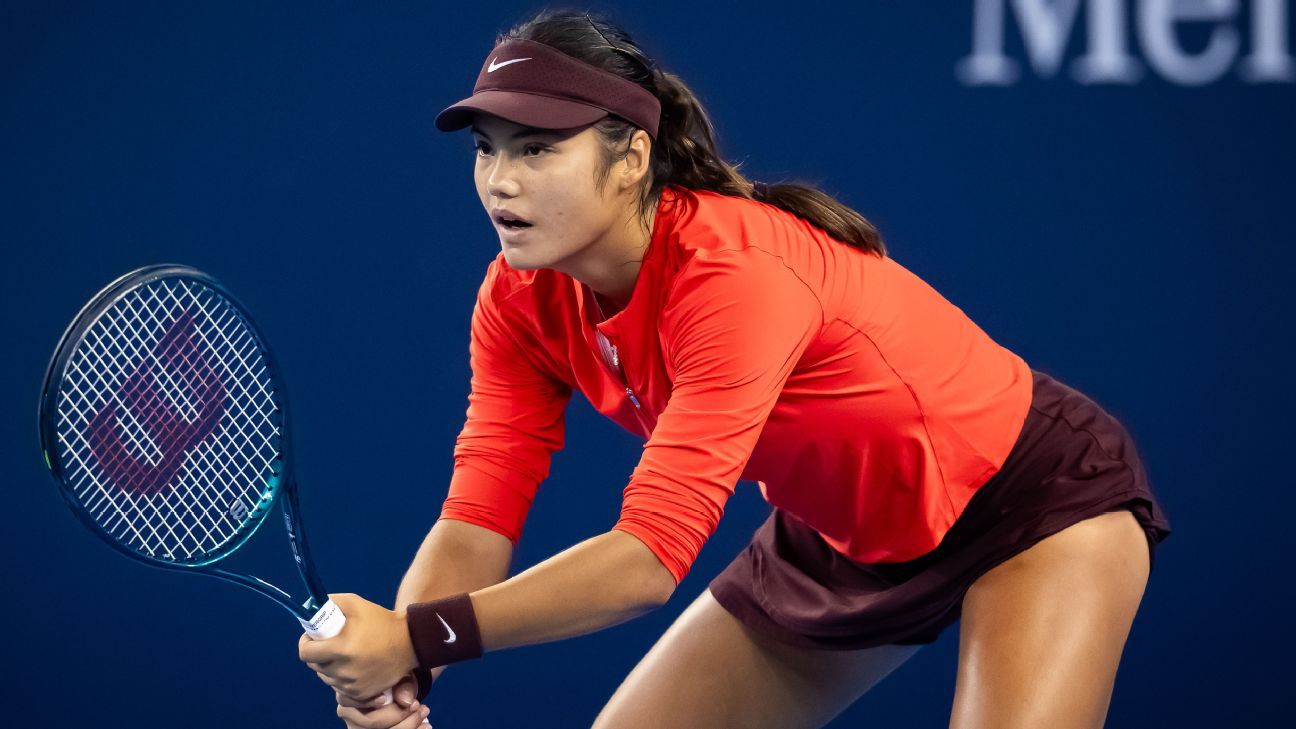
Emma Raducanu’s 2025 season, alive with the hope of hard-court resurgence, met its abrupt conclusion in the sweltering arenas of China. The British star had targeted a string of strong results to lock in a seeding for January’s Australian Open, where her flat-hitting style thrives on the Plexicushion bounce. Instead, a nagging back issue turned tournaments into tests of endurance, sapping the explosive tempo that defines her baseline dominance and forcing an early retreat to heal.
Back pain disrupts Ningbo rhythm
In Ningbo, Raducanu’s back issue emerged as a relentless foe during her Open exit, curtailing the inside-out forehands that pin opponents deep. The humid conditions amplified every serve and stretch on the hard courts, where she typically unleashes a one–two punch to seize control early in rallies. She battled through initial exchanges with crosscourt redirects that still sliced through defenses, but visible strain eroded her down-the-line counters, turning potential breakthroughs into defensive scrambles under the crowd’s watchful gaze.
Emma Raducanu struggles with back issue in Ningbo Open exit, a moment that highlighted the physical cost of her aggressive patterns on unforgiving surfaces. She adapted with more underspin to buy time, yet the pain lingered, echoing the season’s pattern of interruptions that tested her tactical poise. Fans sensed the shift in her movement, a subtle deceleration that spoke volumes about the mental weight of chasing consistency amid discomfort.
Defiance persists through defeats
Raducanu insists she’s making progress despite painful defeats, a stance that revealed her unyielding mindset as she pressed on during the Asian swing. Each match demanded recalibrations, like deeper returns to disrupt aggressive serves, blending her signature intensity with cautious recovery. The arenas buzzed with anticipation for her flashes of brilliance—those inside-in winners that ignite rallies—yet the cumulative toll hinted at deeper vulnerabilities in her game’s relentless drive.
This resilience, forged in quiet training sessions and high-stakes crowds, underscored the psychological layers of elite tennis, where ambition clashes with the body’s limits. Her focus remained on incremental gains, even as rankings points slipped away, setting the stage for a pivotal off-season rebuild. The tour’s jet-lagged rhythm had exposed every twinge, but her determination promised a sharper return to form.
Wuhan pullout forces reset
The decisive blow landed in Wuhan, where Raducanu withdraws from first round match of Wuhan Open, her body demanding a full halt after weeks of strain. Medical pauses during warm-ups captured the exhaustion, far from the fluid 1–2 combinations she wields to dominate fast indoor hard courts. This exit dimmed her seeding prospects for Melbourne, where early draws could now pit her against top seeds without protection.
With the season’s ledger reflecting fewer hard-court victories than hoped, attention turns to rehabilitation, a chance to reinforce the core strength essential for her explosive style. The Asian hard courts, once a stage for her potential, now serve as a cautionary chapter in a career defined by comebacks. As 2026 looms, Raducanu’s path forward hinges on transforming this pause into renewed power, ready to reclaim her place among the tour’s elite.