Players cap media time amid Wimbledon prize standoff

Leading competitors trim post-match duties at the All England Club to protect focus during the shift to low-bouncing grass, carrying forward a protest that began on clay.
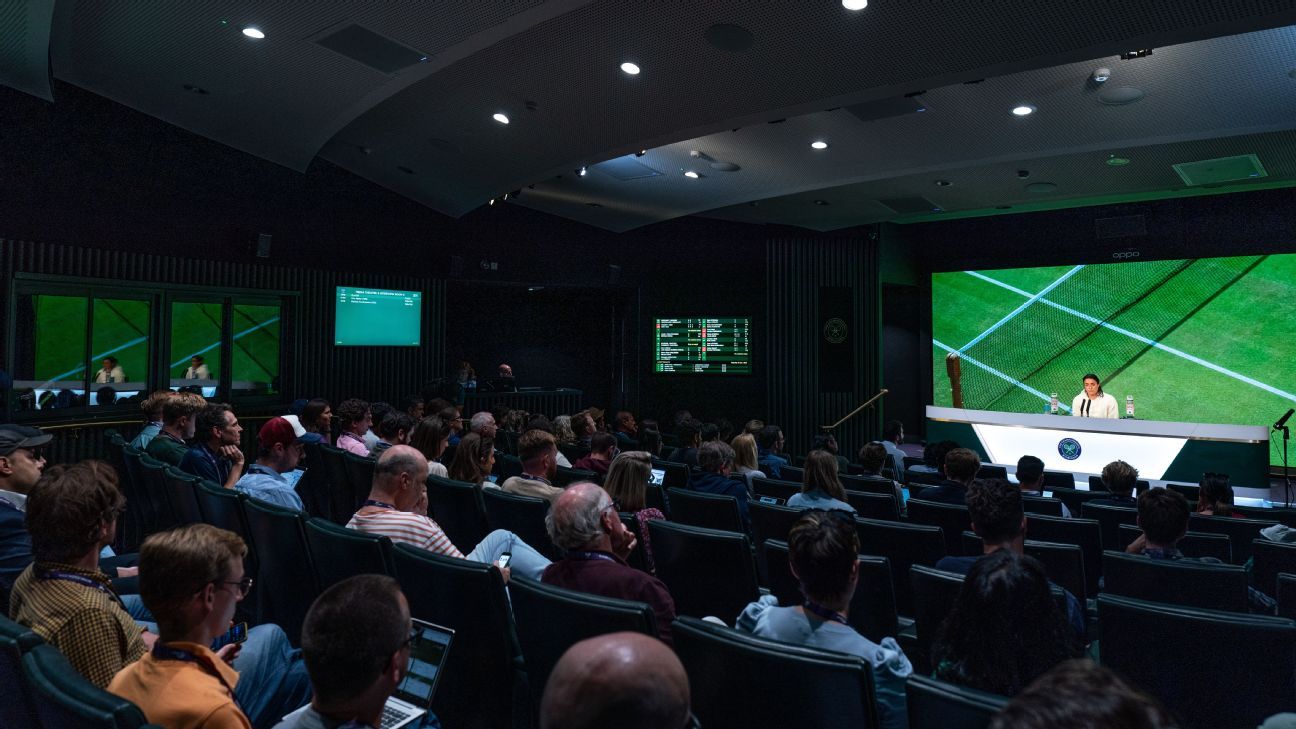
Top players are extending their protest over prize money shares by restricting media access during the first week at Wimbledon, a move that intersects directly with the intense physical and mental demands of adapting to grass.
Season fatigue shapes every choice
The decision caps media time at fifteen minutes after matches in the opening week, preserving energy for the rapid adjustments grass requires. On the slick lawns the ball skids lower and faster, forcing quicker footwork and favoring slice or underspin to blunt opponent pace. Players arrive already balancing heavy topspin transitions from clay with the flatter trajectories needed here, where recovery windows shrink and tactical resets happen daily.
At the French Open, No. 1 Aryna Sabalenka navigated similar restrictions while refining her crosscourt depth against varied return positions. The limited window offers a small buffer against cumulative load, allowing mental space for pattern recognition rather than repeated explanations of results.
Players will limit their contractual media commitments at the tournament to 15 minutes -- reflecting that Wimbledon currently pays slightly below 15% of revenues to players as prize money -- for the duration of the first week of the Championships.
The statement from player representatives noted that the share of projected revenue sits at 14.4 percent, below the 14.9 percent recorded a decade earlier. Wimbledon responded with a twenty percent increase that lifted the total fund to 64.2 million pounds and the champion payout to 3.6 million pounds, yet the push for a sixteen percent target continues.
Grass demands sharper resets
Coco Gauff followed the same approach at the French Open, using saved minutes to review video of down-the-line targets she would later exploit on quicker surfaces. Iga Swiatek likewise reduced commitments, allowing extra time to recalibrate her one-two combinations ahead of the shift in bounce and pace. These choices accumulate across a calendar that offers few true off weeks.
Grass rewards players who can transition from defense to attack within a single exchange. The 1–2 pattern gains extra bite when the return skids through the court, leaving less time for opponents to set up crosscourt replies. Inside-in forehands become decisive when the surface rewards forward movement and narrower angles.
Jannik Sinner, who also trimmed appearances on clay, now faces the added task of maintaining serve-volley adjustments without extra distractions pulling attention outward. Coaches note that clay rewards prolonged rallies and heavy spin, while grass punishes hesitation and rewards constant recalibration.
Rankings math influences energy choices
Novak Djokovic chose not to join the earlier action, yet the broader group continues to weigh how public obligations intersect with on-court tempo. The All England Club expressed surprise at the move, pointing to facility investments and the scale of this year’s increase, but the players’ calculation centers on long-term leverage.
By shortening media duties, competitors create margin to study opponent movement patterns and refine return depths before the second week accelerates. Early-round matches often hinge on who adapts fastest to the low bounce, turning small edges into set-winning margins. The protest remains confined to the opening week, after which normal commitments resume, suggesting a deliberate calibration timed to the most physically taxing phase of adaptation.