Pegula orchestrates tennis’s revenue reckoning

Under Rome’s relentless sun, Jessica Pegula turns her family-honed savvy into a quiet force, uniting players in a push for fairer Grand Slam shares as the French Open’s clay awaits.
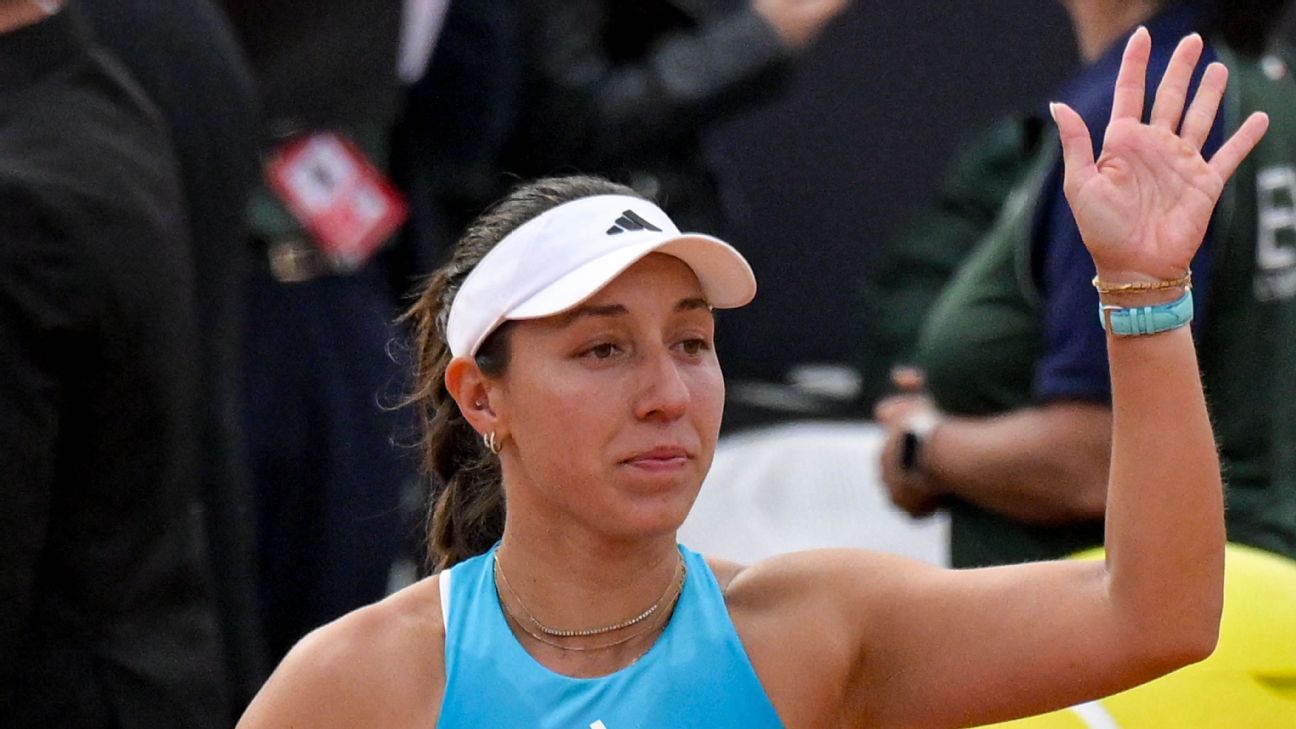
In the ochre haze of Rome’s Foro Italico, where the clay clings to every slide and the air hums with baseline rallies, Jessica Pegula practices with a focus that extends far beyond the court. The No. 5-ranked player, still sharp from her 2024 US Open final, has become the unseen architect of tennis’s brewing revolt against the Grand Slams’ tightfisted revenue splits. While louder calls echo from the top seeds, her methodical outreach—texts across tours, candid chats in player lounges—builds the real momentum, just as the season’s clay-court grind tests resolve before Roland Garros.
“I think it maybe does (come naturally) just because I feel like I’ve taken on a bit of a leadership role with it,” Pegula said.
Pegula’s edge traces back to a childhood steeped in sports empire-building. Her parents own the NFL’s Buffalo Bills and the NHL’s Buffalo Sabres, where deal-making and team unity were dinner-table staples. That foundation propelled her earlier this year to chair a new 13-person panel, overhauling the women’s calendar, rankings points, and mandatory event rules—changes that ease the tour’s punishing transitions from hard courts to grass.
Outreach cuts through tour isolation
On these slower surfaces, where players layer heavy topspin to combat the high bounce, Pegula adapts her flat strokes with extra lift, much like she navigates the sport’s lone-wolf mentality. She approaches anyone from rising talents to veterans, asking point-blank if they’re in. Some brush it off, eyes on their next match; others commit fully, drawn by her no-nonsense pitch that spans men’s and women’s circuits.
This groundwork amplifies bolder strokes from the elite. Top-ranked Aryna Sabalenka urged players should consider a boycott last week for a larger revenue cut, while Jannik Sinner called out a lack of respect from organizers. Their No. 1 status turns whispers into headlines, but Pegula sees it as the spark her organizing ignites.
“At the end of the day, the players are the ones that have the big voices,” Pegula said. “it’s been nice to see Aryna and Jannik kind of step out. I know a lot of other players feel the same way. But to have the two No. 1s very outspoken about it, that’s kind of what it takes to get them to listen.”
The mental weight of tennis’s calendar—jet-lagged shifts from Doha baselines to Rome’s red dust—fuels this unrest, as endless travel erodes focus on tactical edges like varying crosscourt depths. Pegula’s panel already targets that strain, proposing fewer mandates to preserve sharpness for Slams. Now, her revenue drive adds urgency, turning recovery days into off-court strategy sessions.
Disparities sting amid clay endurance
Roland Garros looms in under two weeks, its organizers boasting increasing overall prize money by 10% to a $72.1 million pot. Players, however, fire back that the underlying figures tell a very different story, with shares slipping below 14.9% from 15.5% in 2024—a raw deal amid inflation’s creep.
Contrast that with team sports, where NFL and NHL athletes pocket about 50% of revenues, a figure that dwarfs tennis’s typical under half. Even ATP and WTA events hit 22%, leaving Slams as outliers despite packed stands and global broadcasts. Pegula doesn’t mince words on the gap.
“it’s crazy. it’s an insane difference,” Pegula said when asked about the difference in revenue sharing between tennis and the NFL. “Obviously they’re different sports. They’re run differently. But tennis has been a very old-school sport. I think it’s one of the things that needs to change. Sometimes change is good. Sometimes that means fighting for things.”
Last year’s player letter to Slam chiefs nudged some shifts: Wimbledon up 7% for 2025, US Open by 20%, Australian Open 16% in January. Yet French Open silence persists, and Wimbledon’s pending reveal offers no player dialogue. On clay, where matches drag into defensive marathons—players lunging for inside-out forehands or slicing backhands to reset points—these imbalances hit harder, sapping energy for the long haul.
Unity challenges fragmented power
Tennis’s core fracture—seven governing bodies, from the four Slams to ATP, WTA, and ITF—mirrors the isolation of its one-on-one battles, where a single unforced error cascades. Pegula views the top 10’s cross-gender solidarity as the potential breaker, a rare volley that could force returns. Her direct style, honed in family boardrooms, sustains it amid the tour’s rhythm.
“I’m not afraid to go up to any type of player and go like, ‘Hey, are you interested in this or not?'” Pegula said. “Some players, they don’t care. Sometimes they’re not worried about it. Sometimes they’re like, ‘Yeah, for sure, I’m 100% in.' I’ve been reaching out to players on the men’s and women’s side.”
Without salaries like football or basketball pros, players can’t risk boycotts lightly, making cohesion fragile yet vital. Pegula’s efforts echo a precise one–two: approach shot to draw in, then topspin winner to seal. As Rome’s crowds swell for night sessions, the off-court tension builds, promising that if this chorus holds through the French Open’s grinds, the sport’s old guard might finally yield ground, reshaping rewards for the rallies ahead.