Pegula Conquers Quarterfinal Curse Down Under

Jessica Pegula turns the tables on her Australian Open history, outlasting Amanda Anisimova in a gripping all-American quarterfinal to storm into the 2026 semifinals for the first time.
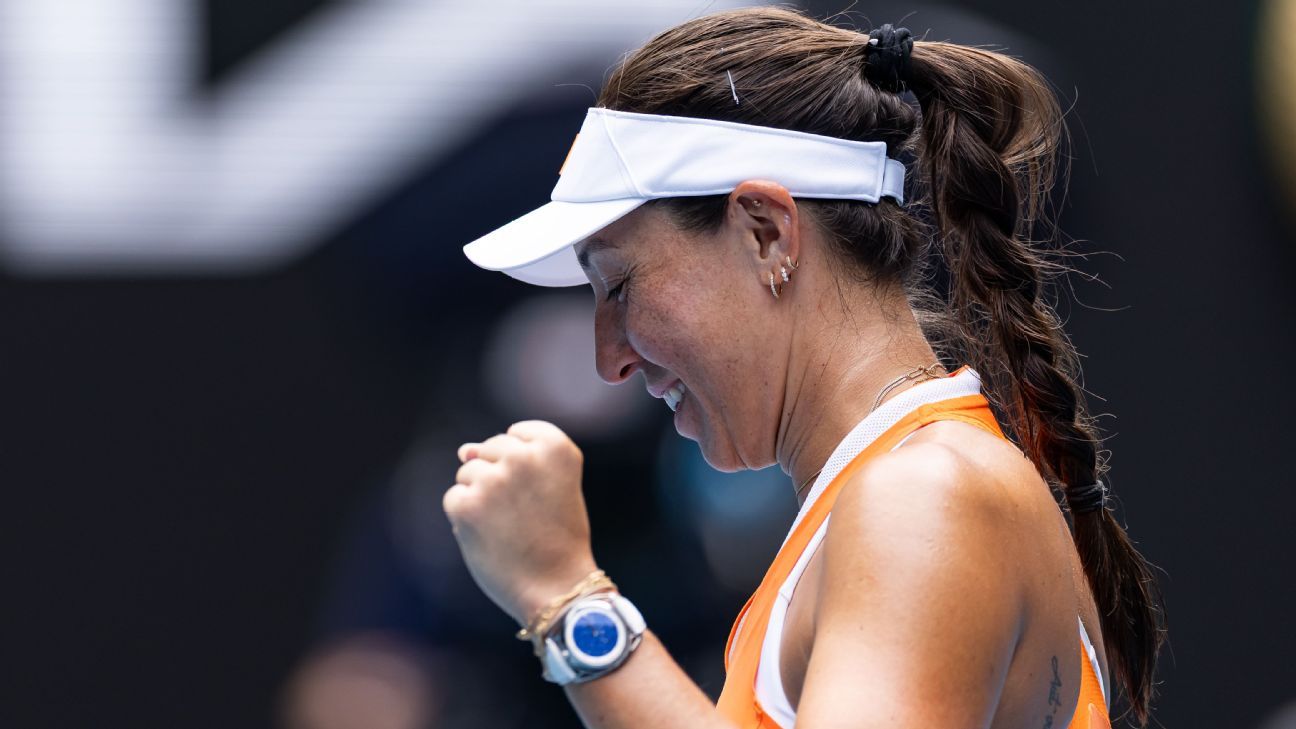
In the baking afternoon light of Melbourne Park, Jessica Pegula shed the shadow of three straight quarterfinal defeats at the Australian Open. She outmaneuvered fellow American Amanda Anisimova 6-2, 7-6 (1), a victory that stretched her dominance over U.S. rivals to a 14th win in her last 15 matches. This breakthrough propelled the No. 6 seed into the final four, where she faces No. 5 Elena Rybakina on Thursday, their head-to-head locked at 3-3.
The day’s earlier action at Rod Laver Arena saw Rybakina overpower Iga Swiatek 7-5, 6-1, while top-ranked Aryna Sabalenka drew No. 12 Elina Svitolina in the other semi. Pegula arrived here after toppling Madison Keys, the defending champion, in straight sets. Now chasing her first Grand Slam title, she meets a Rybakina hungry for a second since her 2022 Wimbledon run.
“I’ve been waiting for the time when I can kind of break through,” Pegula said of her semifinal appearance. “I feel like I really play some good tennis here and I like the conditions.”
First set surges with baseline control
Pegula took command early, her heavy topspin forehands pinning Anisimova behind the baseline on the medium-paced hard courts. She redirected pace with crosscourt angles, forcing errors on inside-out attempts that lacked depth. An ace at 110 mph capped the 6-2 set, the ball’s zip drawing a roar from the sun-soaked stands as Pegula’s serve held at 80 percent first strikes.
This precision built on her round-of-16 edge over Keys, where similar depth disrupted power games. Anisimova, seeking a third straight major final after deep runs at Wimbledon and the US Open, struggled to counter the consistent retrieval that turned defense into offense. Pegula’s comfort on these Plexicushion surfaces—offering grip for spin—allowed her to vary pace, slicing backhands to jam returns and open the court.
Second set breaks breed tiebreak fire
The second set turned into a see-saw of breaks, each player snatching the other’s serve twice as the humidity thickened. Anisimova grabbed a 5-3 edge with sharp down-the-line passing shots that clipped the lines during Pegula’s net rushes. But Pegula regrouped, her one–two pattern of slice serve into forehand winner breaking back to level, the crowd’s energy pulsing with every shift.
In the tiebreak, Pegula’s returns sat deep, pressuring second serves and extending rallies into grinds that sapped Anisimova’s flat power. She won 7-1, avoiding a third set through sheer anticipation. This resilience echoed her season’s mental tweaks, turning past heartbreaks into fuel for the fightback.
“I felt like I could win the rallies and I could put pressure on her serves,” Pegula said. “I just told myself to gear right back up. You’ve got to win the tiebreak unless you want to go to a third set and I really didn’t want to.”
Semifinal clash tests deeper resolve
Rybakina’s flat serves and inside-in forehands will probe Pegula’s return game on Thursday, a matchup where endurance on these courts could decide the outcome. Pegula’s 70 percent tiebreak success this year offers an edge in tight moments, blending her tactical patience with the American grit that carried her past Anisimova. As the final four heats up, with Sabalenka and Svitolina promising baseline fireworks, Pegula’s breakthrough injects fresh momentum into a tournament alive with possibility.
The Melbourne faithful, thrilled by the all-American intensity, sense a story unfolding—one where Pegula’s affinity for the conditions might finally deliver that elusive major leap. Her adjustments, like mixing underspin to disrupt rhythm, position her to absorb Rybakina’s power and counter with depth. In a draw favoring big hitters, Pegula’s steady fire could light the path to the final.