Sabalenka Draws a Line on the Relentless Tour

World No. 1 Aryna Sabalenka powers through Brisbane but vows to skip mandatory events, risking fines to fend off the burnout that’s shadowed her dominant run. Facing Madison Keys in the quarters, she balances fierce prep with a push for sustainability ahead of the Australian Open.
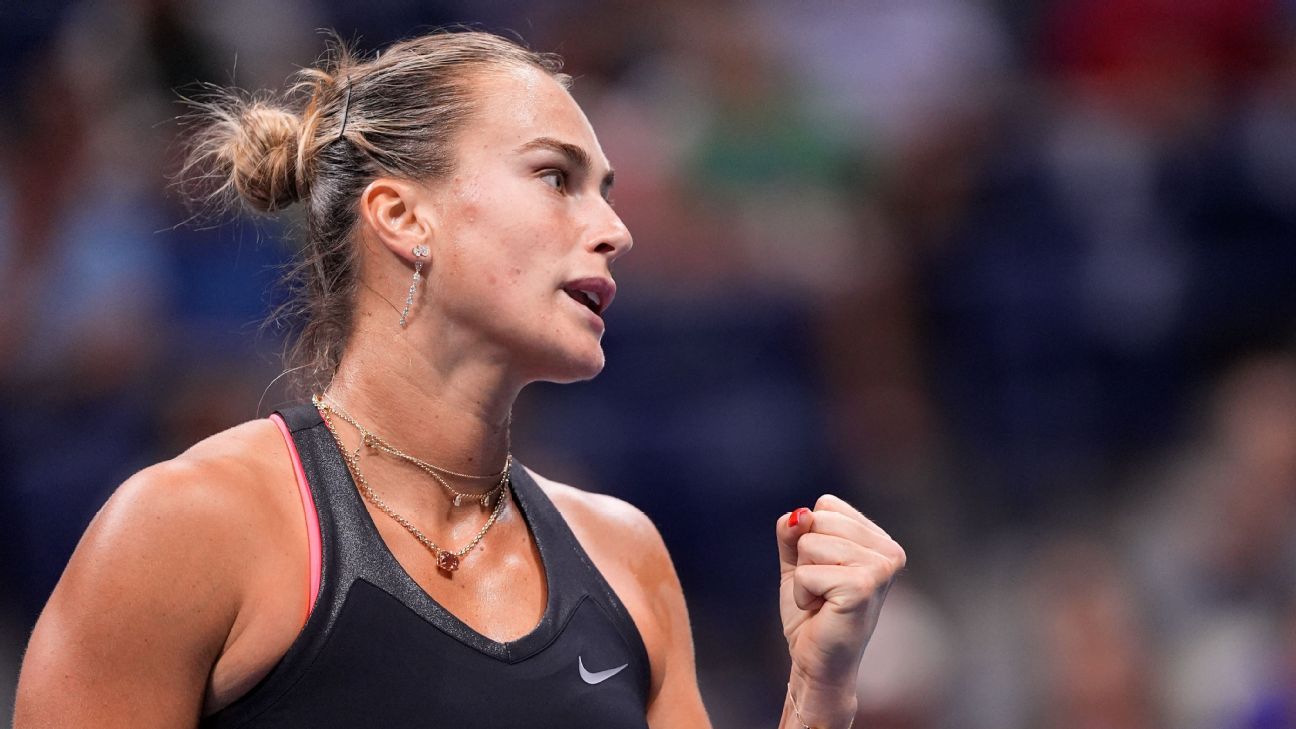
The Brisbane hard courts baked under the Queensland sun as Aryna Sabalenka carved through Sorana Cirstea 6-3, 6-3, her heavy topspin forehands kicking up dust and pinning the Romanian deep. This straight-sets dispatch into the quarterfinals carried the rhythm of her 2025 dominance, yet it masked a brewing tension: the top-ranked Belarusian is done chasing every tournament on an ‘insane’ calendar. After the win, she laid out her plan to protect her body, even if it means fines for dodging mandatory 500-level events.
Sabalenka’s frustration boils from a year of 16 tournaments and a 63-12 record that ended with a runner-up at the WTA Finals in November. She capped it with the Battle of the Sexes match against Nick Kyrgios, then earned the WTA Player of the Year honor for the second straight season, joining Serena Williams and Iga Swiatek as back-to-back winners over the past 25 years. But consistency came at a cost—matches played while sick or drained—prompting her to recalibrate for 2026.
“Well, the season is definitely insane, and that’s not good for all of us, as you see so many players getting injured,” Sabalenka said. “What Serena did, the rules were different. Right now, like last season, by the end of the season, because I didn’t play enough of 500 [level] events, they fine us with points.”
Navigating rules to preserve power
The WTA’s mandatory commitments weave a tight net, deducting points for skipped 500s alongside cash penalties, but Sabalenka calls the rules quite tricky and plans to trim her slate anyway. She’s prioritizing recovery to keep her one–two punch—serve followed by a crosscourt forehand—sharp for majors, rather than grinding through exhaustion on every surface. This shift echoes her Brisbane start, where the medium-paced hard court lets her test adjustments without the full-season weight.
Her body, forged for baseline battles, has shown cracks from overplay, turning potential three-peats into finals losses like the one to Madison Keys at last year’s Australian Open. Now, nearly a year later, that rematch looms in the quarters, promising aggressive rallies where Sabalenka’s inside-out forehands could probe Keys’ taped left leg. it’s not about revenge for her; it’s refinement, honing patterns to peak by January 18.
Keys claws back in epic thriller
Keys fought from a set and a break down to outlast 12th-seeded Diana Shnaider 6-7 (5), 7-6 (5), 7-6 (4) in a three-hour grind, her flat backhands slicing through the humid air during tiebreakers. A medical timeout for fresh tape on her upper left leg came after the second, and the decider stretched to 69 minutes, with two missed match points before she sealed it. This resilience extends her Australian streak, including 2025 titles in Adelaide and at Melbourne Park, building rhythm after just two matches since her US Open first-round exit.
“Always good to start the year with a little bit of drama,” Keys said in her postmatch interview. “Glad we got that out of the way.” Her surface savvy—using the true bounce for deep returns—forces opponents into defensive slices, a tactic that could disrupt Sabalenka’s topspin rhythm in their clash.
Sabalenka views the matchup as a forge for her game: heavy exchanges crosscourt, probing down-the-line with underspin backhands to vary pace. The crowd’s buzz under the lights amplifies the mental edge, turning potential fatigue into focused fire as she eyes the Australian Open.
Draw thickens for Grand Slam warmup
The winner advances to face third-seeded Elena Rybakina, who dismantled No. 15 Paula Badosa 6-3, 6-2 with clinical inside-in forehands, or No. 11 Karolina Muchova, who edged seventh-seeded Ekaterina Alexandrova 6-4, 7-5 in topspin duels laced with lobs. Rybakina’s flat serves pin wide, demanding quick adjustments like low slices to break rhythm, while Muchova’s drop shots add unpredictability to baseline probes. These layers make Brisbane’s draw a tactical lab, simulating Grand Slam pressure without the tour’s endless toll.
Despite the schedule’s insanity, Sabalenka thrives on this density. “By having [so] many top players you have in the draw, it definitely helps to prepare better for the Australian Open,” she said. “it’s important to have quality matches just so you’re preparing yourself mentally for fights, for battles.”
“I like to challenge myself. I like to have great battles, especially heading to the Grand Slam.” Her excitement for the Keys duel—“it’s going to be, as always, a great battle, really aggressive tennis. I’m excited to face her”—signals a pivot from drain to drive, where skipping events fuels a fiercer major charge. In Brisbane’s charged atmosphere, this resolve transforms the calendar’s grind into a launchpad for Melbourne’s battles.
The Associated Press contributed to this report.