Murray Looks Back on Djokovic Coaching Disappointment

Andy Murray shares the thrill and frustration of his brief role guiding Novak Djokovic through a season derailed by injury, pondering what might have been in their unlikely alliance.
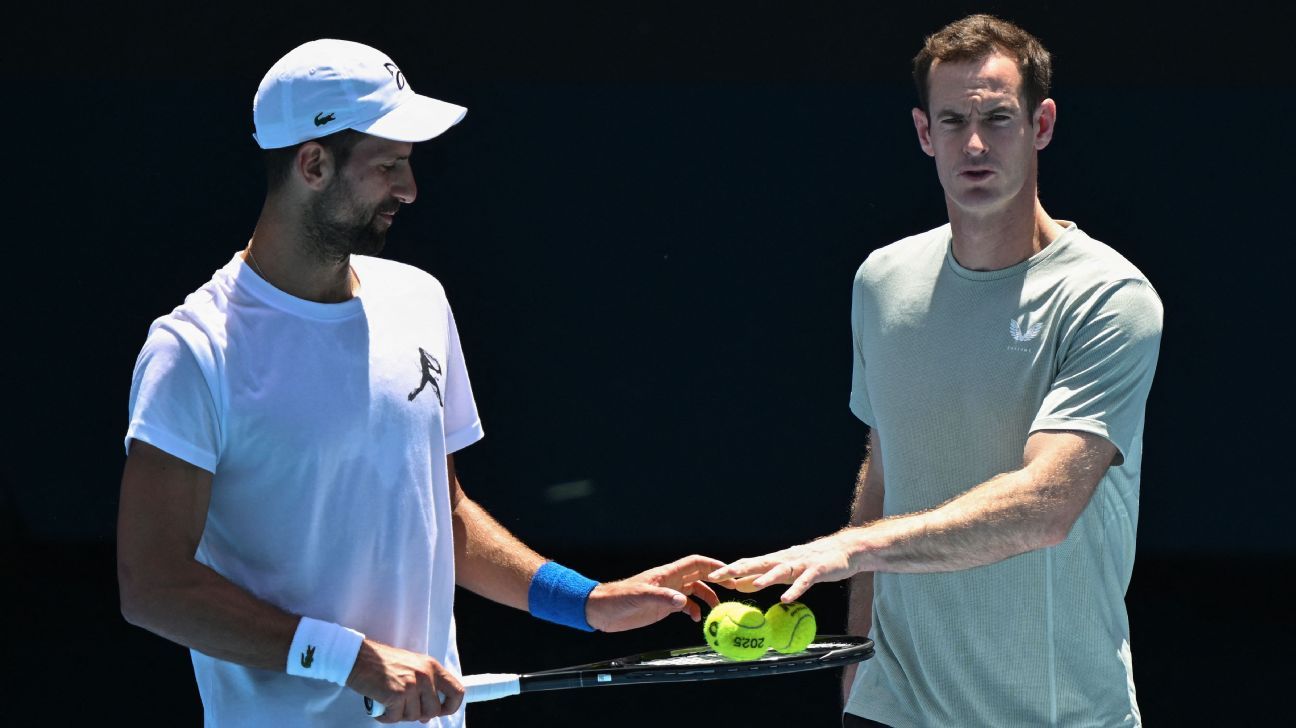
Andy Murray stepped into the coaching box last fall, eager to trade rivalry for partnership with one of tennis’s all-time greats. The move came just months after his own playing days ended at the Paris Olympics, pulling the 38-year-old Scot into Novak Djokovic’s orbit. What followed was a whirlwind six months, blending intense preparation with the harsh realities of the pro tour, as the duo chased majors amid mounting challenges.
From rivals to shared ambitions
The collaboration sparked immediate intrigue when Murray joined Djokovic’s team in November 2024. Fresh from his Olympic send-off, he brought a lifetime of insights from their fierce on-court clashes, including two Wimbledon triumphs of his own. Their time together covered the Australian Open and five additional tournaments, a compressed window filled with early drills on serve patterns and return positioning.
Murray immersed himself fully, dissecting footage late into the night and building rapport with the Serb’s long-time staff. The dynamic hummed with potential, as Djokovic, eyeing a 25th Grand Slam, tapped Murray’s tactical eye to sharpen his baseline rallies. Yet the pressure of expectations soon tested this new bond, turning practice-court harmony into high-stakes scrutiny.
“I look back on it and I’m glad that I did it,” Murray told The Tennis Podcast. “it’s an amazing experience that I’ve had. It didn’t last long but I put everything into it. I was disappointed. Probably didn’t get the results I would have liked for him.”
Injury derails hard-court momentum
The Australian Open opened with Djokovic grinding past Carlos Alcaraz in a five-set thriller, his inside-out backhands carving through the Melbourne humidity to secure a semifinal berth. Murray watched from the player box as the 24-time major winner unleashed deep crosscourt forehands, only for a torn left hamstring to halt the run mid-match. Retiring after one set against Alexander Zverev, he faced boos from the crowd, the arena’s energy shifting from adulation to doubt in an instant.
Recovery proved bumpy on the hard-court swing, with first-round exits in Qatar and Indian Wells exposing Djokovic’s labored movement against opponents’ aggressive one–two serves. Murray urged tweaks to his return depth, aiming to counter high-bouncing deliveries, but the Serb struggled to reclaim his fluid footwork. The psychological weight settled in, as the team huddled to adjust patterns that once defined his dominance.
Miami brought a brief resurgence, Djokovic battling to the final with varied underspin approaches that disrupted taller rivals’ rhythms. He pushed Jakub Mensik, the young Czech, through three sets, leaning on down-the-line passes to test flat backhands. Still, the loss stung, a reminder of how injury had dulled the edge on his 24 Slams legacy.
Clay challenges end the partnership
Plans stretched toward the French Open, but clay’s slower tempo accelerated the difficulties. Opening defeats in Monte Carlo and Madrid highlighted Djokovic’s footing issues, where his power strokes lost bite against the red dirt’s high bounce. Murray advocated for more slice variety to break up rallies and lure errors, yet the surface’s demands post-injury proved too steep, fraying the collaboration by May.
Reflecting on the Australian Open’s early spark, Murray called Djokovic’s semifinal play “ridiculous tennis,” a mix of precision volleys and relentless groundstrokes that briefly quelled skeptics. The injury’s ripple effects, though, created tough months for everyone involved, from strategy sessions to quiet hotel debriefs. He emerged with deeper coaching wisdom, forged in the heat of those setbacks.
“It was going well initially and it was unfortunate what happened in Australia with the injury, but I watched him play ridiculous tennis in that tournament,” Murray added. “After the injury it was certainly a difficult few months for him but also I think for the team and all of us. I learned a lot about what coaching is. I was fully invested, tried my hardest to help, and made some good relationships along the way with his team.”
Murray sees the experience as a pivotal launch into coaching, erasing any what-ifs about jumping in sooner. As Djokovic rebuilds toward grass and hard courts, these shared lessons in resilience and adaptation linger, shaping how both navigate tennis’s unforgiving path forward.