Gael Monfils charts a graceful exit from the tour

In the shadow of Parisian spires, the 39-year-old entertainer draws a line after 2026, transforming his final season into a tapestry of retrievals, roars, and unyielding spirit.
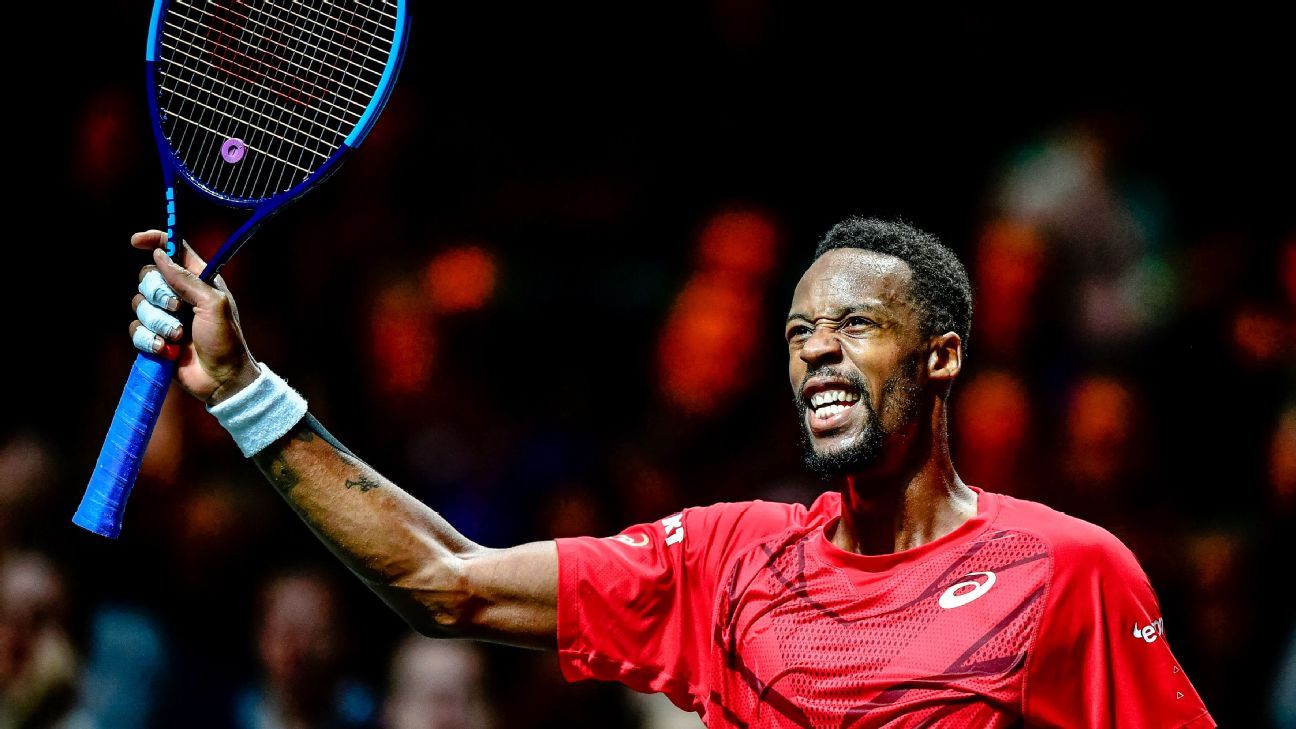
Full screen
Under the fading light of an October evening in Paris, Gael Monfils steps into the quiet afterglow of a career that turned every court into a stage. The former world No. 6, whose elastic dives and thunderous retrievals have echoed through arenas for decades, has set 2026 as the horizon for his professional farewell. This choice pulses with the rhythm of a life spent bending the game to his will, now yielding to time’s inexorable serve.
As arenas fill with anticipation, his final season promises not just matches, but moments—tactical sparks igniting emotional fires, a showman’s exit that redefines triumph on his own elastic terms.
Roots deepen into peaceful resolve
From the moment a racket first nestled in his small hands at two and a half, through the pro debut at 18, Monfils carved a 21-year path lined with 13 ATP titles and the thrill of two Grand Slam semifinals—2008 on Roland Garros’s red clay, 2016 amid the US Open’s buzzing night sessions. His style, a blend of spectacular athleticism and crowd-stirring flair, masked the grind of injuries and near-misses, yet now, at 39 and ranked 53rd, he embraces closure with a veteran’s calm. He announced Wednesday on social media that the year ahead marks his last as a professional, framing it as a cherished privilege turned to serene acceptance.“I held a racket in my hands for the first time at two and a half, and began playing professionally at 18. The opportunity to turn my passion into a profession is a privilege I have cherished during every match and moment of my 21-year career. Though this game means the world to me, I am tremendously at peace with my decision.”
Defying age with tactical fire
Just this January in Auckland, at 38 years and 132 days, he seized his 13th title, surpassing Roger Federer’s final triumph in 2019 by 58 days and proving his body still harbors that explosive retrieval on hard courts. As 2026 unfolds, expect Monfils to refine his arsenal—deploying slice backhands to disrupt rhythms on clay, inside-out forehands to pierce baselines on grass, all while conserving energy through precise one–two patterns that turn defense into sudden volleys. The psychological weight of finality sharpens his focus, no Slam title in sight but no regrets either; he owns the gaps with quiet defiance, the mental strain of longevity now a tailwind rather than a drag. He reflects on the unlikelihood of a late breakthrough, his words steady amid the tour’s relentless tempo. Yet this season demands adaptation: crosscourt lobs to buy time against younger power, down-the-line serves to claim free points on faster surfaces, each shot a bridge between past brilliance and present poise. In Auckland’s chill, those tactics dismantled returns, and they’ll echo through majors where crowd energy fuels his elastic leaps, turning potential fatigue into defiant momentum.“While I came close, I never did win a Grand Slam during my career. I won’t pretend that I expect to do so during the next year.”
Golden echoes and family anchors
Monfils stands as the last of France’s Musketeers, following Jo-Wilfried Tsonga, Gilles Simon, and Richard Gasquet into retirement, closing a chapter for a generation that lit up courts without claiming the ultimate prizes. He marvels at his fortune in sharing the era with giants—Federer, Nadal, Novak Djokovic, Murray—their precision contrasting his joyful chaos, a golden age where rivalries honed his counterpunching edge. Off the baseline, marriage to Elina Svitolina in 2021 and their daughter provide steady ground, buffering the isolation of travel with personal warmth that sustains his tactical edge through grueling swings. Gratitude threads through his outlook, the insane luck of it all lightening the load as he eyes 2026’s varied canvases—from Australian hard courts to Wimbledon’s green drama. He honors the fans whose ‘Allez, Gael!' chants have propelled inside-in winners and impossible defenses, their love the unseen force behind every underspin approach. In this farewell arc, Monfils will weave psychology into play, pressure alchemized into poetry, ensuring his legacy lingers in the roar long after the final point.“What I do have is the feeling that I have been lucky: insanely, stupidly lucky. I’ve had the chance to play during a golden age of tennis, alongside some of the greatest names in the history of our sport: [Roger] Federer, [Rafael] Nadal, [Novak] Djokovic, [Andy] Murray.”
“To every person who ever cheered or shouted ‘Allez, Gael!' in real life or at a TV screen: your energy and love are truly everything to me.”