Michael Chang Sees Himself in Tien’s Quiet Rise

From his own teenage triumph on Paris clay to guiding a new left-handed phenom through the tour’s pressures, Michael Chang is piecing together Learner Tien’s path to sustained success.

Michael Chang knows the thrill and terror of breaking through as a teenager. The American who lifted the Roland Garros trophy at 17 in 1989 now channels that fire into coaching one of tennis’s brightest young guns. Learner Tien, the 20-year-old left-hander, carries echoes of that promise, his game blending subtle power with unyielding grit.
Since they teamed up in July 2025, Tien has notched his first ATP Tour title in Metz and claimed the Next Gen ATP Finals crown. These breakthroughs have thrust him into the spotlight, marking him as a force amid the tour’s relentless churn. Chang’s guidance turns raw talent into calculated edges, from heavy topspin forehands that pin opponents deep to slice backhands that disrupt rhythm on hard courts.
“I think he’s a very special individual,” Chang told ATPTour.com in Indian Wells, referring to 20-year-old Tien. “He thinks a lot more than most players out on the court. He’s very much a fighter that people don’t see until they get into the thick of it with him. He’s not the type of player that will hit a great shot and shout ‘Come on!’ He’s not that type of personality, but he fights and he doesn’t give up, which something I appreciate.”
Sparks ignite in Hong Kong shadows
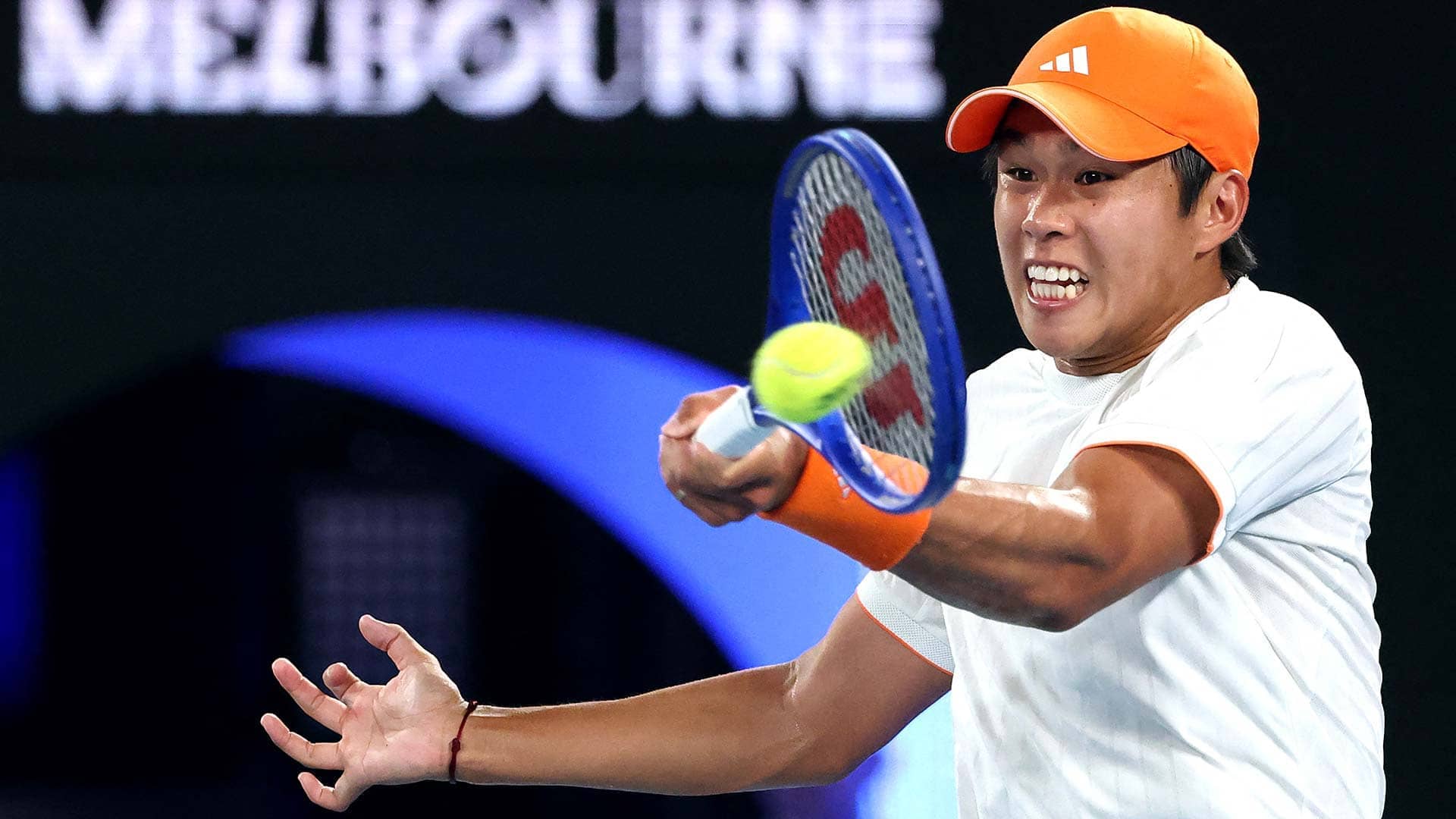
Their partnership began quietly last season in Hong Kong, where Chang first spotted the young lefty drilling on an adjacent court. He knew little then, but weeks later Tien exploded onto the scene at the Australian Open, grinding down Daniil Medvedev in a five-set marathon that lasted over four hours. That upset, built on deep crosscourt rallies and timely down-the-line passes, forced Medvedev into uncomfortable defenses, showcasing Tien’s ability to outlast bigger names under Melbourne’s night lights.
For Chang, moments like these reveal a player’s core. Tien’s left-handed angles—jamming returns with slice serves, then unloading inside-out forehands—create mismatches that echo Chang’s own tactical ingenuity on varied surfaces. As the tour’s calendar blurred from Australian heat to European clay, their bond deepened, with Chang dissecting every point to sharpen Tien’s edge against top competition.
Lessons drawn from Nishikori’s climb
Chang’s coaching roots run deep, starting with Kei Nishikori in the 2013 offseason. Nishikori, then hovering outside the Top 10, struggled with consistency on faster courts, often yielding to aggressive serves in key sets. Under Chang’s eye, he honed 1–2 patterns that blended slice approaches with inside-in winners, propelling him to the 2014 US Open final and a home triumph in Tokyo.
Those years built Chang’s reputation for unlocking potential through analysis. He recalls Nishikori’s Flushing Meadows run, where underspin lobs stalled net rushes and crosscourt depth forced errors in humid conditions. “Kei was already a great player, but he had a tough time breaking into the Top 10,” Chang reflected. “It was fun to work with him and see him accomplish that in 2014. I watched some great matches with Kei… His run at the US Open in 2014 was very special.”
The game has evolved since then, especially with mid-match coaching now standard. Back with Nishikori, advice came in snippets during changeovers, but today Chang can signal real-time tweaks—like urging a shift to down-the-line backhands against poachers—altering dynamics on the fly. This immediacy suits Tien’s thoughtful style, helping him navigate tiebreaks where a single adjustment can swing momentum.
“Coaching back then is very different from coaching now,” Chang explained. “We can coach now during the matches, so that changes the dynamic immensely. There were a few opportunities to do that with Kei, but they were few and far between. My approach toward working with Kei was to understand his game and how he was as a person. It was trying to find ways of communicating in the best way to work on a lot of those weaknesses, and to make his strengths even stronger.”
For Chang, every role feels like solving a puzzle. His career-high No. 2 ranking came from outthinking foes in five-set battles, a mindset he applies whether drilling with pros or his own kids. “I’m very much a thinker on the tennis court. I enjoy trying to figure out ways to win matches, and figure out ways to improve,” he said. “From a coaching standpoint, the combination of those things is a lot of fun. Whether I’m out there working with Learner or my kids… It’s fun to be able to help people improve and see a smile on their face. For me, it’s very satisfying.”
Faith and hunger fuel the bond
Coaching found Chang naturally as his playing days wound down, drawing him back to the courts in a new capacity. He didn’t seek it out, but chances with talents like Nishikori and now Tien pulled him in. “I wasn’t playing on the Tour anymore, but tennis was always going to be a huge part of my life,” Chang said. “It wasn’t something that I really sought, but opportunities just opened themselves up and I was able to work with some really great players. Kei being one of them and now Learner.”
What binds him to Tien goes beyond tactics: a shared faith adds layers to their dynamic. Tien plays with purpose, channeling energy into every draw without craving off-weeks, his hunger mirroring Chang’s in the 1980s. This mindset shines in practice, where they simulate high-stakes rallies—looping topspin to force high balls, then cracking inside-in forehands—to build resilience for majors.
Tien’s 2025 surge included five Top 10 wins and a first entry into the Top 30, from Metz’s indoor volleys to Next Gen dominance. Chang sees these as foundations, refining Tien’s game for 2026‘s demands, like Australian Open defenses where surface speed tests lefty spins. “We share a similar faith, so that brings a unique dynamic to our coaching relationship,” Chang added. “Knowing that he’s going out there and playing his best for the Lord… Every time he goes to a tournament, he’s excited to play. I haven’t run into a week that he has liked to take off, he’s always hungry.”
Under Indian Wells sun, as Tien eyes deeper runs, Chang’s steady presence promises more. Their sessions blend mental drills with shot-making, turning quiet persistence into weapons against the tour’s grind. “He’s a great kid. He’s got a good head on his shoulders,” Chang affirmed. “He’s extremely talented and very smart. It’s been a lot of fun to work with him and see him improve. It’s been great to see him have some great success and hopefully we can continue to work on that.”
Learner Tien listens to coach Michael Chang at the 2026 Australian Open. Photo: Paul Crock/Getty Images