Mensik steadies focus for Zverev clash at Roland Garros

From wheelchair exit to quarterfinal command, the Czech has rebuilt through five-set tests and now brings sharpened net play against the second seed with a final berth on the line.
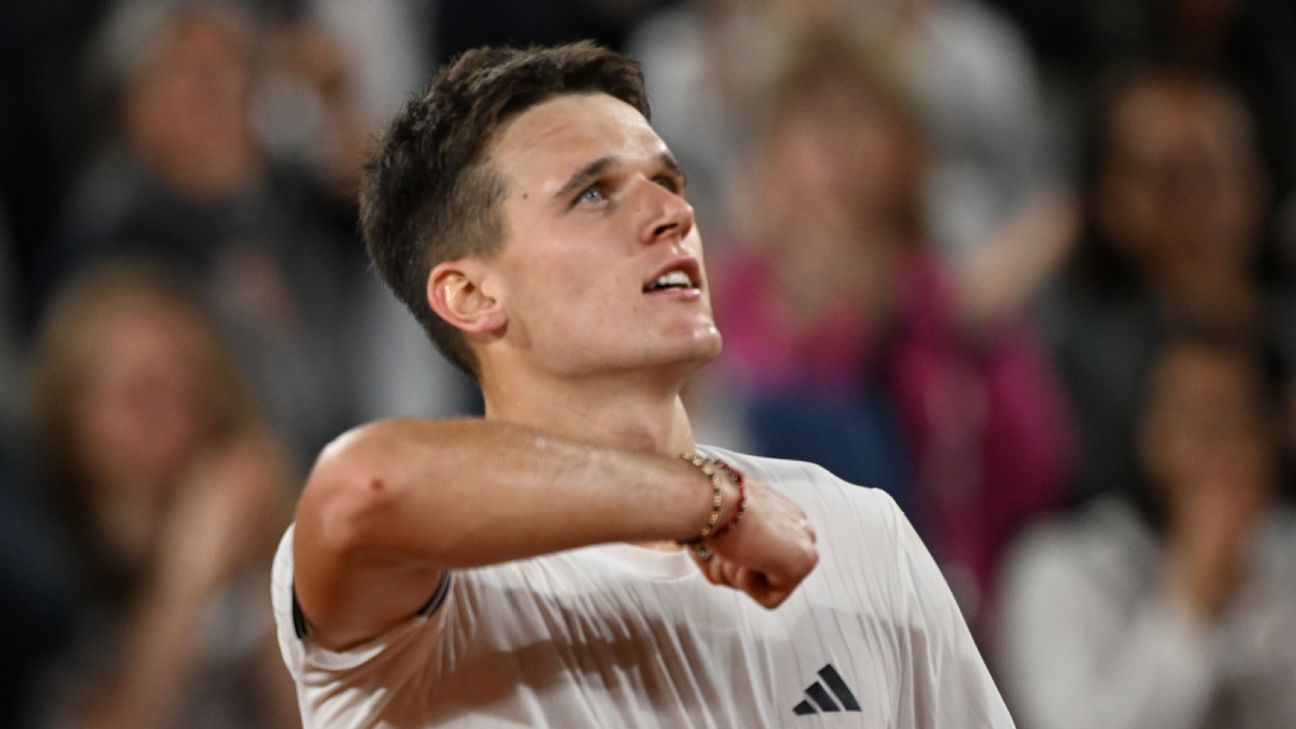
Jakub Mensik arrived in Paris carrying questions about clay endurance, then answered them by turning physical setbacks into sharper tactical decisions across successive rounds at Roland Garros.
Five-set recoveries sharpen net trust
Early in the fortnight the same player had to be wheeled off after cramps struck following a fifth-set tiebreaker against Mariano Navone. Two days later he dropped a 6-0 set to Alex de Minaur before winning three straight. Another five-setter against Andrey Rublev followed, leaving little margin heading into the quarters.
After the cramps and super dehydrations, I needed to put as much fluids as I could inside of me. I came back strong enough to compete again on the highest level and in these very cruel conditions. The sequence forced measured hydration and set-by-set adjustments that carried through each recovery.
After the cramps and super dehydrations, I needed to put as much fluids as I could inside of me. I came back strong enough to compete again on the highest level and in these very cruel conditions.
Those matches highlighted the value of mixing heavy topspin crosscourt with sudden slice approaches to disrupt rhythm on the slower surface. The shift allowed shorter points when legs felt heavy and preserved energy for tiebreakers.
Inside-out patterns unsettle Fonseca rhythm
Against Joao Fonseca, the 6-foot-5 frame proved decisive in 13 of 15 serve-and-volley attempts, a clear 1–2 pattern that Fonseca managed only once. The Brazilian had already toppled Novak Djokovic and Casper Ruud, yet the Czech kept returns low and moved forward to finish points at the net.
This approach minimized baseline exchanges where Fonseca thrives on heavy spin. Six match points were wasted in regulation before the tiebreaker, yet mental composure held as the player closed out the 7-6 (3) set with down-the-line winners. During the post-match on-court interview his mom created a heart shape with her fingers from the stands, drawing a chuckle that eased the tension.
The inside-out forehands and quick net approaches disrupted Fonseca’s rhythm and kept the Brazilian from settling into his own heavy topspin patterns. The 19-year-old Fonseca beat 24-time Grand Slam champion Novak Djokovic in five sets in the third round and then eliminated two-time runner-up Casper Ruud in the fourth round.
Zverev test weighs late-round composure
For a place in Sunday’s final, Mensik will face Alexander Zverev, who eliminated Rafael Jodar in straight sets. Zverev’s experience in late rounds brings its own pressure, yet Mensik’s recent path suggests he has already absorbed lessons about staying present when the body and schedule conspire against him.
The second seed prefers longer baseline rallies with inside-in forehands, a style that could test the Czech recovery if points stretch beyond four shots. Still, the recent serve-and-volley gains offer a counter that could force errors from the German on slower clay. The last 20-30 minutes of the match it was just really insane. I’m happy I managed to stay mentally focused and calm.
A win would place the 20-year-old one match from his first major final, altering projected ranking points by several hundred places depending on the outcome Sunday. The coming semifinal will test whether that psychological arc holds when the stakes rise again.