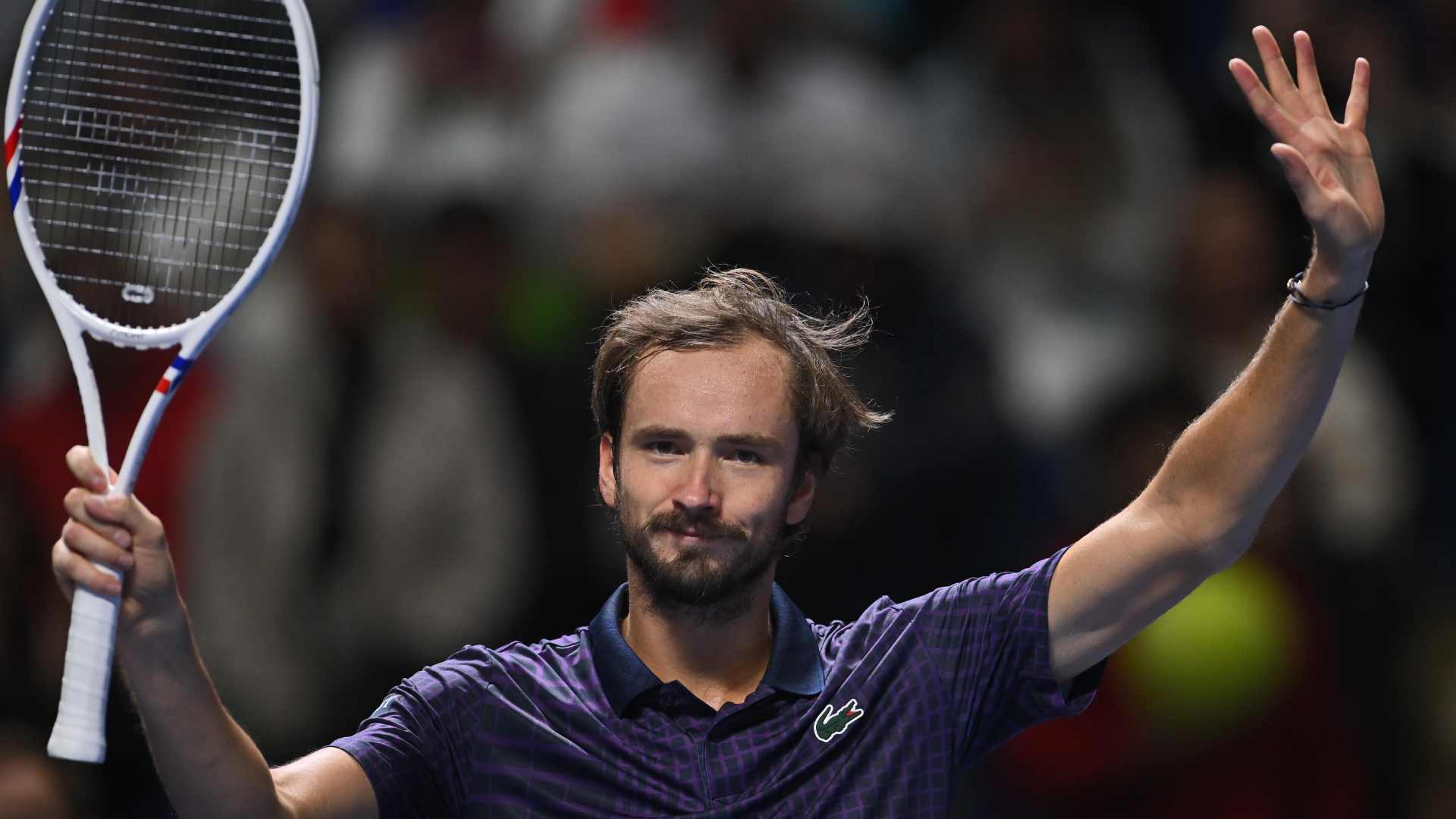
Champions unveil Almaty’s tennis frontier

In the shadow of the Alatau mountains, weary pros like Khachanov and Medvedev trade racquets for ribbons, igniting a facility that blends elite ambition with Kazakhstan’s grassroots surge.
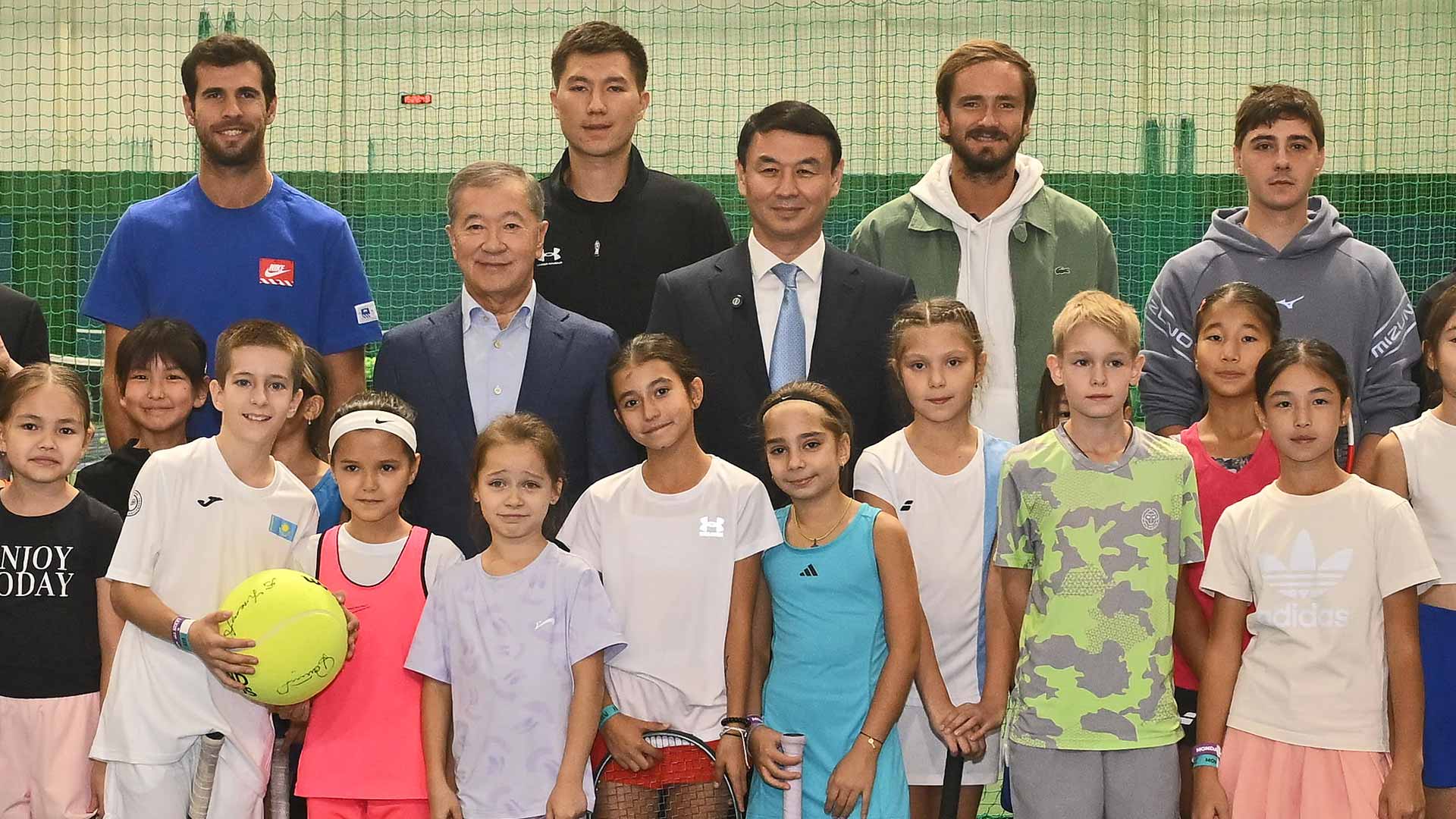
In Almaty‘s expanding Alatau district, where crisp October winds carry the scent of fresh clay and hard-court grit, a group of battle-hardened players gathered under mountain silhouettes for a moment of renewal. Karen Khachanov, fresh from dissecting opponents with inside-out forehands across varied tours, stood with Daniil Medvedev, whose counterpunching returns have etched another season of endurance. Flavio Cobolli, the rising Italian honing his tactical variety, joined Kazakhstan’s Alexander Shevchenko and Beibit Zhukayev to inaugurate the Alatau International Tennis Complex, a Kazakhstan Tennis Federation project designed for both high-stakes drills and everyday swings. The crowd’s cheers mingled with a local band’s rhythms, turning the ribbon-cutting into a communal rally, far from the solitary tension of match points.
Roots take hold amid tour fatigue
The symbolic tree-planting ceremony captured the essence of respite for these pros, who navigate psychological marathons from clay’s sliding defenses to hard-court speed. Shevchenko, blending local pride with international baseline steadiness, shared glances with Zhukayev, whose aggressive serves demand precise recovery footwork, as they envisioned juniors mastering one–two patterns here. Almaty Mayor Darkhan Satybaldy attended, emphasizing the venue’s role in elevating the city’s profile through youth training and global events.
“The new tennis centre has become an important sports facility for the growing Alatau district of our city,” said Satybaldy. “It will serve as a platform for training young athletes and for hosting national and international competitions. This not only raises Almaty’s prestige in the eyes of the global sports community but also contributes to the city’s continued development.”
With 14 courts spanning indoor and outdoor hard and clay surfaces, the complex meets ITF and ATF standards, allowing seamless shifts between topspin rallies on red dirt and flat down-the-line strikes on faster decks. A gym, medical center, cafe, and conference hall provide the recovery ecosystem essential for pros managing fatigue from crosscourt exchanges to slice defenses. For visitors like Medvedev, accustomed to analytical deep runs, the setup offered a tactical breather, highlighting how such spaces foster adaptability without the pressure of rankings.
Accessibility fuels national momentum
Beyond elite prep, the facility commits to inclusivity, offering free programs for low-income children, discounts for large families and pensioners, and full accessibility for those with limited mobility, all guided by certified coaches. This approach echoes the players’ own journeys—Khachanov‘s resilience in rebuilding after setbacks, Cobolli‘s patient climb through versatile shot-making—transforming personal grit into communal opportunity. KTF President Bulat Utemuratov, present at the launch, underscored the broader impact on participation.
He explained that investments like this democratize tennis, turning it into a mass pursuit with world-class conditions. Over 30,000 children in Kazakhstan now play regularly, a figure bolstered by the federation’s efforts since 2007 to construct 39 facilities, including 291 courts nationwide, fueled by more than $200 million in private investment across 18 years. The center can host up to 500 athletes daily, priming a talent pipeline where young Kazakhs drill inside-in approaches or underspin lobs, closing the gap to pro circuits.
Versatile courts shape future rivalries
The dual surfaces invite strategic evolution, letting talents like Zhukayev experiment with net rushes on clay while sharpening returns on hard for one–two finishes against counterpunchers. Shevchenko, thriving on consistent crosscourt depth, sees the venue as a launchpad for endurance-building sessions that mirror major showdowns. For the international stars, wrapping a 2025 season heavy with surface transitions, the event shifted focus from individual survival to legacy-building, their presence inspiring locals to chase similar mental fortitude.
As conversations lingered post-ceremony, turning to off-season resets and potential clashes on these courts, the complex emerged as Kazakhstan’s next proving ground. Balancing top-tier development with societal reach, it promises to nurture players who dictate terms in any matchup, blending aggression with recovery to elevate the nation’s tennis ascent into uncharted territory.