Kasatkina steps back from tour’s breaking point

Beneath the relentless pulse of the tennis circuit, Daria Kasatkina confronts the invisible toll of constant motion, choosing an early pause to reclaim her fire.
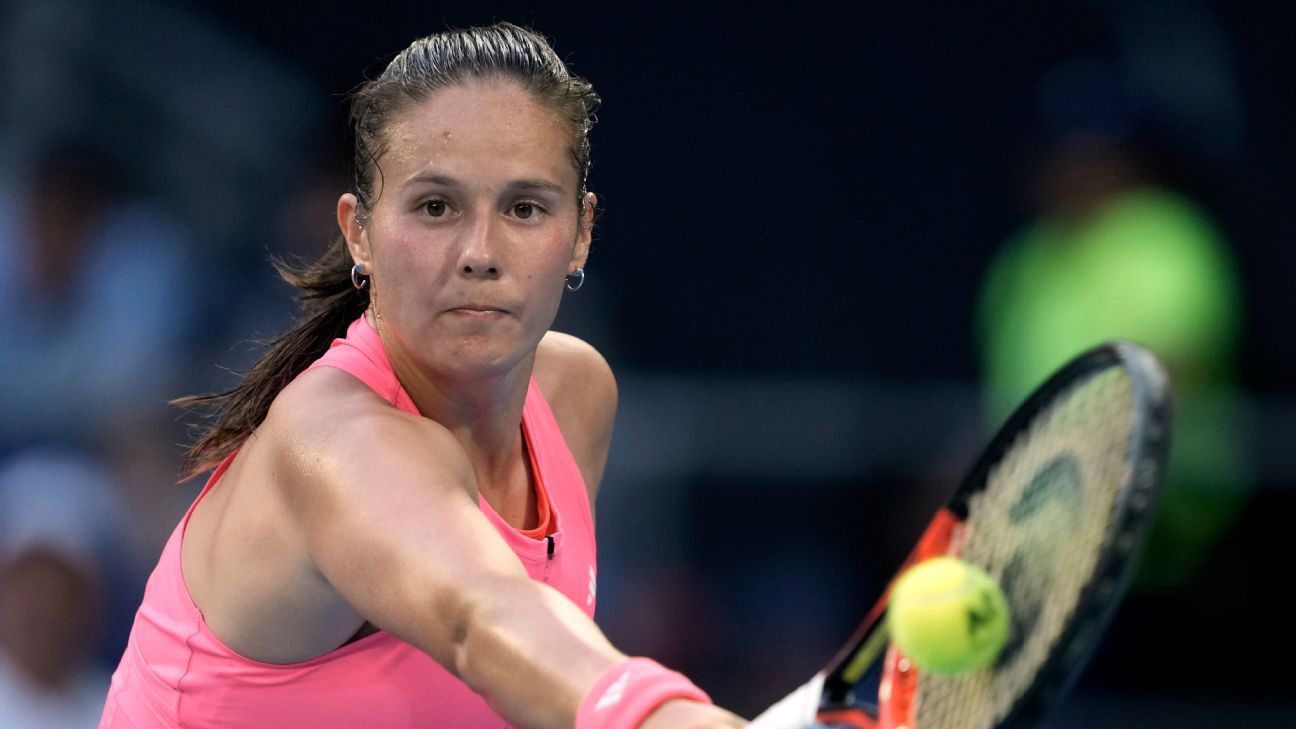
In Melbourne’s crisp autumn light, where hard courts once echoed her rising shots, Daria Kasatkina has halted her 2025 season. The Russia-born Australian player, ranked 19th after her French Open semifinal run in 2022, revealed the mental exhaustion that has shadowed her recent matches. This decision strips away the glamour of global swings, exposing how the tour’s rhythm can fracture even a resilient baseline game.
Tour demands test tactical resilience
Endless travel across time zones has dulled Kasatkina’s sharp one–two patterns, where crosscourt backhands once set up inside-out forehands to wrong-foot opponents. She pressed through clay-court battles in Europe and the hard-court sprints in Asia, but the weight of suitcases and shifting schedules turned fluid rallies into strained exchanges. Her straight-set loss to Sonay Kartal in the China Open’s second round on September 27 laid bare these cracks, as Kartal’s flat groundstrokes pinned her deep, disrupting the defensive lobs that usually bought time for counterattacks.
Off-court hurdles deepened the drain: a drawn-out push for permanent residency in Australia and the quiet pain of separation from her parents. Engaged to Olympic figure skater Natalia Zabiiako, Kasatkina has navigated exile from Russia, a reality she described in a 2023 Times of London interview as a gay person opposing the war in Ukraine. These layers seeped into her preparation, masking vulnerabilities in serve returns that once neutralized big servers on faster surfaces.
“Truth is, I’ve hit a wall and can’t continue. I need a break. A break from the monotonous daily grind of life on the tour, the suitcases, the results, the pressure, the same faces (sorry, girls), everything that comes with this life.”
Emotional strain echoes across the circuit
Kasatkina admitted her form had slipped for months, as she bottled up unrest to sidestep any hint of ingratitude amid the sport’s privileges. The schedule’s crush, blending high-stakes events like her Ningbo Open title in October 2024 with scant recovery, pushed her to a breaking point she shares with others. Player lounges, typically alive with tactical chatter under stadium lights, grew heavy with unspoken fatigue, where every practice drill mirrored the grind stretching ahead.
She joins Elina Svitolina and Beatriz Haddad Maia in cutting seasons short for rest, a trend underscoring how mental bandwidth fuels on-court instincts like timely underspin slices to disrupt aggressive baselines. Kasatkina wrote on Instagram that she had felt far from fine for a long time, her results fading as suppressed emotions eroded the focus needed for down-the-line winners. This shared pressure highlights the WTA’s calendar testing not just strokes, but the psychological poise that turns pressure into momentum.
“The schedule is too much, mentally and emotionally I am at breaking point and sadly, I am not alone.”
Rebuilding toward a tactical renewal
Looking to 2026, Kasatkina vows a return energized and ready to rock, using this break to restore the all-court versatility that defined her peak. In Melbourne’s familiar training grounds, away from tour chaos, she can refine adjustments like varying serve depths to exploit weaker returns on grass or clay. Her story ripples through the circuit, advocating for balance that sustains the tactical depth behind every point-winning sequence.
As she steps into quieter rhythms, the absence of her steady presence leaves a void in draws where her clever net rushes once shifted atmospheres. Yet this pause promises evolution, channeling personal trials into a sharper edge that could reignite deep runs. The tennis world watches, knowing true competitors emerge stronger from such deliberate resets.