Sinner navigates nerves on opening day at Wimbledon

The defending champion absorbed early pressure from an underdog before settling into rhythm on the fresh grass, leaving questions about how far the vulnerability might stretch.
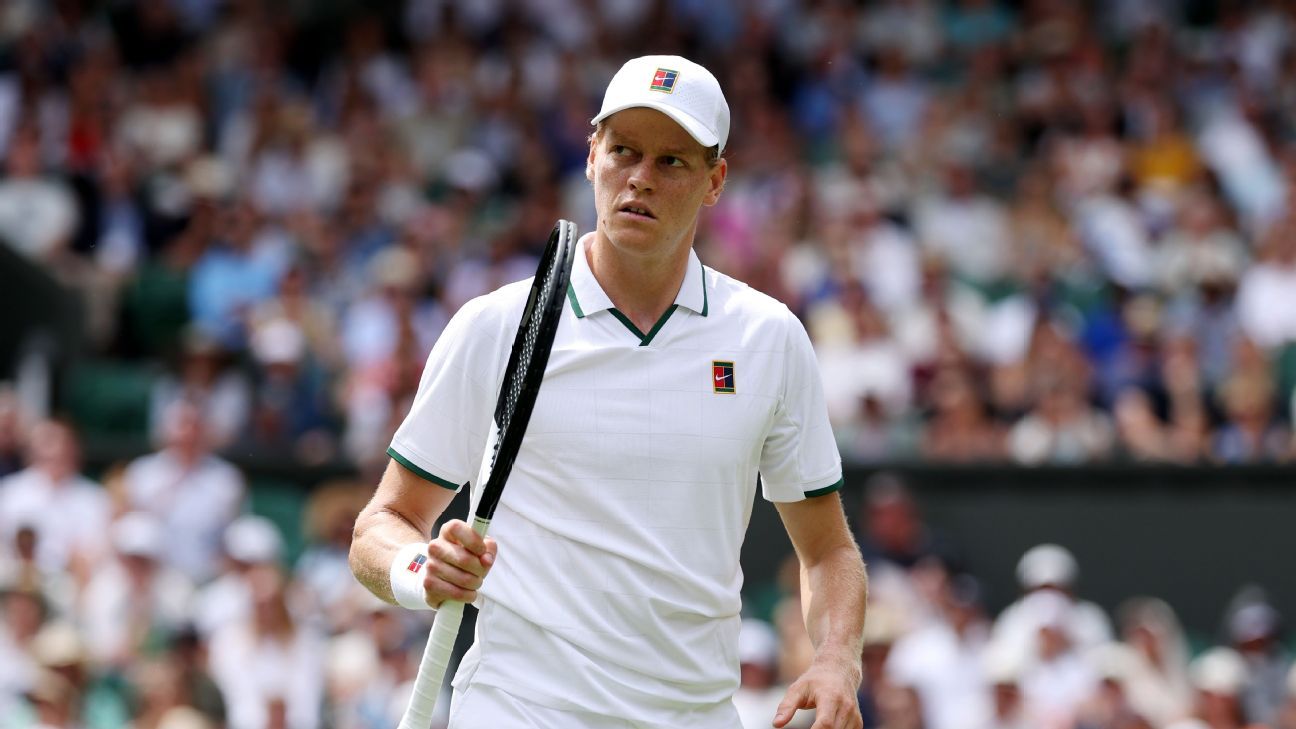
Jannik Sinner walked onto Centre Court with the weight of a title to defend and the memory of a five-set collapse still close. The afternoon temperature sat at a comfortable 73 degrees, yet the untouched grass created an unfamiliar skid that disrupted timing from the first ball. Early double faults and ten unforced errors handed Miomir Kecmanovic the opening set, and the crowd felt the tension ripple through the stands.
Ten more unforced errors arrived before the second set began, but the Italian shortened his swing and started redirecting crosscourt forehands with flatter trajectories. The shift allowed him to finish points inside the baseline rather than absorbing extended rallies. By the fourth set the one-two pattern of serve followed by inside-out forehand began to land with authority, turning defense into attack.
It was a little tight in the beginning. Didn’t play my very best but tried to get into it. It was my first match on grass. This also is very important. I’m happy that I turned it around.
The 4-6, 6-3, 6-7 (6), 6-2, 6-3 victory kept the campaign alive yet exposed how quickly rhythm can vanish when the surface refuses to cooperate. Opponents watching from the locker room noted every hesitation and filed the information away for later rounds.
Early nerves test mental preparation
The practice session with Novak Djokovic recorded for the BBC had carried a simple message about embracing the walk onto virgin grass. Sinner absorbed the advice yet still described himself as very nervy before descending the stairs behind the court. The brand-new surface offered no prior reference points, and every foot plant carried an extra layer of calculation.
After losing the third-set tiebreak he changed his shirt without glancing at the bleeding toe that had resulted from a hard fall. The physical reminder stayed secondary to the need to reset mentally for the fourth set. He lost 18-straight points and seven games against Juan Manuel Cerundolo in Paris, and that sequence lingered in the background as the match stretched into a fifth set here.
Once the one-two combinations clicked, the 76 percent pre-match win probability from IBM watsonx no longer felt distant. The crowd responded with louder encouragement each time he stepped inside the baseline and finished down the line. Those small adjustments began to mask the accumulated pressure from a season that had already demanded repeated recalibration.
Refining one two patterns for grass speed
The heavy topspin crosscourt patterns that dominated clay required immediate shortening on this surface. Sinner mixed underspin backhands to draw short replies, then transitioned into inside-in forehands that stayed low and denied the opponent time to set up. The change reduced the margin for error when the ball skidded through the service box rather than bouncing high.
Against a player ranked No. 50 the adjustments proved sufficient once the fourth and fifth sets arrived. The same refinements will face a sterner test against Nuno Borges, whose recent semifinal run in Mallorca featured aggressive returns that punish any second-serve hesitation. Wider serve placement followed by flatter inside-out shots will likely replace the high-looping patterns that worked on slower courts.
Further ahead the winner of Ignacio Buse versus Jenson Brooksby awaits, and both players have shown comfort on faster surfaces. Rafael Jodar and Ethan Quinn represent additional threats whose power games could exploit any remaining timing gaps. Daniil Medvedev looms as a possible quarterfinal opponent after pushing Sinner to deciding sets earlier this season.
Schedule ahead amplifies season pressure
Recovery windows between matches become critical when the draw tightens. The decision to skip lead-in grass events traded match practice for physical readiness, and Tuesday now offers the only chance to lock in cleaner ball striking before the second-round test. Borges carries momentum that could extend rallies if the favorite’s first-strike tennis falters again.
Each subsequent opponent will study the fifteen first-set unforced errors and the back-to-back double faults that surrendered the early break. They will also observe how Sinner regrouped to win three of the final four sets. The pattern suggests resilience remains intact even when the opening phase falters under accumulated pressure.
Wednesday’s contest will reveal whether the small footwork tweaks discussed after the opener restore quicker transitions from defense to attack. The grass rewards players who stay low and redirect pace, and finding that balance under the weight of expectations will define how far the title defense can stretch.