Nicola Pietrangeli shaped Italy’s tennis from clay to glory

The trailblazing Italian who conquered Roland Garros and Davis Cup finals left a blueprint of resilience that echoes in today’s champions, his passing at 92 marking the end of an era built on grit and national pride.
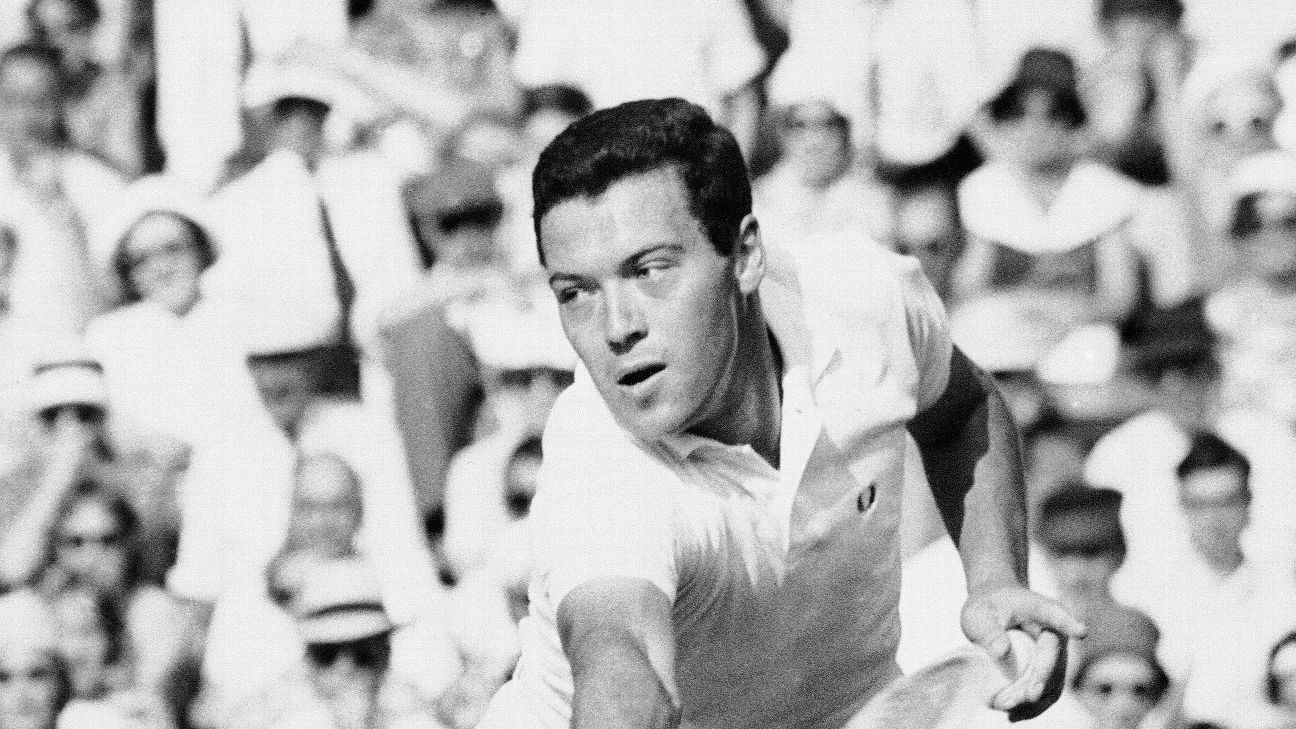
Nicola Pietrangeli, Italy’s pioneering tennis force through the 1950s and 1960s, died at 92, his career a blend of tactical mastery and unyielding drive that defined a nation’s aspirations on the court. The Italian Tennis and Padel Federation shared news of his passing on Monday, highlighting his singular honor as the only Italian in the International Tennis Hall of Fame. Long before stars like Jannik Sinner rose, Pietrangeli carried Italy’s hopes, his records in singles majors standing firm until recently surpassed, though his Davis Cup triumphs remain unmatched.
Conquering Roland Garros pressures
Pietrangeli broke new ground as the first Italian to claim a Grand Slam singles title, winning the French Open in 1959 on the grinding red clay where deep crosscourt rallies tested endurance. He defended that crown in 1960, mixing topspin forehands with underspin slices to disrupt opponents’ flat shots in long exchanges. Runner-up spots followed in 1961 and 1964, both to Spain’s Manuel Santana, whose aggressive net rushes forced Pietrangeli into extended baseline defenses, sharpening his ability to loop high balls inside-out for time.
Alongside Orlando Sirola, he captured the 1959 doubles title in Paris, their one–two combinations of volleys and passing shots overwhelming pairs in tight sets. These Paris runs, amid the springtime hum of the stadium and the weight of being Italy’s standard-bearer, built his mental edge, carrying over to a Wimbledon semifinal in 1960 and Australian Open quarterfinals in 1957. The modest $150 prize for his 1960 win barely covered two months’ rent in Rome, yet it fueled a career driven more by passion than payout.
“I won $150 for the 1960 title, which covered two months rent for my home in Rome,” Pietrangeli told the Gazzetta dello Sport in 2020.
“In 1964 Santana and I made a bet whereby the loser would pay for dinner,” Pietrangeli said. “I honored the agreement and 10 of us went out that night, including our wives, and Manolo invited (Spanish soccer player) Luisito Suárez. I spent my entire earnings from the tournament to cover the evening.”
Davis Cup battles tested resolve
In Davis Cup, Pietrangeli’s endurance shone across 164 matches in 66 ties, posting a singles record of 78 wins to 32 losses and doubles at 42-12. With Sirola, their partnership netted 34 victories in 42 doubles rubbers, using crosscourt lobs and down-the-line poaches to break rhythms on grass or clay. As a player, he steered Italy to finals against Australia, clashing with Rod Laver and Roy Emerson in hostile away atmospheres where fatigue from travel amplified every point’s stakes.
Those near-misses honed his leadership, culminating as captain in 1976 when he guided Adriano Panatta, Corrado Barazzutti, Paolo Bertolucci, and Antonio Zugarelli to a win over Chile under Augusto Pinochet’s regime. Despite boycott calls, Pietrangeli urged the team forward, blending aggressive inside-in forehands from Panatta with steady returns to clinch Italy’s first title on hard courts slick with tension. His insistence turned potential withdrawal into triumph, reshaping the Azzurri’s path amid political shadows.
“That was really my biggest contribution for that final,” Pietrangeli said. “Without me, Italy would have not traveled to that final and we wouldn’t have won.”
Italy’s next Davis Cup successes came decades later, with Sinner leading victories in 2023 and 2024, then Matteo Berrettini and Flavio Cobolli delivering a third straight title on home soil in Bologna last month. Pietrangeli’s unmatched total wins endure, his tactical adjustments to surfaces and foes inspiring these runs where crowd energy surges with each decisive rally.
Enduring presence at Foro Italico
Beyond competition, Pietrangeli anchored Italian tennis as its elder guide, claiming Italian Open titles in 1957 and 1961, the latter toppling Laver through varied pace and inside-out forehands that kept the Australian guessing on Rome’s clay. A front-row regular at Foro Italico, he absorbed the tournament’s buzz, his stories bridging eras for rising players. In 2006, the picturesque Pallacorda court became Stadio Pietrangeli, a venue he hoped would host his farewell, tying his legacy to the grounds where doubles synergies and baseline grinds unfolded.
Born Nicola Chirinsky Pietrangeli in Tunis, then a French colony, to an Italian father and Russian mother, his roots added adaptability to a game that thrived on clay’s tempo and the psychological push of national duty. Sinner’s ascent to four majors, including his third at the 2025 Australian Open, builds on this foundation, yet Pietrangeli’s Davis Cup blueprint—patient rallying under pressure—guides Italy’s current climb, promising more chapters in the sport’s evolving narrative.