Pegula dismantles Keys in breakthrough Australian Open win

Jessica Pegula’s composed takedown of defending champion Madison Keys exposes a game primed for Slam glory, turning quarterfinal doubts into mounting momentum on Melbourne’s hard courts.
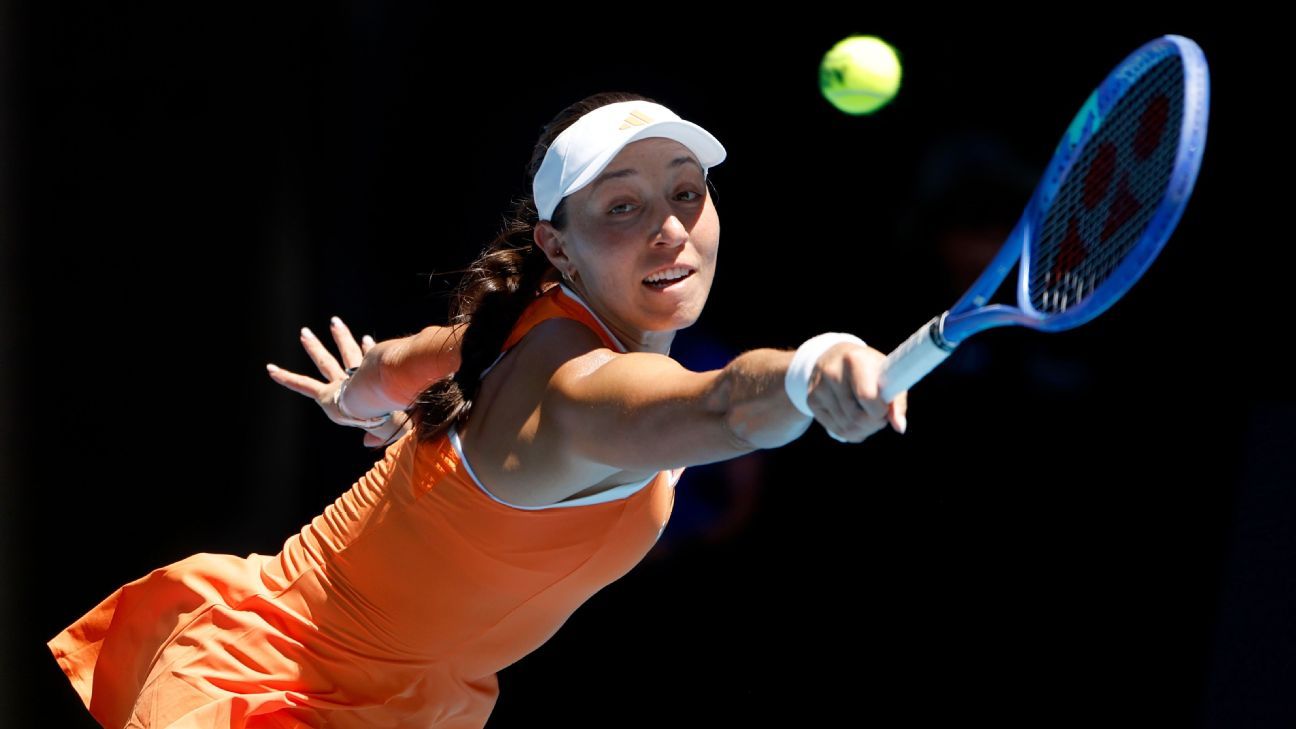
In the charged atmosphere of Rod Laver Arena, Jessica Pegula’s Australian Open run gained real edge. The world No. 6 had navigated the first three rounds with unflinching poise, dropping no sets, but this fourth-round clash against defending champion and close friend Madison Keys carried deeper stakes. Pegula’s 6-3, 6-4 victory wasn’t just another step forward; it dismantled Keys’ power game through sharp variety and mental steel, hinting at the breakthrough long expected from the 31-year-old American.
The matchup pitted Keys’ explosive shotmaking against Pegula’s efficient baseline control, yet Pegula dictated from the start. She stepped inside the baseline on returns, pressuring with deep chips to break early, then held serve with wide placement that stretched Keys across the court. Looping forehands disrupted rhythm, slices kept balls low on the hard courts, and flat crosscourt strikes finished points before Keys could unleash her inside-out weapons.
“[I’m] happy with the way I was able to serve I think on some really big, key points, execute my strategy,” Pegula said after the match.
“I have been seeing, hitting, moving, I feel like very well this whole tournament, and to be able to keep that up against such a great player as Madi and defending champion was going to be a lot tougher of a task today, but I think I was still able to do that really well.”
Composure absorbs power early
Pegula’s intent showed immediately, as she forced Keys into movement rather than letting her plant for aggressive returns. After 10 games, with Pegula leading 6-3, 1-0, Keys had struck 14 winners but committed 20 unforced errors, while Pegula balanced five of each. The Melbourne hard courts, with their medium pace and true bounce, amplified Pegula’s depth, turning Keys’ high-risk style into a liability as rallies extended under the arena’s glare.
Keys flashed her ceiling—a thumping serve, a down-the-line backhand winner slicing past Pegula—but consistency eluded her. Pegula absorbed those moments without flinching, varying her targets to prevent patterns from forming. The crowd’s murmurs built with each error, the tempo shifting as Pegula’s high-IQ game wore down the 2025 champion’s explosiveness.
This wasn’t mere survival; Pegula transitioned offense seamlessly, using a 1–2 pattern of crosscourt forehand into down-the-line backhand to exploit Keys’ weaker side. Her movement stayed crisp, body weight driving forward even on serves into the sun, refusing to let external factors disrupt focus. By forcing extra balls, she eroded Keys’ confidence, the physical and psychological toll evident in the lengthening points.
Variety sustains the edge
The second set mirrored the first, Pegula holding a slim lead built on absorbing serves and angling groundstrokes to pull Keys wide. Just one double fault from Pegula contrasted sharply with Keys’ six, underscoring her discipline amid the heat. She mixed underspin to dip the ball low, countering Keys’ flat hitting, then followed with heavy topspin to push deep and set up inside-in forehands.
“It was really important to focus on my serve,” Pegula said. “It was very tough on that one side serving into the sun. I lost that game. And I was kind of, like, you know what ... she hit a couple good shots, whatever. Just don’t dwell on it that much.”
“I needed to really stay focused. I think just keep my feet moving, keep my body weight going forward. Sometimes when you get a little nervous or playing really well, sometimes you kind of just relax, and it’s hard to do that against someone like Madi who can flip matches really quickly by hitting a couple of big forehands and winners, and all of a sudden she hits a couple good serves, and it’s already back to even.”
By match end, Keys tallied 26 winners against 28 unforced errors, while Pegula finished with 12 winners and 13 errors—a brutal stat line that highlighted how variety neutralized power. The hard courts’ skid favored Pegula’s adjustments, her slices staying low to disrupt Keys’ footing, while deeper returns chipped away at second-serve vulnerability. This execution under fourth-round pressure felt like a pivot, her season-long refinement of mental resilience paying off in prolonged rallies that tested endurance.
Friendship and history fuel momentum
The personal layer added weight: the two co-host “The Player’s Box” podcast, their bond turning the court into a stage of quiet rivalry. It marked the first women’s Australian Open match between top 10-seeded Americans since Serena Williams and Lindsay Davenport in the 2005 final, evoking U.S. tennis lineage under Melbourne’s lights. Pegula didn’t let sentiment soften her edge; instead, it sharpened her focus, dismantling the defending champion’s game with intelligence that screamed Slam readiness.
For years, Pegula’s consistency earned admiration but also labels like the great quarterfinal regular, questions lingering about her weapons and breakthrough timing. She arrived in Melbourne chasing that major title, past 2024 Slam stops casting shadows, yet dismissed the noise. “I felt like if I’m making quarters of a Slam, that’s pretty good,” she said. “So I never really understood the negativity towards it, or I guess just the headline of, you know, how does she get past the quarters?”
“I mean, the fact that I’m putting myself in that many positions I feel like is a feat in itself. ... [At the] US Open, I [made] finals, made semis, and that felt like normal. So to me it doesn’t really feel that much different. I think maybe even now I’m even more comfortable knowing that I’ve gotten further, it doesn’t feel, I don’t know, as big of a deal to be in the quarters.”
Now unbeaten in sets, with only 17 games lost through four rounds, Pegula advances to face No. 4 seed Amanda Anisimova in the quarterfinals—her 3-0 head-to-head edge tested at Slam level for the first time. Anisimova’s baseline aggression echoes Keys’ fire, but Pegula’s tactical layering, from serve placement to rally construction, positions her to extend the run. This win over the defending champion reframes her narrative, the breakthrough not looming but unfolding, as Melbourne’s hard courts become the canvas for her most complete tournament yet.