Serena Williams returns to Wimbledon singles with fresh purpose

Four years after her last singles match, Serena Williams steps onto the grass at the All England Club carrying renewed energy and a clear focus on the process rather than the outcome.
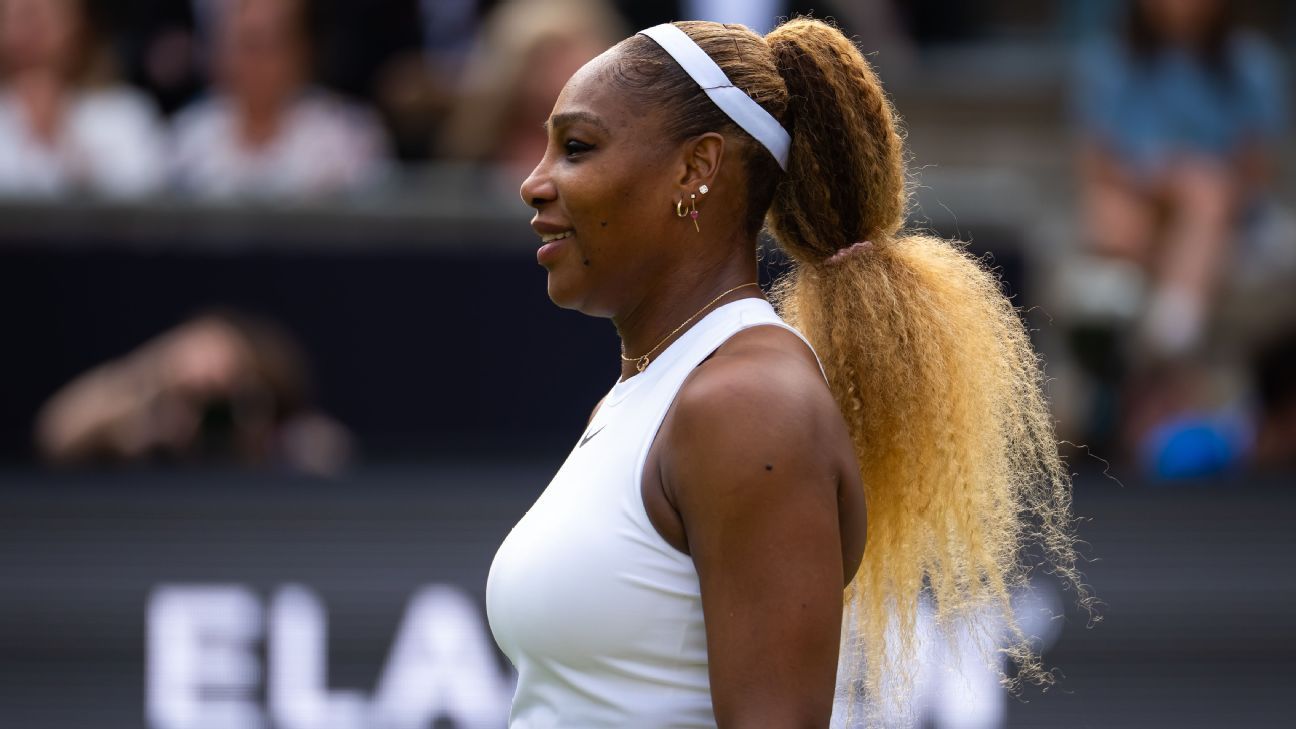
Serena Williams steps onto the grass at Wimbledon carrying the layered weight of four years away from singles competition, her first match against Maya Joint arriving with a mindset tuned to presence rather than proof.
On June 1, it became official after months of measured training that turned speculation into certainty. Serena Williams had weighed family schedules against physical readiness until the foundation felt solid enough to proceed. Williams had quietly reentered the testing pool the previous December, prompting immediate questions yet an initial denial on social media. The process unfolded with deliberate pacing, each step calibrated to avoid any sense of haste.
She loves this sport, loves to compete and as long as she is happy doing this -- and she is -- her team will be here with her and for her. The most important thing I and any of her team have said is, ‘As long as she is enjoying it, that’s all we care about.'
Williams was asked by host Savannah Guthrie during a January appearance about possible plans, the exchange stretching into an awkward ninety seconds of smiles and evasion before the topic was closed. Three weeks later she posted a video of herself serving on her own account, the caption noting the gap since September 2023, and within days the reinstatement cleared the required protocol. Alycia Parks joined the sessions in Florida as spring arrived, the two hitting regularly while keeping conversations light and focused on the present ball rather than future matches. Parks posted a video of one of those practices in early March, the footage showing clean ball striking without any deeper commentary on timelines.
Months of quiet preparation build momentum
Williams told Women’s Health that weight management had eased joint discomfort and improved recovery markers, allowing longer sessions without the fatigue that had lingered after earlier returns. The 44-year-old has shortened swing paths on both wings to generate pace without loading the body excessively before the point even begins. Practice patterns now emphasize grass-specific movement, with repeated drills on slice approaches and inside-out targets to offset the limited match play. The schedule moved from Florida courts to the grass at Queen’s Club, where doubles matches offered the first competitive rhythm.
Victoria Mboko partnered for that outing, her aggressive baseline patterns mirroring the power that once defined the elder player’s game. Williams and Mboko won the match 7-6 (2), 6-2, the victory providing immediate feedback on serve placement and movement under lights. The pair lost their next match when an injury ended the run, yet the experience fed directly into the next stop in Berlin alongside Karolina Muchova. That Berlin opener fell to Routliffe and Giuliana Olmos in straight sets, the loss revealing areas where timing still needed sharpening on faster surfaces.
Erin Routliffe and Nicole Melichar-Martinez tested the early patterns, forcing adjustments in first-serve percentages because grass rewards players who can close points quickly. The sequence of events kept the focus on incremental adjustments rather than immediate results. The final wild-card decision arrived on June 21, confirming a singles draw that would open against Maya Joint. The choice to begin on grass carried its own psychological layer, given the surface’s demand for precise footwork and quick reactions after limited match play.
Grass court adjustments test old patterns
Having last faced Ajla Tomljanovic before “evolving away” from tennis, the return places every pattern under fresh scrutiny. Andy Roddick noted on his “Served” podcast the unusual choice to start at a major rather than building through smaller events, highlighting the internal assurance required for such a leap. The 23-time major champion now mixes flat first serves with heavier kick options to pull the returner wide before stepping inside the baseline for the second shot. Rankings math adds another layer because the No. 53-ranked opponent has shown comfort hitting crosscourt angles on grass yet struggles when forced to defend down-the-line early in rallies.
Williams has drilled one-two patterns that begin with a wide serve and finish with an inside-out forehand aimed at the open court. These sequences reduce the time the opponent has to set up heavy topspin replies. Her team has emphasized recovery windows between points because the surface demands constant forward movement. Williams has added short, sharp net approaches after successful inside-in forehands to finish points before longer exchanges develop. Stubbs has observed the same assurance on the practice courts at the All England Club, where the emphasis remains on enjoying the process with daughters courtside.
The one-two combination of serve and first-strike forehand has shown flashes of its former weight, though the team continues to refine recovery between points to manage the longer rallies grass can produce. Each session now carries the added element of two young spectators whose presence reframes the daily pressure into something lighter. Crosscourt angles and inside-out patterns are being revisited with an eye toward efficiency rather than domination, the goal being sustained enjoyment across multiple events. The psychological arc that began in December has settled into a steady rhythm of preparation and acceptance, allowing the return to unfold on terms set by the player herself.
Enjoyment drives the next chapter
Williams has indicated she will continue playing competitively throughout the summer, giving her additional opportunities to refine these grass-court adjustments against varying opponent styles. The surface considerations favor her powerful first serve when she can locate it consistently in the body or wide corners. Stubbs has observed that Williams now prioritizes enjoyment over outcome, which allows her to experiment with different 1–2 combinations without the pressure that once defined her pursuit of records. The focus remains on adapting to the low bounce and fast conditions that reward early aggression rather than extended baseline exchanges.
Even other Grand Slam champions are surprised by her choice to play singles with such little preparation. The crowd energy at Queen’s Club carried over to the All England Club, where practice sessions drew clusters of players and coaches eager to watch the movement and ball striking. Williams and her family were most excited to check out some of the kid-friendly tourist sites in town, turning the week into a blend of competition and normal family moments. The summer calendar ahead offers further opportunities to test adjustments without the historical chase that once defined every appearance.