Holger Rune’s Steady Climb from Achilles Setback

Absent from the Australian Open’s roar, the 22-year-old Dane turns injury into introspection, rebuilding his game with the same fire that once toppled Djokovic.
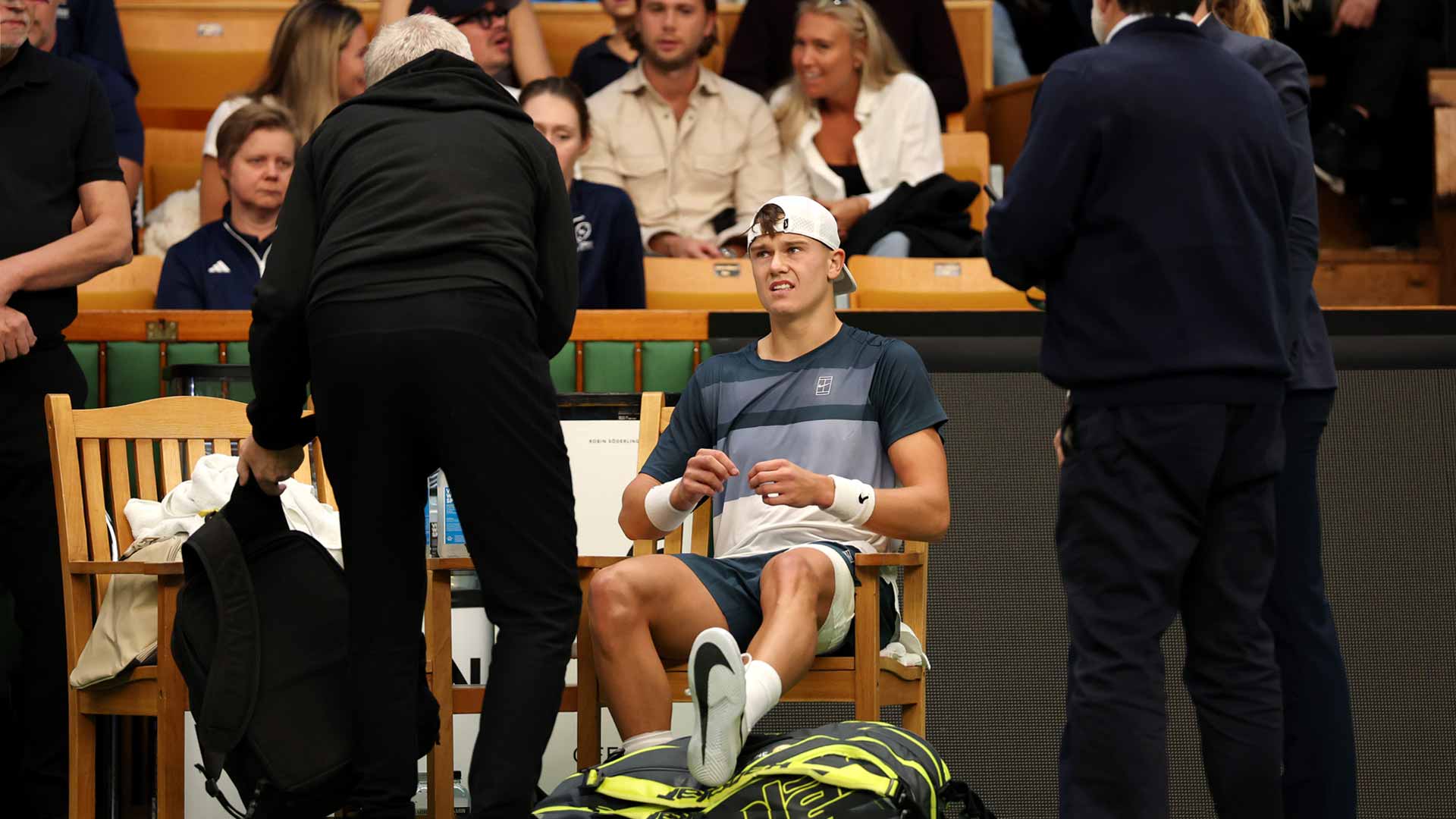
While the Australian Open unfolded under Melbourne’s relentless sun, baseline duels crackling with heavy topspin and crosscourt winners, one voice echoed missing from the draw: Holger Rune. The 22-year-old Dane, sidelined since an Achilles tear struck during a Stockholm match last October, watched the fortnight pass from afar. That abrupt end to his season cracked open not just his tendon but a deeper reckoning with the grind of elite tennis.
Rune’s path forward began with confusion, then resolve. An MRI confirmed the damage, leading to surgery that he credits for accelerating his return. His team, drawing on athlete-specific recoveries, mapped a timeline far shorter than the year-long hauls often cited in studies.
“It was very unexpected,” Rune recalled. “I didn’t know quite what happened when it happened, but after that the first focus was what to do now and how to move forward.”
Sudden pause fuels quiet reflection
Two weeks in a cast offered unintended vacation after a punishing schedule, but Rune quickly shifted to structure. Gym sessions built strength, easing into court work by December—first on one leg, feeding balls with controlled slices to preserve rhythm. Now, with both feet planted, he loads up on forehands, the ball leaping off strings with renewed bite.
This break peeled back the tour’s isolation, granting time in Denmark with family and friends that Rune rarely savors. Films and football matches filled early days, from Netflix binges to James Bond marathons on the sofa, leg elevated. Yet competition simmered, sparking in card games or gym challenges, keeping his edge honed without the court’s intensity.
“My time has actually been really busy, which is nice,” Rune explained. “I’ve had a very tight schedule because there are so many things to do in the rehab. It keeps me occupied during the time off.”
Support poured in from fans and peers, a reminder of the bonds beneath the rivalry. Messages from fellow players highlighted the collegial side of the circuit, fueling his drive amid the quiet. Rune misses the adrenaline of performing, the crowd’s surge during his inside-out lasers.
Rehab grind sharpens competitive edge
A footballer’s story of returning in four and a half months inspired Rune’s approach, emphasizing surgery’s speed for young athletes. Strict protocols guide progress—no shortcuts in building from light rallies to full swings, avoiding secondary strains on hard courts or clay slides. His youth accelerates healing, but discipline turns potential into precision.
“Luckily everything went really well,” Rune said. “My surgeon did an amazing job, the physios are great and my team is really good.”
Court sessions now pulse with energy, two-legged drives echoing his pre-injury power. The 1–2 pattern—serve deep, then approach with topspin—feels alive again, warding off rust that could blunt his aggression. This methodical rebuild addresses last season’s overload, where endless deep runs left little recovery margin.
Off-court pursuits like Formula 1 viewings in Qatar or attending football games occupy the mind, subtly refining strategy. Watching rivals’ patterns informs adjustments, such as varying down-the-line backhands to disrupt returners on faster surfaces. Competitiveness never fades; it channels into rehab battles, proving his inner fire endures.
“I have always been competing since I was young. Always eager to win and fight. I had that dragon inside me on court. I still have it. This injury is a moment to show myself how much strength I have and how much I’m willing to put into it. I miss the adrenaline and competitiveness, even at home doing gym exercises or small games just to feel it again. I am getting my competitiveness out that way.”
“We searched a lot. With Achilles injuries, most studies are on older people, and many don’t have surgery and recovery can be a year,” Rune said. “But for athletes it’s different and quicker as we have the surgery. Surgery was the most natural thing for me to speed up the process in a healthy way.”
“One football player reached out to me. He had the same injury and was back after four and a half months. There are strict guidelines and you can’t skip steps. I’m strong and young, so I believe I’ll recover quickly, but it takes hard work and smart work.”
Break reshapes career trajectory
Rune burst into prominence in 2021, stunning Novak Djokovic by claiming a set at the US Open as a qualifier with fearless passing shots. Trophies followed in 2022, mastering Munich’s clay before dominating Stockholm’s hard courts. That Paris Masters 1000 run, toppling Djokovic for the title, rocketed him into the Top 10—the youngest champion there since Boris Becker in 1986.
Qualifying for the Nitto ATP Finals and adding Barcelona hardware solidified his Top 15 presence, but the pace exacted a toll. Deep excursions at Indian Wells and beyond ignored subtle fatigue signals, culminating in the Stockholm snap. Now, reflection guides a wiser path: balancing tournament loads with body awareness, eyeing long-term slams over weekly sprints.
“When you play every week, you don’t really stop to assess things,” Rune noted. “I think it’s about managing tournaments better and listening more to my body. Sometimes you push too much, and now it was too much for my body. In the future, I’ll try to look at the bigger picture, not just the next goal, but how I feel physically and mentally. I think that is important for my longer-term aims.”
“But this break, I have had a chance to look back. It meant a lot [to win Barcelona]. Paris is still my most memorable win, but every title is special. Last season that was the perfect week, and Indian Wells [final] was also a great week.”
“That’s one of the parts I miss most, performing on court and feeling the support. I’ve also had nice messages from a lot of players. Even though we’re competitors, we’re colleagues and want the best for each other.”
“It’s amazing, especially now that I’m hitting on two legs,” Rune said. “It’s starting to feel really nice. Before it was nice too, but it’s not quite the same when you know what you’re capable of. Now it’s more fun because I can actually put some energy behind the ball.”
“There’s still a lot of rehab to do, but just being back on the tennis court is really nice. I think it’s going to be helpful when I come back that I’ve kept the swing and everything going, because we don’t want other injuries from too much time off. So far I think we’ve used our time the right way.”
“It’s nice to be more with family and close friends,” Rune said. “We don’t really get that chance normally. I have watched a lot of films, especially at the beginning after the surgery. I was on the sofa with the leg up watching Netflix and some James Bond as well. Now I’ve been to a football game, watched other sports and tried to occupy my brain with things other than tennis. I watched Formula 1 when I was in Qatar, too.”
“Right after the injury, I really needed rest anyway. I was at the end of the season and ready for a vacation, just not in this way. The first two weeks in the cast went really quickly. I was relaxing, going to the gym a little bit, and it was nice to have time off. After that it became more intense. I never thought it would be forever. I’m really young and healing really fast so far, which is good.”
As 2026 looms, Rune’s sessions build momentum, his strokes carrying the promise of past triumphs. This enforced pause forges not just a healed body but a recalibrated mind, ready to reclaim stages with tactical poise and unyielding drive. The court calls, and he’s answering stronger.