De Minaur shoulders Australia’s Open dreams

As the top seed flies the flag at Melbourne Park, Alex de Minaur confronts the weight of a nation’s hopes and a brutal draw at the 2026 Australian Open.
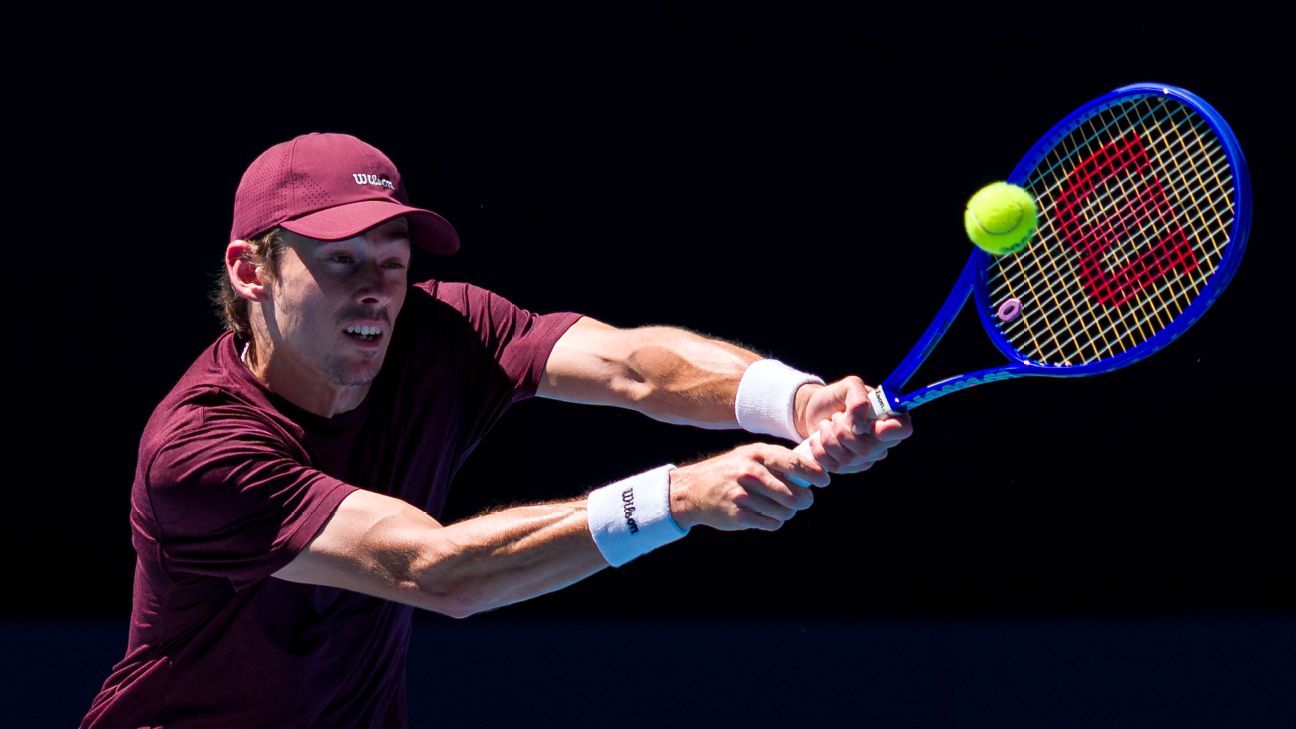
In the sweltering heat of Melbourne Park, Alex de Minaur steps onto the court carrying more than just his racket. The No. 6 seed, Australia’s highest-ranked player, feels the pulse of a nation that hasn’t crowned a men’s champion here since 1976. His 2025 breakthrough—quarterfinals at this very Slam, a Washington Open title, and a year-end high—sets the stage for even greater expectations in 2026.
De Minaur’s path forward brims with intensity. He sidestepped an early clash with former Wimbledon finalist Matteo Berrettini after a withdrawal, now facing lucky loser Mackenzie McDonald in the opener. Frances Tiafoe could await in the third round, Alexander Bublik in the last 16, and Carlos Alcaraz in the quarters—a gauntlet that demands flawless execution from the first ball.
“It basically just means that I’m going to have to be firing from the word ‘Go,'” De Minaur said of his path.
Turning pressure into fuel
The Australian Open always amplifies the stakes for home players, but for De Minaur, it’s a personal crucible. He thrives on the crowd’s roar, channeling it into bursts of speed and precision that define his game. Last year’s quarterfinal run marked his deepest venture here, a psychological milestone that rebuilt confidence after leaner years.
Reflecting on 2025, he highlights resilience amid ups and downs. Reaching two ATP finals, including that hard-fought Washington triumph on the 500-level courts, showcased his improving serve and return aggression. Yet, the mental grind of close calls lingers, pushing him to refine his one–two punch: a slicing serve followed by a deep crosscourt return to pin opponents back.
Offseason brevity underscored the tour’s relentlessness—a mere week-and-a-half with family in Spain and Monaco before ramping up. No Maldives escape for him; instead, a focused reset to combat fatigue. This mental recharge, he explains, sharpens his edge against the psychological toll of high-stakes Slams.
Starting the year at the United Cup reignited his fire. Representing the green and gold in Sydney, he notched a gritty three-set win over Hubert Hurkacz, the red-hot force from Poland’s championship squad. That victory, laced with defensive slices and inside-out forehands, echoed his tactical adaptability on faster surfaces.
The home crowd’s energy is his secret weapon. Australian fans, patriotic and unrelenting, back players from the opening point. De Minaur engages them deliberately, drawing surges of adrenaline during tight holds—especially when his flat backhand slices force errors under pressure.
“They can get me out of a hole and ultimately all I want to do is play some good tennis for them. it’s extra motivation,” he shared. As the top-ranked Australian, the Open multiplies this dynamic. He views the added scrutiny not as burden, but as excitement that elevates his play.
Walking onto Rod Laver Arena, the packed stands evoke childhood dreams, transforming nerves into rhythmic baseline rallies. Success this year means surpassing last January’s mark. While he avoids fixating on outcomes, a semifinal push feels within reach if his heavy topspin forehand disrupts rhythms early.
The pressure narrative builds season-long: every practice session in Monaco hones the mental fortitude needed to sustain leads against comeback artists. But he has a tough draw. The Plexicushion surfaces here, medium-paced under the heat, reward his flat shots that skid low, but demand early aggression to avoid grinding rallies.
Facing the unbeatable duo
De Minaur’s biggest hurdles loom in Jannik Sinner and Carlos Alcaraz, against whom he’s a combined 0–18. These matches test his limits, demanding variations like low-bouncing underspin to counter their power. The era they dominate raises the bar, forcing constant evolution in his all-court game.
Preparation shifts subtly for them: more emphasis on serve placement to avoid their lethal returns, and tactical tweaks like approaching the net after a solid 1–2 pattern. He’s experimented with inside-in forehands to wrong-foot their coverage, but breakthroughs remain elusive. Still, the challenge fuels his drive, a psychological arc from frustration to determination.
His third Ultimate Tennis Showdown title in December affirmed his fast-format prowess, where quick points suit his speed. That lightning-bolt trophy, won on indoor hard courts, mirrored the explosive starts he craves at Melbourne—short points ending in winners rather than marathons.
Pinch-me moments trace back to Sydney triumphs: his 2017 debut in packed stadiums he once trained on, and the 2019 ATP title that launched his rise. Iconic nights like Lleyton Hewitt’s dawn epic against Marcos Baghdatis in 2008, or the Nadal-Djokovic finals, inspired a kid dreaming of similar glory. Those memories anchor him amid 2026’s pressure cooker.
“I just want to do Australia proud,” De Minaur emphasized, capturing the emotional weight of his home Slam. The draw’s brutality amplifies the season’s narrative arc. After McDonald, Tiafoe’s athleticism could force extended rallies, testing endurance.
Bublik’s unpredictability—wild serves mixed with drop shots—requires vigilant footwork, while Alcaraz’s variety in the quarters demands peak defensive scrambling. De Minaur’s level, he believes, matches theirs on good days. His 2025 win tally and year-end ranking signal progress, but consistency against top seeds hinges on mental resets after errors.
The United Cup’s team vibe carried over, blending individual grit with collective pride. Personal support bolsters this journey. His fiancée, Katie Boulter, ranked No. 113 on the WTA Tour, offers grounded perspective.
Their differing styles—her power versus his finesse—spark mutual insights, from point construction to handling match-point tension. Off-court, she tempers the tour’s isolation, a vital psychological buffer. Wedding plans weave into the chaos, squeezed between packed calendars.
With limited windows, decisions prioritize shared downtime, underscoring life’s balance amid professional demands. This normalcy grounds him, preventing burnout in a year defined by escalating expectations.
Them not talking tennis constantly preserves sanity, fostering a life beyond baselines. Yet, when strategies surface, they refine approaches—like using slice to disrupt Boulter’s baseline game, adaptable to ATP foes.
Revealing the off-court spark
De Minaur’s public persona extends beyond strokes. His “Best Actor” nod at the ATP Finals, complete with a tiny trophy, highlights his lighter side. Social videos let him showcase goofiness, countering the intense competitor fans see during matches.
One fan favorite: his parking lot attendant skit, blending humor with tour life. These clips humanize him, easing the psychological load of constant scrutiny. As he noted, they reveal a laid-back vibe, essential for mental recovery between Slams.
We have the best staff ever 😍#TennisParadise pic.twitter.com/0OXhEzvnZ5
— BNP Paribas Open (@BNPPARIBASOPEN) March 13, 2024
The 2026 Open narrative peaks here: a player evolving under pressure, blending tactical sharpness with emotional depth. From United Cup highs to draw daunting paths, De Minaur’s arc promises drama. If he harnesses the crowd’s lift and refines his patterns against elites, Melbourne could etch his name deeper into Australian lore.
His preparation emphasizes recovery—gym sessions before racket work, mental drills for focus. The fast Australian hard courts favor his speed, allowing quick inside-out redirects that turn defense into offense. Yet, sustaining that through five sets against Alcaraz’s endurance tests his season-long resolve.
Childhood idols like Hewitt fuel this quest. That 4:34 a.m. finish in 2008, under dawn lights, symbolized unbreakable spirit—a template for De Minaur’s own late-night battles. Nine titles since Sydney 2019 affirm growth, but the Slam drought adds urgency to every forehand.
Crowd interaction remains key. In tight games, he pumps fists to ignite roars, creating momentum shifts. Fans’ unwavering support, expecting full effort, mirrors his ethos: give everything, win or learn.
This reciprocity builds psychological resilience, turning potential cracks into comebacks. Against Sinner’s flat power, he eyes more net rushes post-serve, varying with drop shots to disrupt rhythm. Alcaraz’s creativity demands preemptive angles—down-the-line passes after luring him wide.
These adjustments, honed in practice, form the tactical spine of his pressure narrative. The United Cup quarters, though short of glory, showcased team synergy. Beating Hurkacz involved early breaks via aggressive returns, a blueprint for Open openers.
McDonald’s qualifier fatigue could open doors, but underestimating him risks an upset in this high-wire act. Boulter’s presence at joint events adds layers. Shared tournaments mean mutual cheering, amplifying wins’ joy and softening losses’ sting.
Her No. 113 ranking belies her influence, offering tactical nuggets like spin variation on returns—tools De Minaur adapts seamlessly. Offseason’s brevity highlighted priorities: family time over extravagance. No player lounge in the Maldives; just recharge in Monaco, plotting 2026’s assault.
This grounded approach sustains his arc, from 2025’s peaks to Open aspirations. Social media’s fun side relieves tension. The parking attendant video, with its playful banter, drew laughs and connections.
Fans referencing it courtside eases pre-match nerves, a psychological hack in his toolkit. As January 18 dawns, De Minaur’s first-round date with McDonald sets the tone. A straight-sets cruise builds belief; any wobble tests mettle early.
The draw’s escalation—from Tiafoe’s flair to Bublik’s chaos—mirrors the season’s building pressure, demanding adaptive psychology. His UTS dominance, third title in the fast format, suits Melbourne’s pace. Short points reward his anticipation, slicing serves to skid low and force weak replies.
This edge, psychologically empowering, positions him to challenge the duo’s hegemony. Iconic finals—Nadal versus Federer, Djokovic’s defenses—inspired venue reverence. Hewitt’s Baghdatis marathon, ending at record 4:34 a.m., etched endurance’s value.
De Minaur channels that, viewing late holds as triumphs in Australia’s saga. 2025’s two finals underscored consistency, Washington’s hard rewarding his topspin. Quarterfinals here last year broke barriers, a mental win over self-doubt.
2026 extends that, aiming for contention amid national hopes. The green and gold’s weight? He wears it proudly. United Cup’s Sydney cheers previewed Open frenzy, where every cheer bolsters resolve.
This interplay—crowd, tactics, psyche—defines his path to potential glory. Wedding logistics, amid tours, highlight life’s weave. Scarce dates forced choices, but shared decisions strengthen bonds.
Boulter’s understanding navigates turbulence, her support a constant in variable fortunes. Actor award celebrated personality, videos bridging court intensity and off-duty ease. Goofy roles remind him—and fans—of joy’s role in longevity.
As pressure mounts, this balance sustains the arc toward breakthrough. De Minaur’s story unfolds in real time: a nation’s proxy, tactician, everyman. Melbourne’s courts await his fire, ready to ignite or test the dream.