Osaka quiets the noise to crack Wimbledon open

Naomi Osaka treated Centre Court like an extended practice session and dismantled the world number one, leaving the bracket stripped of its hierarchy and the remaining field chasing rhythm on grass.
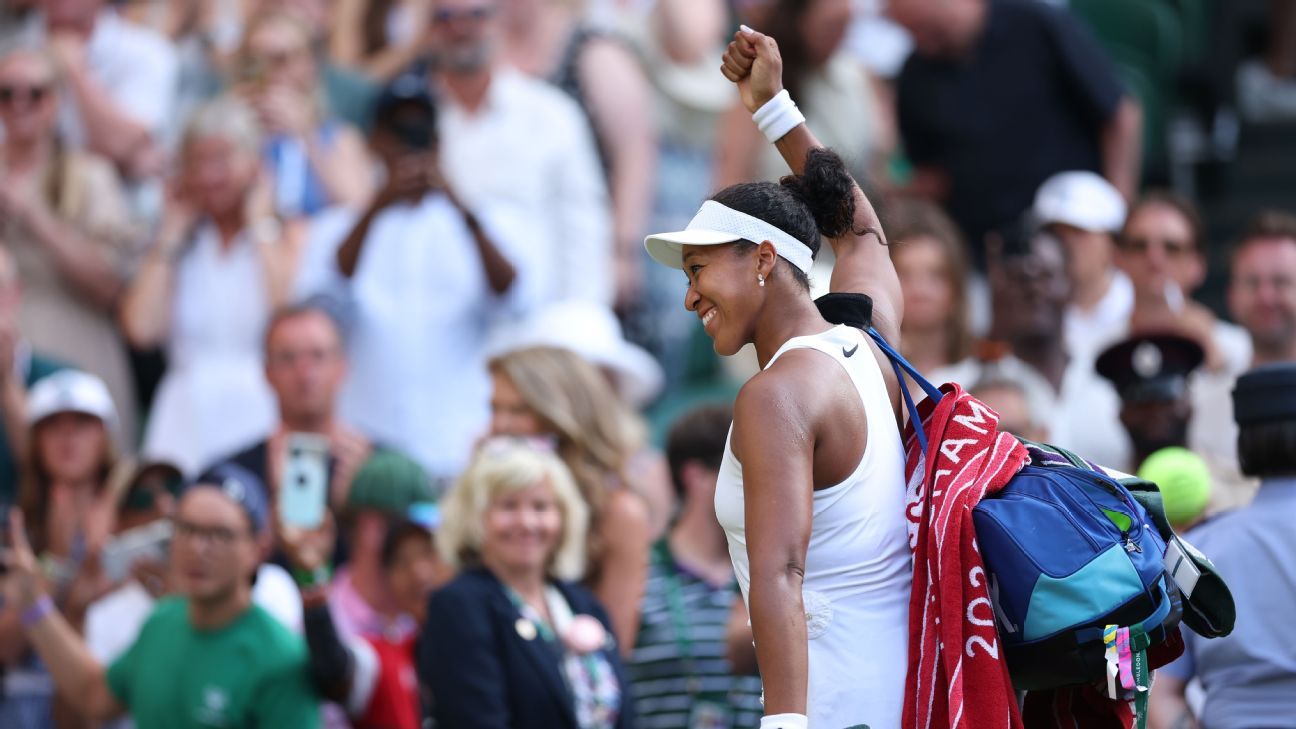
The crowd sensed the upset before the final point landed on Centre Court. Naomi Osaka carried the quiet resolve of someone who had spent months rebuilding rhythm on grass after a foot scare at Bad Homburg. Across the net stood Aryna Sabalenka, whose streak of dominance had begun to feel like an obligation rather than a choice.
“it’s been a long time since I’ve had so much fun on the court and to do it here it really means a lot. I mean going into this match, I lost to her like three times in a row so that really sucked. So I wanted to turn it around and I’m really glad I had the opportunity to do that.”
Season-long scrutiny shapes every point. Osaka had absorbed three straight losses to the world number one earlier in the year, each one replayed in post-match press conferences that asked the same questions about her return from maternity leave. She arrived in London with a new habit of treating matches like extended practice sessions, shielding herself from the scoreboard pressure that had tripped her up in Madrid.
Osaka builds early control with flat strokes
The weight of a season defined by near misses hung over Centre Court long before the first ball was struck. Osaka used a high first-serve percentage to set up short balls that she attacked inside-out or down-the-line. The approach paid off immediately when she broke in the third game and never looked back through the opening set. She kept her return position slightly deeper on second serves to cut off Sabalenka’s inside-out forehand angles. This adjustment limited the world number one’s ability to dictate with heavy topspin and forced more errors into the net or wide of the sideline.
Grass rewarded the flatter trajectory Osaka preferred, allowing the ball to skid through rather than sit up for Sabalenka’s preferred contact point. Early in the match Osaka targeted the Sabalenka backhand with crosscourt slices that stayed low. The slice forced awkward stances and reduced the time Sabalenka had to load for her own heavy groundstrokes. By the middle of the first set the pattern had become a reliable 1–2 combination that Osaka repeated without variation until the set was secured. Iga Swiatek and 2022 champion and world No. 2 Elena Rybakina had already exited, so the bracket favored players who could sustain aggressive baseline patterns.
she secured the 6-2, 7-6 (2) win and her place in the quarterfinals. Osaka, 28, jumped in celebration -- her first sign of emotion for much of the day -- and those in the stands jumped to their feet with her. The surface considerations at the All England Club rewarded the decision to stay aggressive on first-strike tennis rather than engaging in extended rallies where Sabalenka’s raw power might eventually prevail. Osaka had never defeated a top-10 player on a non-hard surface before this result. The victory over the world number one therefore carries extra weight for her grass-court confidence heading into the later rounds.
Draw opens after top seeds fall
Although Sabalenka is a three-time semifinalist at Wimbledon and nearly made her first final last year before being defeated by Amanda Anisimova in a heartbreaker, Osaka has also been playing well on the grass this season. After previously struggling on the surface and never advancing beyond the third round at Wimbledon, Osaka made her first grass-court final last week at Bad Homburg, a 500-level event. She had to retire from the match as a precaution with a foot injury but arrived in London with momentum and confidence on her side. Through her four matches at the event, she is yet to drop a set. She has lost just one set on grass this season.
The tactical discipline on display against the top seed suggests Osaka has solved the movement questions that once limited her on the low-bouncing surface. It was Osaka’s first win over a world No. 1 since defeating Ashleigh Barty in 2019, and arguably her biggest victory since coming back from maternity leave at the start of the 2024 season. In fact, with the fourth round still in action, Jasmine Paolini is the only woman left who has ever even reached the final. Jessica Pegula, who advanced to the last eight at the All England Club for the second time earlier Sunday, is the top seed remaining at No. 4. She will play two-time major champion Coco Gauff on Tuesday.
As for Osaka, the No. 14 seed, she will play No. 10 Karolina Muchova, now a three-time quarterfinalist, as both look to advance to their first Wimbledon semifinal. Muchova had a 6-1, 1-0 lead over Osaka in the Bad Homburg final before Osaka stopped the match. They have a 3-3 career head-to-head record, and Osaka defeated Muchova in the US Open quarterfinals in September. The other half of the draw, which plays its fourth-round matches on Monday, is even more unpredictable. Ninth-seeded Linda Noskova is the highest-seeded player left. She will play Madison Keys, the only player remaining in the bottom half of the draw who has won a major title.
Sabalenka reflects on rare straight sets loss
After losing in the quarterfinals at the French Open to Diana Shnaider last month, she said she wanted to quit tennis and has since said it took a few days to get out of that mental space. But on Sunday, she took a lighter tone. Sabalenka admitted the level from Osaka was simply too high on the day and vowed to recalibrate before the hard-court swing. The tactical lessons from this loss will likely center on improving second-serve returns and finding ways to step inside the baseline earlier on grass.
Sabalenka spoke afterward with visible fatigue, admitting the opponent had simply overpowered her on the day. She referenced the quarterfinal loss to Diana Shnaider at the French Open that had left her contemplating a break from the sport. This time the tone was lighter on the surface, though the disappointment remained clear in every clipped answer. The loss ended a remarkable run of twenty one consecutive tiebreak wins at majors and marked her first straight sets defeat at a Slam since the 2020 US Open. Sabalenka indicated she would step away briefly, echoing the recovery plan that preceded her 2025 US Open title after a similar summer reset.
The psychological toll of carrying favorite status through a draw that had already removed three prior champions was evident even in her measured words. Osaka’s path forward now sits inside a bracket stripped of its original hierarchy. With no previous Wimbledon champion remaining, the tournament has become a test of who can manage the sudden absence of external pressure. Osaka has already shown she can convert that freedom into focused tennis. The quarterfinal against Muchova will reveal whether the same calm can survive another high stakes afternoon on grass.