Zverev claims first major title in Paris

An unusually open draw at Roland Garros handed Alexander Zverev the chance he had waited years for, and the German finally converted after navigating familiar pressure points against Flavio Cobolli.
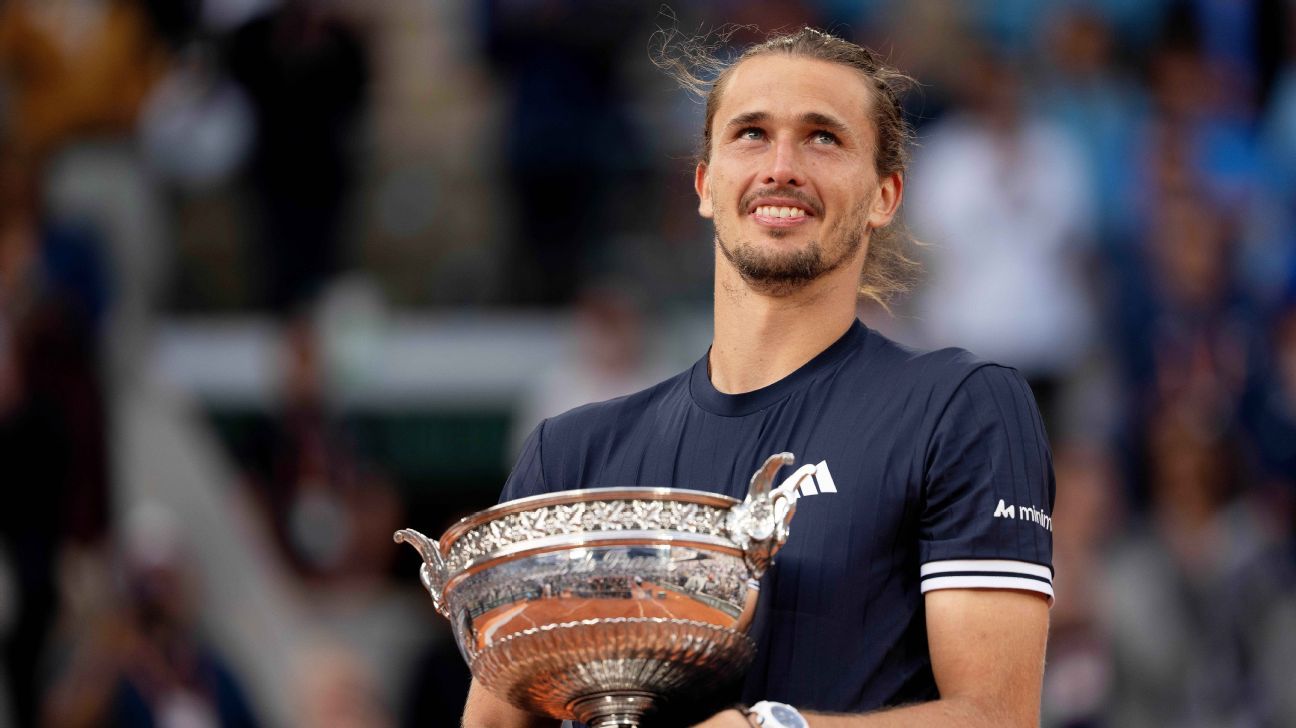
Relief arrived in waves for the German after years of near misses. Alexander Zverev fell to the clay once the final point landed, the weight of three prior major finals lifting in an instant. The path had opened when wrist issues sidelined one top contender and early exits removed two others, yet converting that opening still required steady tactical control across seven matches.
His serve, once prone to double faults under stress, now functioned as the primary weapon that prevented any late surge. First-serve points won climbed steadily through the fortnight, reaching 80 percent in the fifth set of the final when the match tightened. Clay rewarded the extra margin he built into slice out wide, pulling his opponent off the baseline and creating shorter replies that his improved forehand could attack.
“I want to say thank you to everyone. We have been through so much. We have been through injury, heartbreaks, losses, we have been losers at times in the most important moments. At the end of the day, we are Grand Slam champions now, and that is what counts.”
Off-court matters had complicated his public image, including being accused by two former partners of domestic abuse, yet the Paris atmosphere stayed focused on the tennis once the final ball was struck. The 29-year-old had spent recent seasons sharpening his first-serve percentage on slower surfaces, moving away from the flat deliveries that once invited returns. Against Flavio Cobolli those adjustments proved decisive in the deciding set after his five-set victory.
Old doubts surface before the finish
Memories of the 2020 final against Dominic Thiem surfaced in the fourth-set tiebreak when nerves briefly returned. Cameras caught the former champion in the stands, a reminder of the collapse when Zverev had served for the title only to watch it slip away. In that moment the tendency to push rather than attack returned briefly, yet he reset between points with longer routines and trusted the revised mechanics.
Carlos Alcaraz and Novak Djokovic had once blocked similar paths, but their absences removed the need to manufacture extra pace on clay. Zverev instead leaned on percentage tennis, using the 1–2 combination of serve plus forehand to dictate rather than trade. Earlier losses had exposed a passive forehand that opponents exploited by targeting the middle of the court. Hours on the practice courts with heavier topspin and a slightly more closed stance produced a more reliable crosscourt option that now stays inside the lines under fatigue.
Clay surface rewards serve depth
Against Cobolli the pattern appeared repeatedly: a deep crosscourt forehand followed by an inside-out finish when the Italian left the ball short. The serve, which had wildly let him down against Thiem with numerous double-faults, has become a huge weapon. His forehand, once a problem, is now vastly improved, allowing him to vary tempo without losing control.
Roger Federer and Rafael Nadal once set the standard for sustained excellence on the surface. Zverev now joins that list as the first German man to win a major since 1996. The tactical refinements that turned potential into results will be tested again soon, yet the template for handling big points on clay is now firmly in place.
Forward path opens with title secured
With the major monkey removed, future scheduling decisions gain flexibility. Zverev can now target hard-court swings with less accumulated pressure, knowing clay success has already altered his legacy. The same serve depth and forehand adjustments that worked on the slow surface translate to faster conditions when opponents have less time to set up.
He has spoken of the relief that nobody can remove the achievement, yet the drive to add more remains intact. Future draws will test whether the same composure travels to quicker surfaces. The adjustments made this fortnight, especially in high-pressure service games, provide a template he can repeat. “No matter what happens, I will always be a Grand Slam champion,” he said Sunday. “And nobody can take that away from me.”