Alex Eala shoulders Philippine tennis’s bold ascent

From packed stands in Melbourne to a historic home tournament, the 20-year-old phenom turns every match into a milestone for a nation discovering its place on the WTA stage.
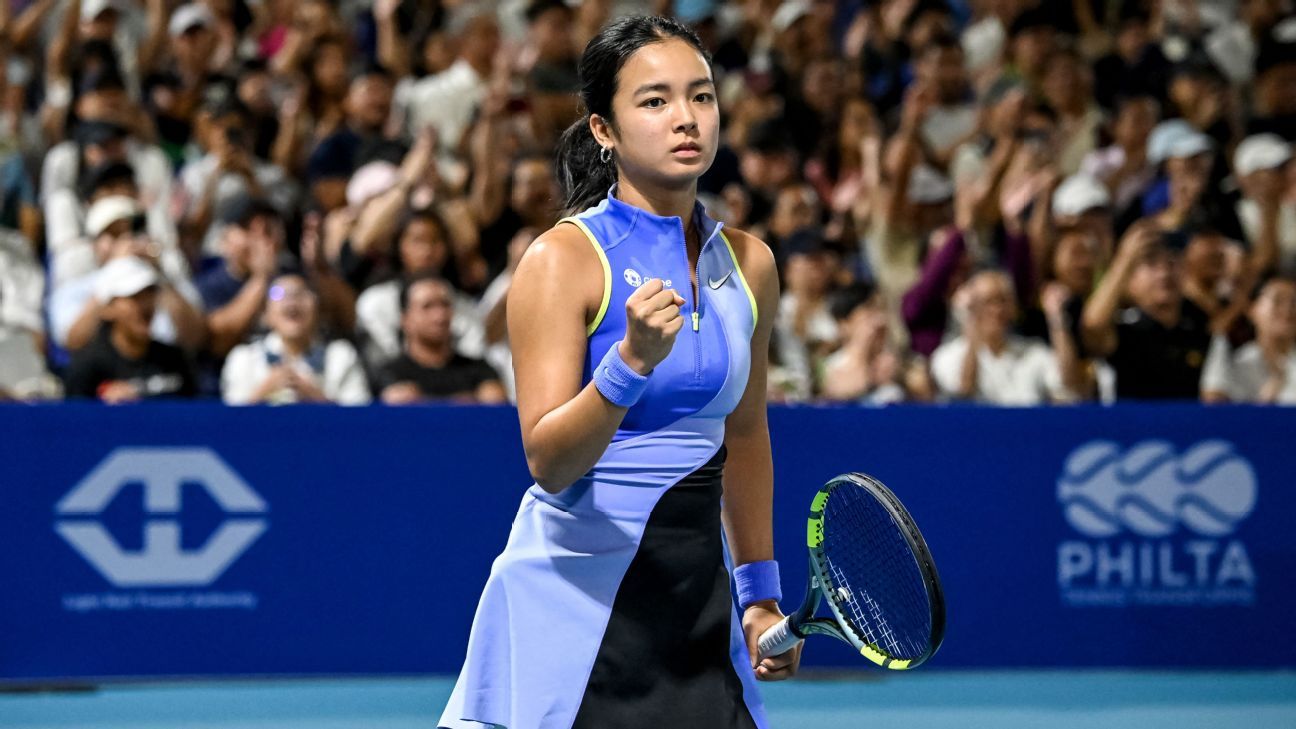
Melbourne Park’s Court 6 hummed with an electric undercurrent on a balmy afternoon in the 2026 Australian Open first round. Filipinos streamed in, flags fluttering, their voices rising in waves that drowned out the usual quiet of early play. Alex Eala stepped across the baseline, her 20-year-old frame coiled with the quiet intensity of someone who knows the eyes of a country track her every swing.
Her semifinal charge at the 2025 Miami Open had cracked open the door to global recognition, pulling Philippine tennis from obscurity into the tour’s steady rhythm. She followed that surge with deliberate climbs in the WTA rankings, her game evolving through hard-fought sets that demanded precision on fast surfaces. Direct entries to all four Grand Slams followed, but the breakthrough etched deeper when she claimed the first US Open singles victory for a Filipina, outlasting Clara Tauson in a gritty exchange of crosscourt rallies and down-the-line passes.
“This tournament, even though not yet finished, is already a great success. The turnout, the excitement, the feedback from players and WTA officials -- it’s amazing. For a first edition, I’m just happy to be part of it and to see it unfold,” said Eala, on having a WTA tournament in the Philippines.
Early setbacks fuel fiercer drive
The pressure mounted under Melbourne’s glare, every point a referendum on her progress. Eala’s early exit at the Australian Open against Alycia Parks exposed the raw edges of her baseline aggression, Parks’ blistering inside-out forehands forcing hurried slices that skimmed the net. Still, the packed stands erupted in support, their chants a psychological anchor that amplified the momentum she had built, turning defeat into a spark for what came next.
Days later, that loss pivoted her toward home soil and the inaugural Philippine Women’s Open, the first WTA-sanctioned event in the country—a direct echo of her rise. The transition from Melbourne’s rebound ace to Manila’s humid courts tested her adaptability, her heavy topspin forehands dipping sharply to control rallies against familiar foes. Without her, envisioning such a tournament feels remote; her presence infused it with instant weight, drawing crowds who sensed the shift in Philippine tennis’s trajectory.
Home crowds sharpen collective resolve
Local players like Tennielle Madis, Elizabeth Abarquez, Kaye Emana, and the doubles pair of Angeline Alcala and Joanna Peña stepped into the fray, their flat strokes meeting the tour’s depth in winless openers. Eala framed these outings as essential exposure, the kind that hones footwork and spin recognition in a sport starved of infrastructure back home. Her own matches pulled families courtside, their cheers blending with the slap of balls on clay, a reminder of the passion waiting to be channeled.
In the quarterfinals, Eala’s quarterfinal loss to eventual champion Camila Osorio revealed tactical chinks—Osorio’s steady defense absorbing her one–two patterns, forcing errors on extended points. Yet the week delivered net gains, sharpening her adjustments on slower surfaces and underscoring patience as the key to long-term climbs. Disappointment lingered, but she absorbed it with the poise of someone who views losses as blueprints for refinement.
“Having a WTA tournament here is a huge stepping stone and a wake-up call. Filipinos are hardworking and passionate, and if we start to invest in our tennis players, we can slowly build more champions,” Eala said.
The Manila stint reinforced her role beyond the lines, inspiring juniors with a path of elite training abroad and pro-circuit grit. Her international bounces—from hard courts to clay—layered mental stamina, each shift demanding fresh reads on opponents’ rhythms. Back home, the roar grounded her, a cultural tether that fueled pride amid the tour’s isolation.
“I think it was an overall good week. Of course, I’m disappointed about today. I think I had better days, but it is what it is. I just have to accept it, and there’s always next weekend,” Eala added.
Global stages demand evolving poise
Her return to the circuit at the Mubadala Abu Dhabi Open carried that momentum forward, the No. 45-ranked player dispatching Zeynep Somnez with a crisp mix of wide serves and crosscourt forehands to reach the round of 16. Abu Dhabi’s outdoor hard courts rewarded her post-Manila tweaks, underspin backhands varying heights to disrupt flat hitters. At 20, she navigates the grind with clarity, her game a blend of power and placement honed across continents.
Eala’s arc—from Miami’s highs to Melbourne’s heat, Manila’s embrace to desert winds—mirrors the psychological demands of pro tennis, where jet lag meets expectation in every warmup. She stands as the benchmark now, her resilience pulling Philippine tennis into sharper focus, with federations eyeing academies and surface-specific drills to nurture the next wave. As crowds swell and results stack, her path points upward, each match a step toward deeper runs and a nation fully in the game.
“I think just being so international with my profession and finding myself in different places in the world -- I find that where it’s where you come from becomes a big part of who you are. It really allows you to appreciate really where you come from, your culture, and it really makes you proud to be Pinoy,” Eala said.