Fonseca turns deficit into history at Roland Garros

The Brazilian teenager absorbed early pressure on Philippe-Chatrier before unleashing inside-out forehands and decisive aces that ended Novak Djokovic’s bid and opened the draw wide.
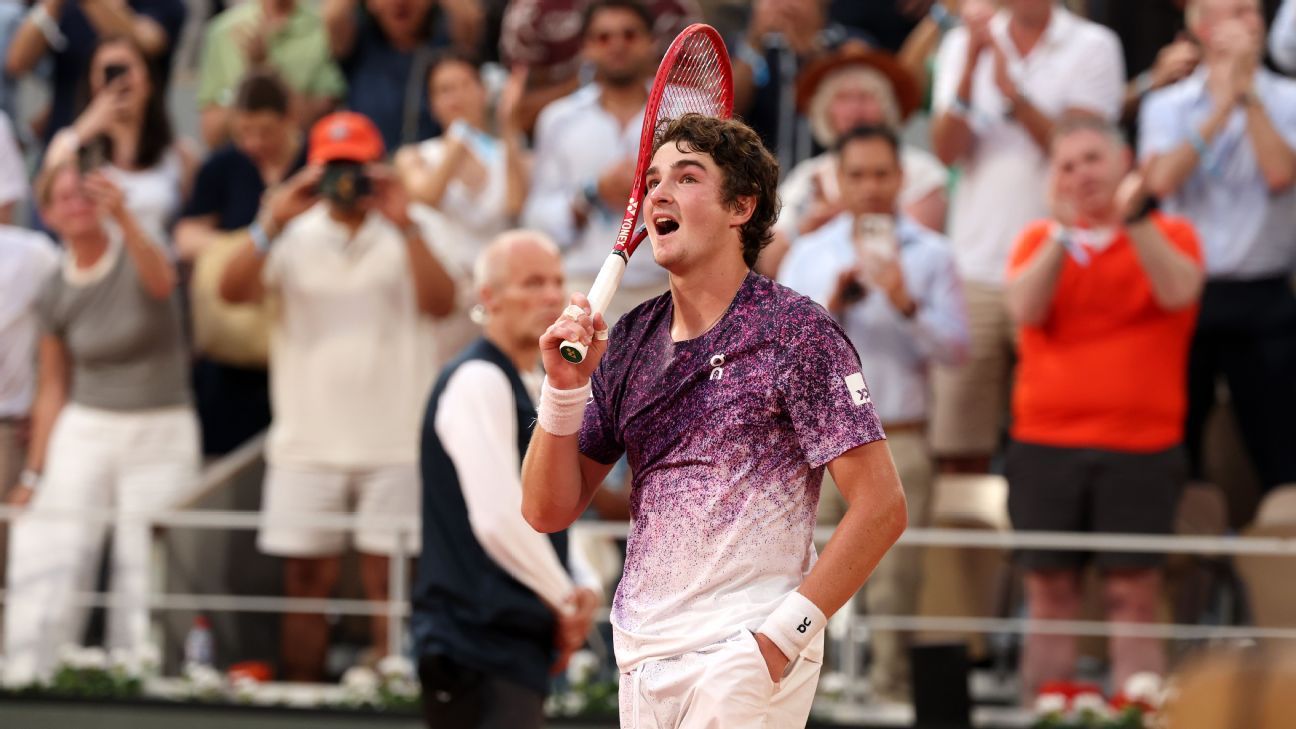
Joao Fonseca walked onto Philippe-Chatrier carrying the quiet pressure of a season defined by promise and the sudden absence of familiar giants. The Brazilian teenager had already navigated two fifth-set recoveries in the draw yet faced the most daunting test against a player whose record after two sets at majors stood at 288-1. Early on the contest followed the expected script with precise crosscourt exchanges and heavy topspin keeping rallies long on the slow clay.
Opening sets reveal hidden strain
Novak Djokovic controlled the first two sets through disciplined one-two patterns that pinned Joao Fonseca behind the baseline. The 39-year-old absorbed the heat and the yellow-and-green crowd noise without visible reaction while Jannik Sinner (431a1bce-57de-2a02-8022-9f32b0f60efb) and Ben Shelton had already exited. Yet the physical cost of a compressed schedule after shoulder trouble began to surface in slower recovery between points. Fonseca stayed compact on his groundstrokes and mixed slice on the backhand to disrupt rhythm.
He absorbed the veteran’s inside-out forehands without panic and waited for the first opening. The psychological shift arrived when the teenager broke early in the third set and sensed fatigue in his opponent’s movement. From that moment the match tilted toward the player who had less to lose.
Third set adjustments flip momentum
Fonseca began the third set by stepping inside the baseline on return and redirecting down-the-line with increased pace. He broke immediately and followed with a one-two combination that mixed a wide serve to the backhand with an inside-out forehand winner. The shift forced Djokovic into longer exchanges where the clay slowed the ball enough for the teenager to recover and counter. Eleven aces arrived across the match five of them in the deciding set as Fonseca varied his serve placement to exploit fatigue.
He targeted the Djokovic backhand repeatedly with heavy topspin crosscourt before switching to the inside-in line when the 39-year-old leaned early. The crowd noise rose with each successful adjustment. If you missed the phenomenal Djokovic-Fonseca match, relive it with the highlights by @emirates.
If you missed the phenomenal Djokovic-Fonseca match, relive it with the highlights by @emirates 💫#RolandGarros #Emirates #FlyBetter pic.twitter.com/CMaMZmWLDQ
— Roland-Garros (@rolandgarros) May 29, 2026
Djokovic appeared more and more fatigued even vomiting on court and suffering an apparent hand cramp. Fonseca surged and forced a deciding set. He closed the match with three consecutive jaw-dropping aces each drawing a louder crowd reaction than the next until the stadium reached a fever pitch. The surface rewards players who can sustain heavy topspin rallies and change direction without losing balance. Fonseca used that trait to his advantage after dropping the first two sets 4-6 4-6. He increased the margin on his crosscourt forehand by two feet and added extra kick on second serves to push Djokovic wider on the ad side.
Deciding set exposes shifting belief
The fifth set tested endurance on both sides yet Fonseca’s mindset had already changed after taking the third. He later admitted he had not expected to win entering that set but once ahead he noticed the older player’s movement slow and began to trust his own power. Eleven aces overall including five in the decider reflected growing confidence rather than mere serving luck. Djokovic found chances to lead 4-1 on serve in the fifth but again could not close the gap. Fonseca responded with down-the-line winners that drew gasps from the 15,000-seat arena. The Brazilian later compared the feeling to John Isner while joking about the ace count. Every decisive moment saw him step in rather than retreat. The final three aces sealed a 7-5 victory in four hours and 53 minutes and defeated Djokovic for the first time at a major by a teenager. The result removed the last past champion from the draw and guaranteed a new Roland Garros winner for the first time since Rafael Nadal in 2005. Fonseca will next face Casper Ruud while the rest of the field including Alexander Zverev and Felix Auger-Aliassime chase the same opening. Jurgen Melzer remains the only player to have beaten Djokovic after two sets at a major before this result. Fonseca became the first teenager in nearly 40 years to win multiple matches after being down 0-2 sets.
The absence of Carlos Alcaraz due to injury and the earlier loss by Jannik Sinner to Juan Manuel Cerundolo had already altered expectations. Fonseca carried none of that accumulated major burden and played without the historical weight that pressed on the 39-year-old. His post-match comments focused only on the next match against Ruud and Tommy Paul rather than the larger implications. Rafael Jodar and other young players now see a path that once seemed blocked by sustained dominance from Roger Federer and later the current top two. The remaining bracket features Frances Tiafoe Learner Tien and Brandon Nakashima all capable of capitalizing on the same mental freedom. Fonseca simply expressed relief at reaching his first major fourth round and the chance to keep competing without overthinking the moment. Djokovic acknowledged the opponent’s superior play in key exchanges and offered no immediate schedule details beyond traditional rest before Wimbledon. The 3.27 million dollar question now centers on who among the unproven names will seize the unexpected opening created by one teenager’s refusal to accept an early exit. Fonseca’s arc from doubt to full commitment offers the clearest template for the days ahead on the Paris clay. Quentin Halys waited on the other side of the net for Alexander Zverev while Alex Michelsen had already tested Rafael Jodar in five sets. The 27 seed Fonseca absorbed the initial pressure but waited for the right moment to alter his patterns. Rankings math now favors younger players who reached the fourth round without prior major title experience. With no major champions remaining in the men’s draw for the first time in a round of 16 at a Slam in the Open era the path opens for a new champion since Rafael Nadal in 2005.