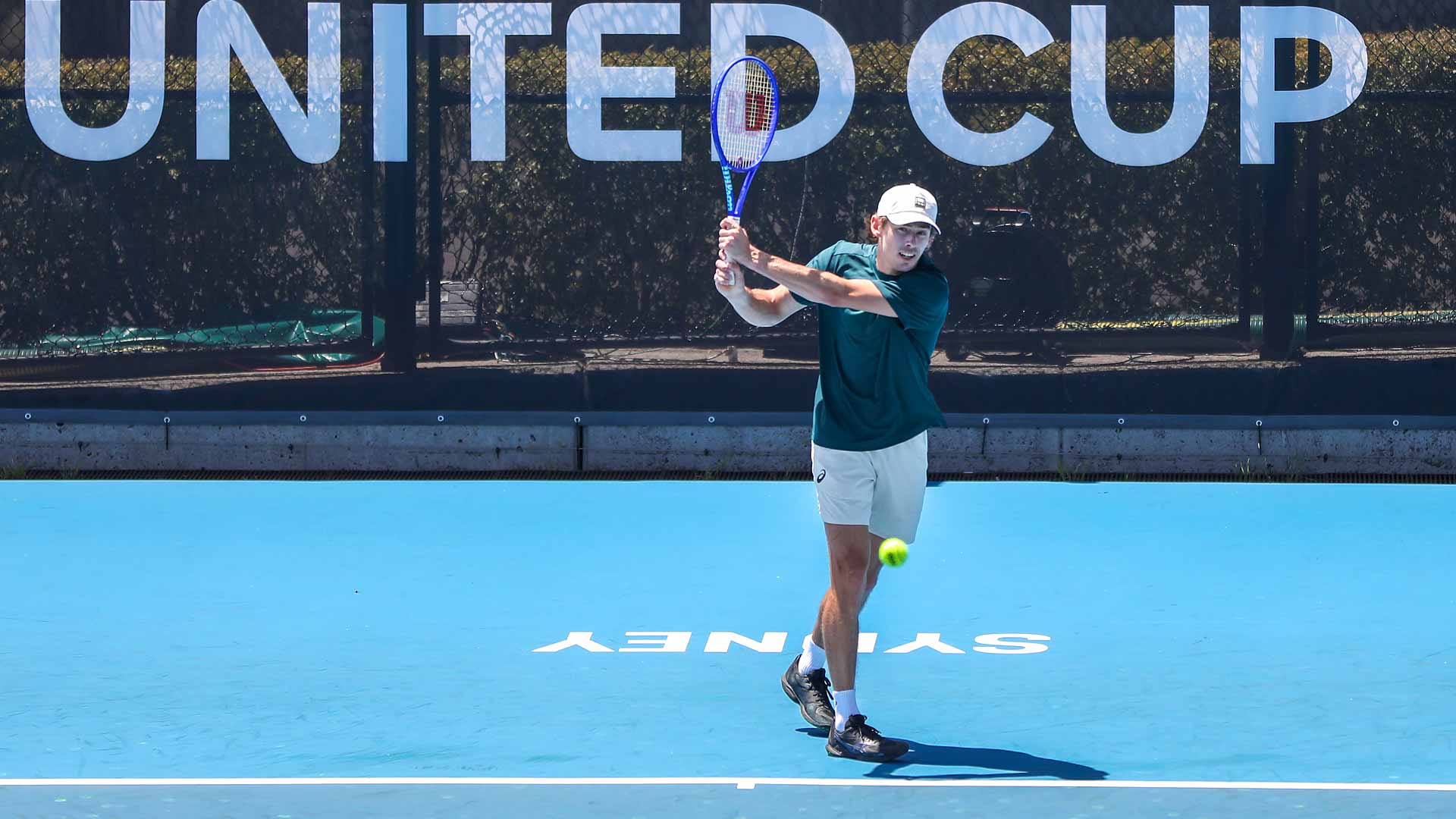
Hewitt Backs De Minaur’s United Cup Sideline Call

Sydney’s quarterfinal heat tested Australia’s resolve against Poland, where a captain’s prudent rest after a singles epic preserved one star’s fire for the battles ahead, even as the tie slipped away.
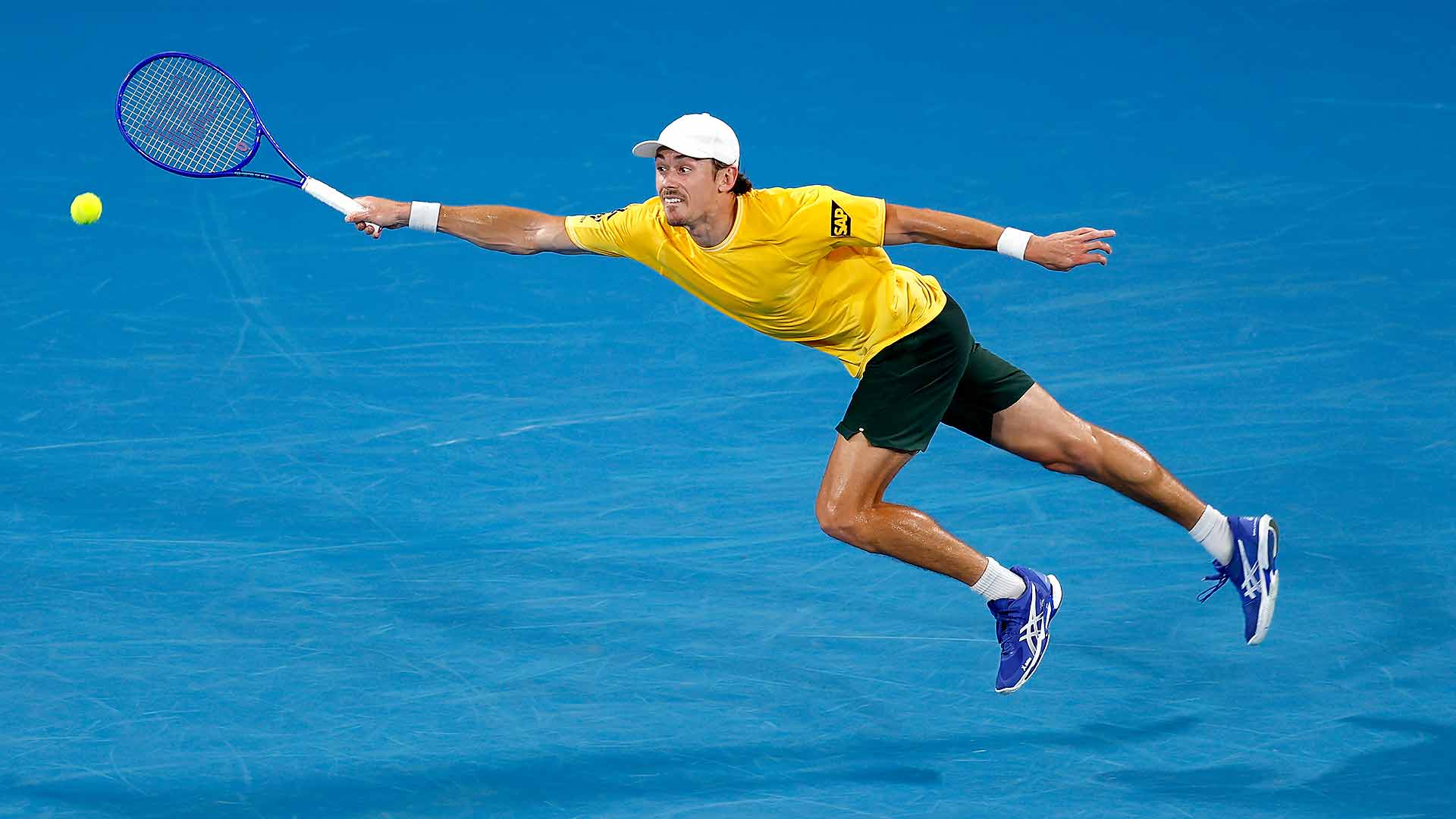
Sydney’s Ken Rosewall Arena thrummed with late-night urgency Friday as Australia faced Poland in the United Cup quarterfinals. Lleyton Hewitt’s choice to hold back Alex de Minaur from the decisive mixed doubles after his grueling singles win captured the event’s raw edge—team glory versus individual endurance on these hard courts. The air hung heavy with the scent of fresh rubber and crowd anticipation, every point a reminder of the tournament’s punishing rhythm.
Heroics demand careful recovery
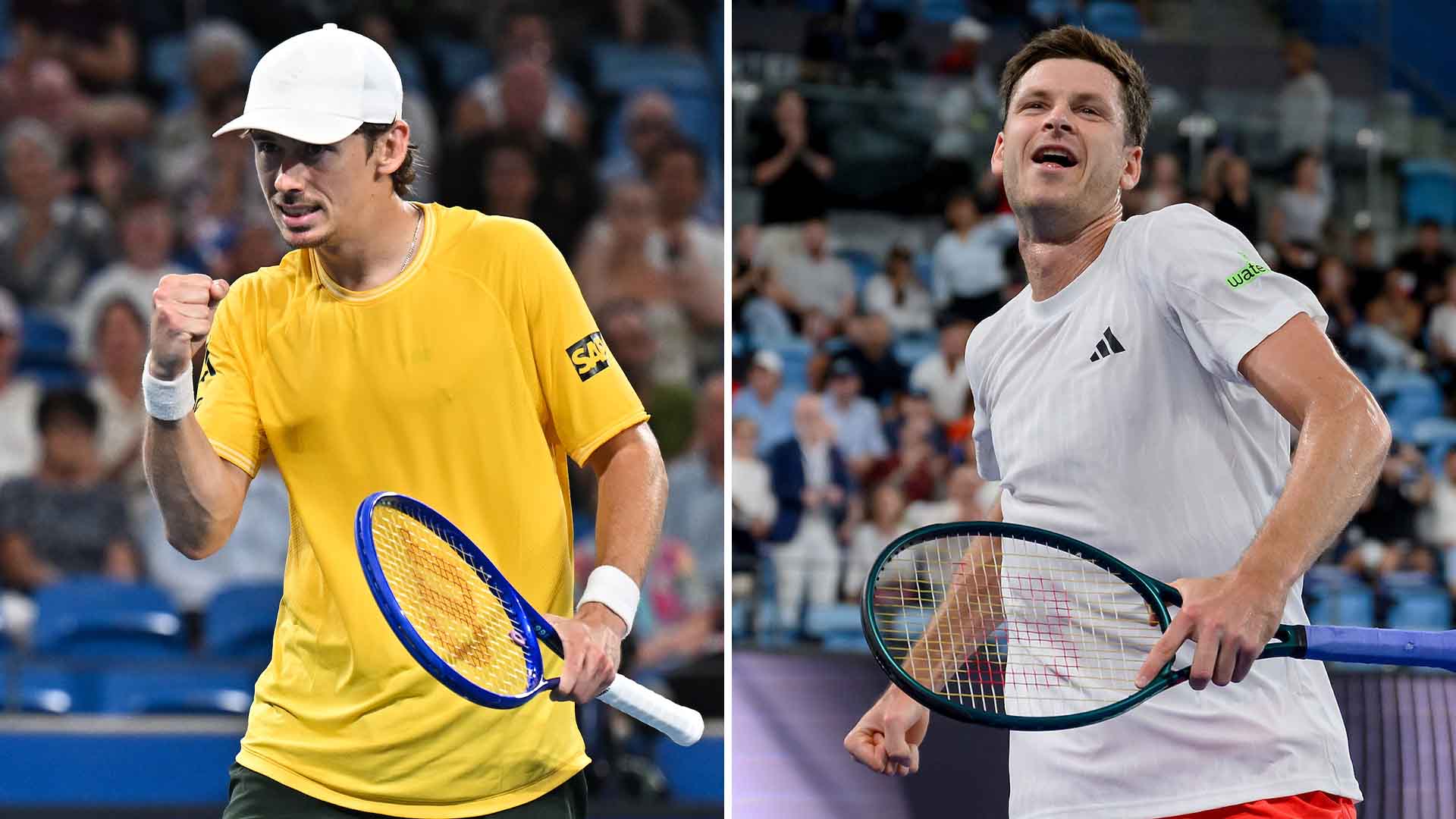
De Minaur had just outlasted Hubert Hurkacz in a two-hour, 18-minute battle, his legs churning across the baseline to save nine break points in the opening service games. He fired inside-out forehands crosscourt to stretch the Pole’s returns, then locked in with a streak of 21 consecutive points on serve to seal the second set. The effort, against a player whose booming serves tested every reflex, left the Australian visibly spent, his shirt darkened with sweat under the arena lights.
“Alex was feeling a few tweaks the last few days,” Hewitt said. “He’s been doing a lot of training in the off-season to get ready for five-set matches. We decided the best thing for his body moving forward was not to put his hand up to play mixed tonight. Also, if you are that second match, to turn around straightaway and switch on. You just don’t want to risk injury as well at certain times, especially the amount of moving he had to do tonight against a bloody quality player out there.“
Storm Hunter stepped in with John-Patrick Smith for the decider, but Jan Zielinski and Katarzyna Kawa overpowered them 6-4, 6-0, their net approaches slicing through Australia’s defenses on the medium-paced surface. The loss ended Australia’s run, yet Hewitt’s restraint echoed the United Cup‘s deeper demands, where one match’s triumph feeds the next week’s survival. De Minaur‘s absence, unlike his mixed doubles push against Czechia earlier in the group stage, prioritized the long haul over immediate redemption.
Serving surge buries early doubts
Earlier in the tournament, de Minaur’s scrappy loss to Casper Ruud had exposed serve wobbles—55 percent first serves landed, marred by eight double faults that handed momentum shifts. He hit the practice court hard, tweaking his toss and grip to steady the motion, turning anomalies into assets. Against Hurkacz, that work paid off with 82 percent first serves in, his one–two pattern—flat serve wide followed by a deep down-the-line forehand—forcing errors and easing the baseline grind.
The hard court’s consistent bounce amplified his heavy topspin returns, pulling Hurkacz off balance with angled slice backhands that opened the court. This shift not only clinched the singles point but rebuilt confidence after the Ruud stumble, his body language shifting from tentative to commanding as the match wore on. Hewitt’s oversight ensured those gains wouldn’t fray in a rushed mixed doubles turn, safeguarding the Australian’s form for the Australian Open’s early rounds.
“I think what was a little bit strange for me was the amount of double-faults,” de Minaur said. “That’s something I don’t normally hit. Obviously that was what felt like an anomaly. We got back to the practice court, just worked on a couple things, a couple different feels. I’m very happy with my serving performance the following two matches, kind of showing all the work that I put in. Of course, if I can land first serves and play with a lot of first serves, it makes my life a whole lot easier. Makes me definitely a more dangerous opponent.”
Team ties test deeper resolve
The United Cup’s format—singles clashes folding into mixed stakes—forces players like de Minaur to navigate fatigue’s psychological pull, where a captain’s call can redefine a season’s arc. Hewitt, drawing from his own team event scars, weighed the tweaks against the risk of a sudden pivot, opting for preservation amid Sydney’s humid intensity. As Poland advanced, the arena’s echoes faded into quiet reflection, de Minaur’s sidelined presence a strategic breath before the hard-court swing intensifies.
Australia’s exit stings, but it positions the young star with recovered legs and sharpened serves, his off-season endurance build now battle-tested without unnecessary strain. The quarterfinal’s tactical pauses hint at stronger synergy ahead, where guarding against tweaks ensures de Minaur’s speed and retrieval remain weapons in majors to come. In tennis’s team theater, such choices fuel the quiet confidence that turns pressure into prolonged contention.