Gauff resets serve angles to end grass drought at Wimbledon

Four straight losses on the surface had created quiet tension, yet precise first-serve placement and rapid point construction delivered a 54-minute dispatch that reset the American’s rhythm at the All England Club.
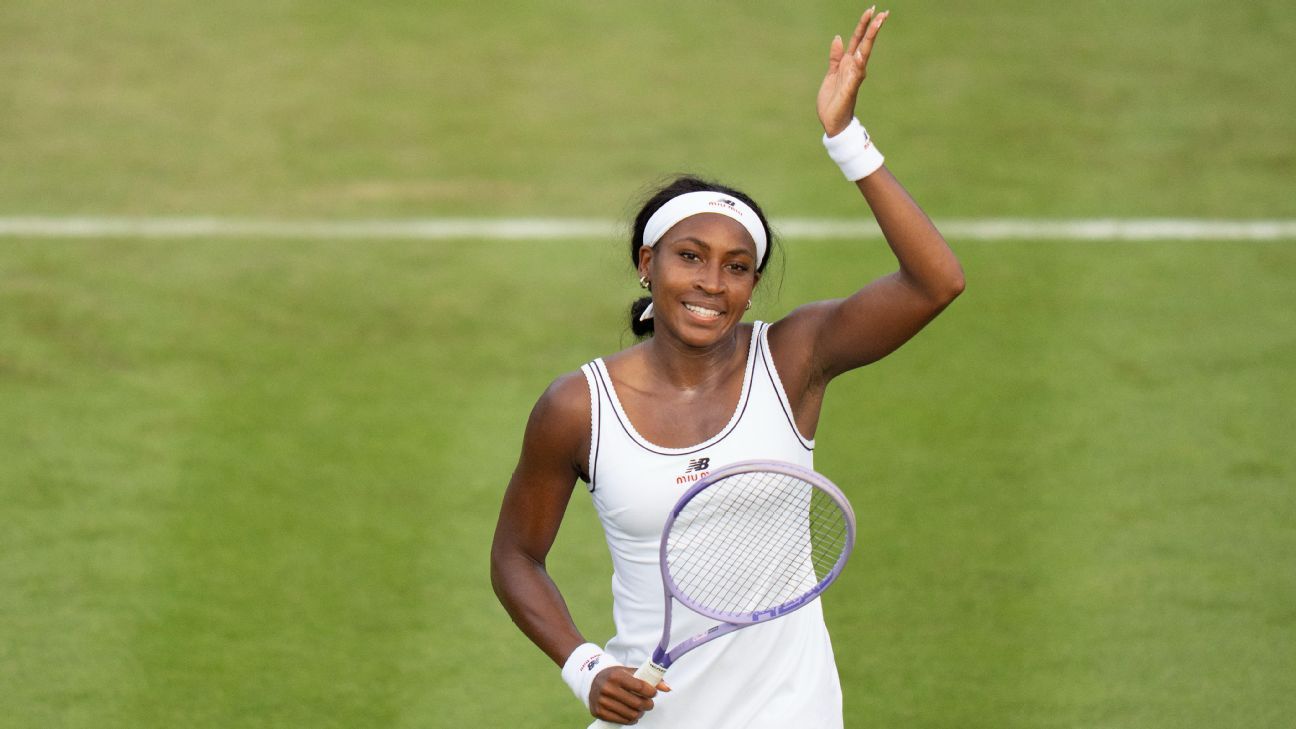
No. 7 Coco Gauff carried the weight of four straight grass losses into her Wimbledon opener yet translated that into sharper inside-out targets and heavier first-serve percentages against Tamara Korpatsch.
Serve placement shifts on low-bouncing courts
The American posted an 88 percent first-serve points won rate, her second-highest Wimbledon mark after the 90 percent recorded against Sonay Kartal in 2024. That efficiency stemmed from deliberate adjustments to toss height and contact point, allowing flatter trajectories that skidded through the shorter grass rather than inviting returns from defensive positions.
By keeping the ball wide on the deuce side and then following with crosscourt backhands, Gauff limited extended rallies and converted the majority of those service games inside two shots. The three games dropped matched her most economical Wimbledon performance to date and highlighted how surface speed rewarded early aggression over prolonged baseline exchanges.
Gauff will face the winner of Solana Sierra versus Anna Bondar and holds a 2-0 head-to-head edge against Sierra while carrying no prior data on Bondar.
Streaks tested amid major expectations
World No. 1 Aryna Sabalenka mirrored the efficiency with a 64-minute victory over Teodora Kostovic, extending her streak of 23 consecutive major first-round wins that trails only Iga Swiatek at 26. Sabalenka last dropped an opening-round major match in 2020 against Carla Suarez Navarro, underscoring how consistent hold patterns on grass preserve energy for later rounds.
McCartney Kessler awaits Sabalenka after recording the first unseeded double-bagel at Wimbledon since Mary Pierce defeated Oleksandra Oliynykova in 2003. The result illustrates how lower-ranked players can exploit grass speed when opponents struggle to adjust slice and underspin responses.
Fashion entries and surface transitions
Naomi Osaka made another fashion statement by wearing a flowing kimono for her walk-on before defeating Elsa Jacquemot 6-1, 7-5. The visual contrasted with the tactical focus elsewhere as players balanced personal expression against the need for quick adaptation to low-bounce conditions.
French Open champion Mirra Andreeva overcame Magda Linette 7-5, 6-4 by mixing heavy topspin crosscourt patterns with occasional inside-in forays that tested Linette’s movement on the slick surface. French Open finalist Maja Chwalinska, entering on a wild card, fell 2-6, 7-5, 6-2 to Mananchaya Sawangkaew, showing how grass rewards players who recalibrate footwork angles within the first set.