Gauff weighs fairness against community friction in Toronto

After her straight-sets win the two-time major champion offered a layered view on gene testing that blends on-court focus with broader questions of policy timing and player psychology.
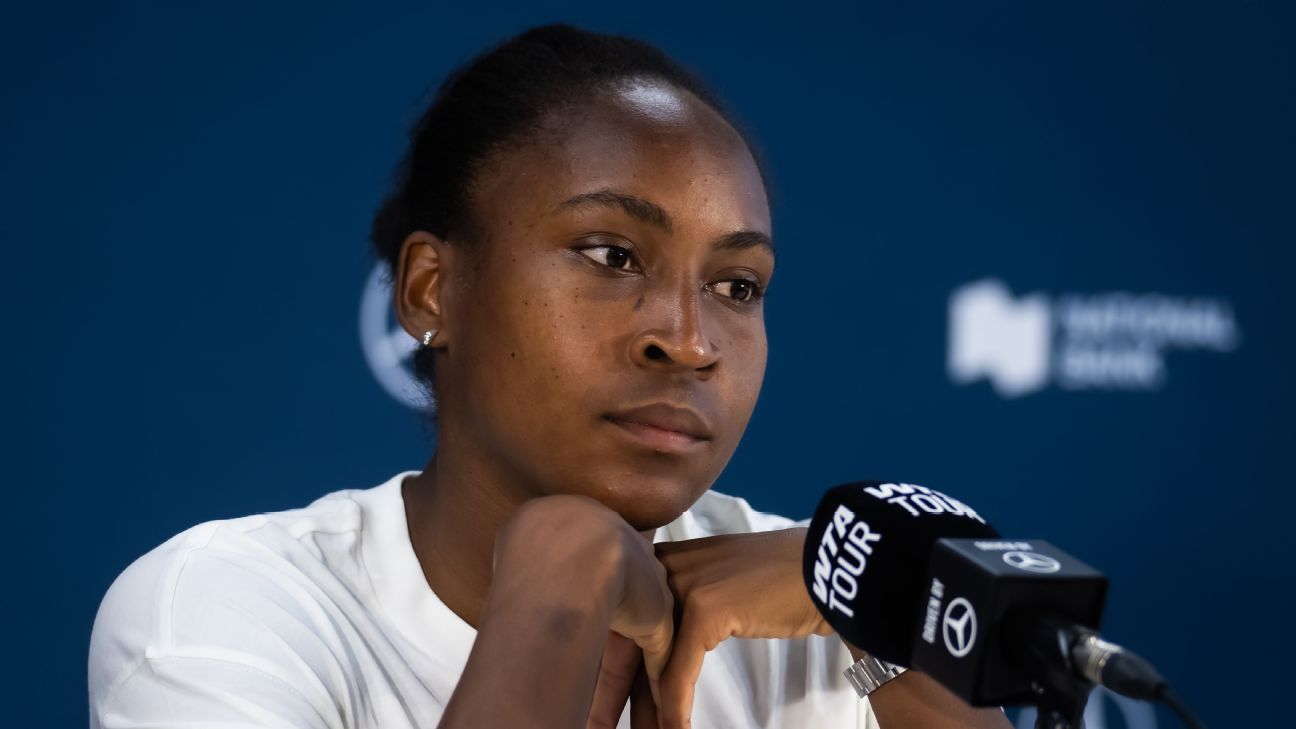
Inside the humid Toronto arena the air carries the familiar mix of anticipation and fatigue that defines late-summer hard-court swings. Coco Gauff had just secured her opening-match win over Kayla Day yet the post-match questions quickly turned away from crosscourt winners and toward a different kind of endurance test.
The newly introduced gene-testing requirement for the 2028 Los Angeles Olympics adds another layer to an already dense schedule that stretches from clay to grass to hard courts without meaningful breaks. Players must absorb the procedural change while maintaining focus on footwork adjustments and shot selection under variable conditions.
So, yes, I guess I kind of agree with trying to protect the fairness in women’s sports. But I also do not like the attack that it is creating. People who don’t really care but just want to use this as a reason to attack the trans community -- so I’m not really a big fan of that either.
Hard-court patterns shift under added weight
The surface rewards early preparation and compact swings that keep the ball deep. Gauff often favors an inside-out forehand to open the court after a solid serve, yet the added mental weight of policy compliance can interrupt the rhythm of that one-two sequence. When the schedule compresses recovery time between events, even minor distractions from off-court discussions can blunt the edge in long baseline exchanges.
Her ability to mix slice backhands with heavy topspin keeps opponents guessing, but sustained focus becomes harder when external debates intrude on preparation routines. The two-time Grand Slam champion has spent the season managing expectations that rise with every deep run, and this latest development lands squarely in the psychological lane.
Calendar demands test focus amid policy change
World No. 2 Elena Rybakina addressed the same topic after her straight-sets victory over Daria Kasatkina. Her response reflected the pragmatic mindset many adopt when policies arrive mid-season: acceptance paired with a quiet preference for the prior status quo.
Both players have navigated high-stakes matches throughout the year, adjusting tactics to exploit opponent movement and court speed. The added administrative step now sits alongside those on-court calculations, requiring mental bandwidth that could otherwise go toward refining slice approaches or down-the-line targets. Points accumulated on North American hard courts often decide year-end positioning, and a single early exit can alter the margin between top-eight seeding and a less favorable draw at the year-end championships.
Gauff’s emphasis on nuance suggests she views the conversation as one that must remain tethered to fairness without drifting into broader social friction that distracts from the court. As the field moves toward the year’s final hard-court stretch, the testing requirement will travel with the tour, a quiet administrative presence amid the visible demands of match play. Players will continue to balance physical output with the psychological discipline needed to keep external noise from altering their patterns or timing.