Gauff’s poise prevails over Lys’s power in Beijing

On Beijing’s unforgiving hard courts, Coco Gauff shakes off serve jitters and taps into her aggressive instincts to outlast Eva Lys, securing a familiar semifinal spot in her title defense.
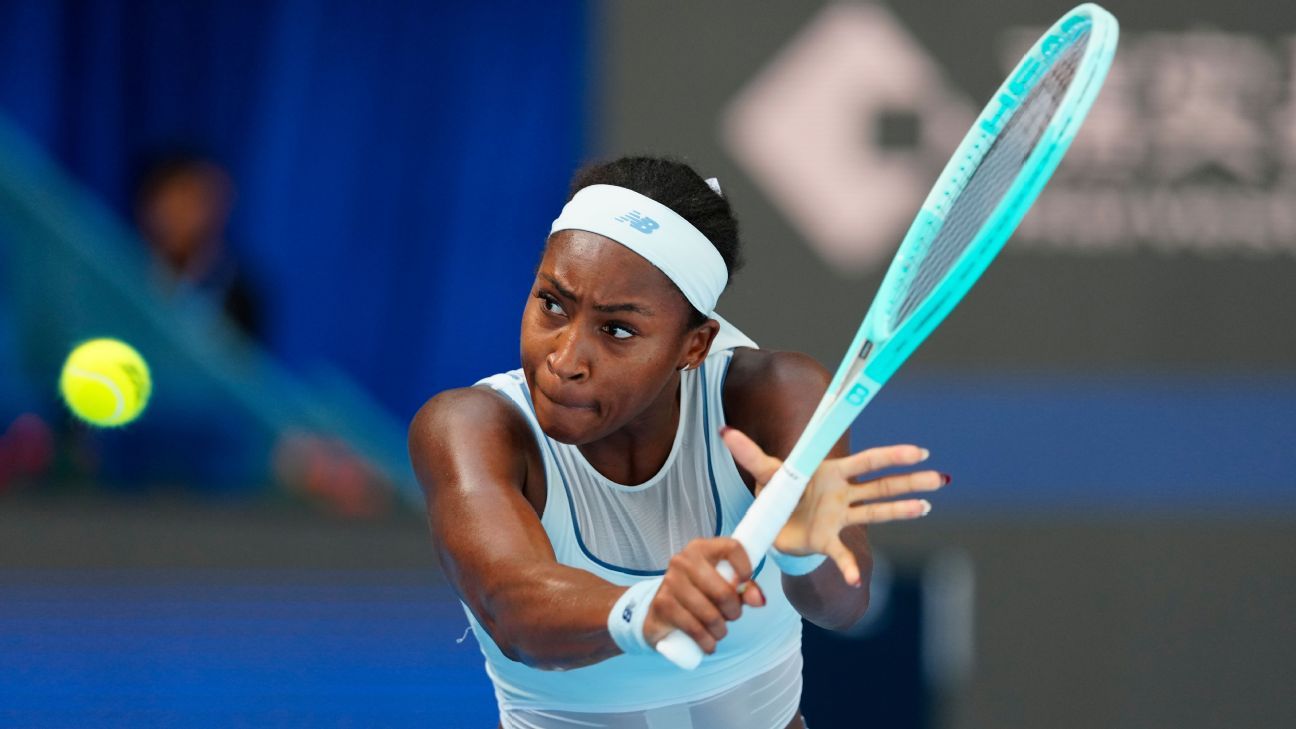
Under Beijing’s crisp autumn light, Coco Gauff stepped onto the court as the defending champion, her shoulders carrying the quiet weight of expectations in a season that has blurred the lines between triumph and trial. Facing Eva Lys, the German player hungry for her first WTA title, the second-seeded American navigated a tense battle of baselines and breaks, emerging with a 6-3, 6-4 victory that marks her third straight semifinal at the China Open. The win pulsed with the raw energy of the outdoor hard courts, where every skid and spin tested resolve, and Gauff’s ability to stay forward turned potential stumbles into steady progress.
Navigating serve storms with bold counters
Gauff’s serve, a cornerstone of her game on these fast surfaces, wavered under Lys’s relentless returns, offering up seven break-point chances that hung like storm clouds over the match. The German converted three, her hard-hitting groundstrokes forcing the American into defensive scrambles, yet Lys faltered more often, dropping serve five times as Gauff ramped up her pressure with deep, probing returns. In the cool stadium air, filled with the crowd’s rising hum, Gauff mixed 1–2 combinations—flat serves followed by crosscourt forehands—to disrupt her opponent’s rhythm, her inside-out winners carving through the tension like a release valve.
This wasn’t a clinic of flawless execution but a gritty display of adaptation, where the Plexicushion hard amplified Lys‘s topspin blasts, pulling Gauff wide and deep, only for the champion to slice back with underspin to reclaim the center. The psychological edge sharpened with each hold, Gauff’s focus a bulwark against the doubts that crept in during deuces, her year of high-stakes runs from French Open glory to national team duties fueling the fire. As the sets wore on, the American’s aggression transformed vulnerability into velocity, the points building like a crescendo toward semifinal security.
“She’s a tough opponent. She hit some incredible shots on the run,” said Gauff, who is seeking her 11th career title. “I was trying my best to stay aggressive. Just staying confident in my game and not being too passive.”
Turning pressure into tactical triumphs
Beyond the scoreboard, the match wove deeper threads of mental fortitude, Gauff channeling the expectations of her top-five status into precise down-the-line backhands that exploited gaps in Lys‘s defense. The German’s on-the-run passing shots drew sharp intakes from the sidelines, her power evoking the intensity of a player on the cusp, but Gauff refused passivity, leaning into one–two punches that pinned and pursued. Beijing’s atmosphere, with its echoing stands and golden-hour glow, amplified the drama, each break a pivot point in a duel where adaptability trumped raw force.
Lys fought with the hunger of a title chase, her serves skidding low to challenge Gauff’s movement, yet the American’s returns grew bolder, varying depth to counter the pace and turn extended rallies into opportunities. This hard-court skirmish highlighted Gauff’s evolution, her slices neutralizing momentum and setting up inside-in forehands that echoed her junior-day savvy, all while the crowd’s energy swelled, mirroring the internal surge that carried her through. The victory, hard-won amid the tour’s Asian swing, reaffirms a champion who thrives when the mental game intensifies, her poise a quiet rebellion against pressure’s tide.
Semifinal stakes sharpen the path ahead
Looking forward, Gauff’s next hurdle awaits in the form of either third-seeded Amanda Anisimova, the Wimbledon and US Open runner-up whose flat power could demand even tighter margins, or No. 6 Jasmine Paolini, riding high from Italy’s Billie Jean King Cup defense with a versatile game suited to these bouncy courts. Anisimova’s intensity might force Gauff to refine her net approaches, while Paolini’s speed could stretch the American’s baseline endurance, each scenario laced with rankings implications in a season’s final push. As the semifinals dawn, Gauff’s journey pulses with the promise of reclaimed momentum, her strokes a testament to resilience forged in Beijing’s unforgiving light, one confident point at a time.