French Open keeps faith in human line calls on clay

A disputed forehand mark in Casper Ruud’s fourth-round exit against Joao Fonseca exposed the limits of electronic systems on a surface that shifts with every slide and sun angle, leaving Amelie Mauresmo convinced that officials still read the live conditions best.
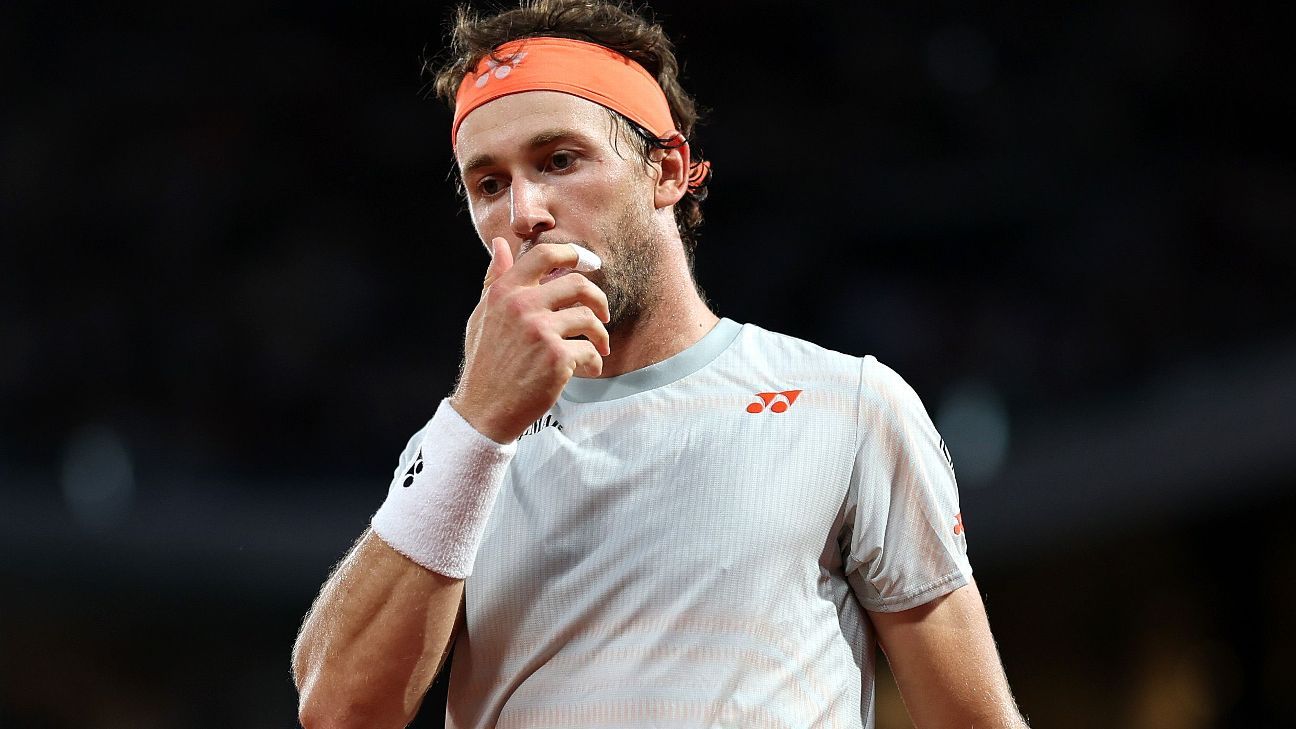
A single forehand down the line in the second-set tiebreaker altered the fourth-round outcome at Roland Garros, yet the French Open has decided the technology meant to settle such moments still falls short on clay. Casper Ruud led 8-7 when the ball landed near the line and a spectator shout prompted the chair umpire to inspect the mark. The point went to Joao Fonseca, the set followed at 7-6 (8), and the match finished 7-5, 7-6 (8), 5-7, 6-2.
Clay variables expose sensor gaps
Red clay absorbs moisture overnight and dries under changing afternoon light, creating bounce that static sensors struggle to track. Mauresmo noted that warm-up events already revealed enough variance for the tournament to stay with human officials in 2026. Players adjust inside-out patterns and crosscourt rallies knowing marks can be read differently once multiple slides have altered the surface.
The one-two combinations that worked earlier in the week became harder to repeat after the disputed point, because both players lengthened recovery windows between exchanges. Fonseca mixed slice approaches with sudden heavy topspin to keep the Norwegian pinned, while Ruud tried underspin backhands to disrupt rhythm. The live surface rewarded those who accepted small errors rather than waiting for digital confirmation.
“What we observed at the clay-court tournaments leading up to Roland Garros is that the reliability of this system is not absolute. As of today, the machine is not 100 percent reliable, so we continue to place our confidence in human officials.”
Amelie Mauresmo addressed the episode the next day, framing the decision around trust in officials who read live conditions rather than static sensors. Her stance echoed through the locker room where several players noted that red clay changes texture hourly under sun and wind, making digital calibration harder than on hard courts.
Momentum shifts test recovery windows
Ruud entered the match with two prior finals appearances at the same venue, yet the disputed call compressed the margins he needed to reset. Fonseca capitalized with aggressive crosscourt angles that stretched rallies in the fourth set and converted the earlier swing into more inside-in targets once lines had been tested repeatedly. Weather shifts during the evening session softened the clay further, slowing the ball and forcing both competitors to lengthen swing paths for the same depth.
The final scoreline reflected how these incremental changes compounded across three hours. Ruud fought back to take the third set but could not sustain the adjustments required after the tiebreaker swing. The younger Brazilian’s flatter trajectory on approach shots created shorter recovery windows that the surface quirks only narrowed.
Review timeline leaves 2027 options open
Mauresmo indicated a post-tournament assessment will examine whether new tracking tools can handle the variables unique to Roland Garros. For 2026 the decision remains with human officials who understand how daily watering and sun exposure alter ball behavior. That continuity lets players continue to calibrate their one-two combinations around visible marks instead of waiting for a machine verdict that may still require interpretation on this particular surface.
Attention now turns to how the remainder of the season will test recovery for both competitors. Ruud’s team will weigh whether to shorten the summer hard-court block or add extra clay preparation ahead of another potential Paris return. Mauresmo closed her remarks by noting openness to future technology once reliability improves, but she stressed that trust in officials had been reaffirmed for the current edition.