Djokovic Faces Melbourne Pressure on Australian Open Day 5

Under Melbourne’s relentless sun, Novak Djokovic and Jannik Sinner chase rhythm in a second-round slate loaded with champions and controversy, where every point tests resolve and reveals tactical edges.
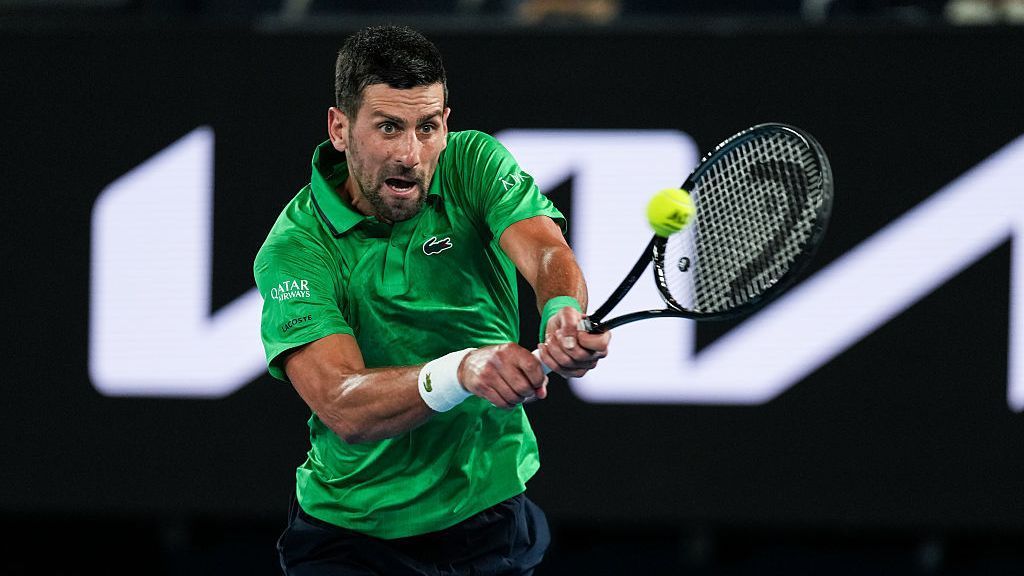
Melbourne Park crackles with the familiar buzz of grand slam intensity as the Australian Open 2026 hits Day 5, wrapping up second-round singles on these brisk hard courts. Ten-time champion Novak Djokovic steps back into the spotlight, his returns slicing through the humid air after an offseason marked by physical tweaks and mental recalibrations. Last year’s winner Jannik Sinner defends his crown nearby, both men navigating the psychological weight of expectations amid a schedule brimming with past titlists and hungry contenders. The crowd’s energy builds from the first ball toss, turning Rod Laver Arena into a cauldron where focus can forge paths to deeper runs or expose lingering doubts.
Champions wrestle inner doubts
Djokovic’s preparation sharpens on heavy topspin drills, countering opponents who loop balls high to exploit any dip in his backhand stability. He drops low for slice returns, transitioning into inside-out forehands that open the court wide, each rally a bid to reclaim the calm that has defined his 10 Melbourne triumphs. Yet the mental grind surfaces in quiet pauses between points, as he absorbs the roar of fans who sense his pursuit of an 11th title could hinge on quelling those subtle storms. Sinner mirrors this intensity, his flat serves gaining bite from the surface’s pace, setting up one–two patterns that pressure returners deep in the baseline.
Madison Keys, the other 2025 victor, unleashes her flat groundstrokes with underspin variety to pull foes off balance, her kick serves kicking high on the deuce side to buy time for aggressive follows. These matches pulse with the season’s accumulated tension, where a crosscourt winner can silence inner critics built from months of uneven form. As the Australian faithful chant through extended exchanges, victories here promise to rebuild confidence, propelling these champions toward clashes that could redefine the draw’s hierarchy.
Osaka and Swiatek chase court poise
Naomi Osaka, the 2019 and 2021 champion, strides out amid curiosity over her outfit, but her true narrative unfolds in explosive serves and down-the-line passes that dictate tempo. Post-maternity, she refines footwork to match the courts’ minimal skid, blending power with selective defense to conserve energy for grueling rallies. The intrigue deepens as she faces a qualifier, her inside-out forehands booming to wrong-foot servers, each point a step in reclaiming the mental edge that once carried her to majors.
World No. 2 Iga Swiatek layers precision atop power, her topspin forehand looping over the net to force errors on the hard bounce while dissecting weak backhands with crosscourt exchanges. Her clay-bred consistency adapts swiftly here, gliding across the baseline as if compressing the court’s dimensions, though a deep run demands stamina to hold her ranking against challengers like Aryna Sabalenka. These women’s battles infuse the day with tactical depth, where poise under pressure turns potential upsets into statements of dominance, the arena’s echoes amplifying every unforced error or clutch hold.
Americans and Aussies fuel home drama
The Australian doubles duo of Nick Kyrgios and Thanasi Kokkinakis ignites local fervor, their net rushes and crisp volleys thriving in the electric atmosphere yet strained by partnership’s mental demands. Kyrgios’s underarm serves and Kokkinakis’s lob counters add volatility, drawing roars that could propel them through early rounds or unravel focus in tight sets. Home-soil support surges like a wave, testing their ability to channel the noise into synchronized play.
America’s quartet—Ben Shelton, Taylor Fritz, Amanda Anisimova, and Jess Pegula—brings big serves and groundstroke depth, Shelton’s lefty spin curling away from right-handers to net upsets worth ranking points. Fritz varies backhand slices to disrupt rhythms, turning defensive lulls into momentum via inside-in forehands, while Anisimova and Pegula press with deep returns that exploit the surface’s speed. Their aggressive styles clash in matchups where mastering pace first could spark a trans-Pacific surge, each win chipping at the top seeds’ leads.
Off the court, women’s world No. 1 Aryna Sabalenka fielded criticism from Ukraine’s Oleksandra Oliynykova, who advocated banning all Russian and Belarusian players amid geopolitical strains—a debate now echoed by Medvedev and Rublev’s input, simmering like the day’s humidity. This undercurrent adds emotional layers, pulling focus from baselines to broader tensions as players like Sabalenka respond with measured resolve. Day 5’s outcomes will ripple forward, shaping not just brackets but the tournament’s pulse, where resilience on and off court determines who endures Melbourne’s unforgiving heat.