Semifinals Ignite Australian Open Drama

In Melbourne’s January heat, Carlos Alcaraz clashes with Alexander Zverev while Jannik Sinner defends against Novak Djokovic, as the path to the 2026 title sharpens into focus amid rising tensions on and off court.
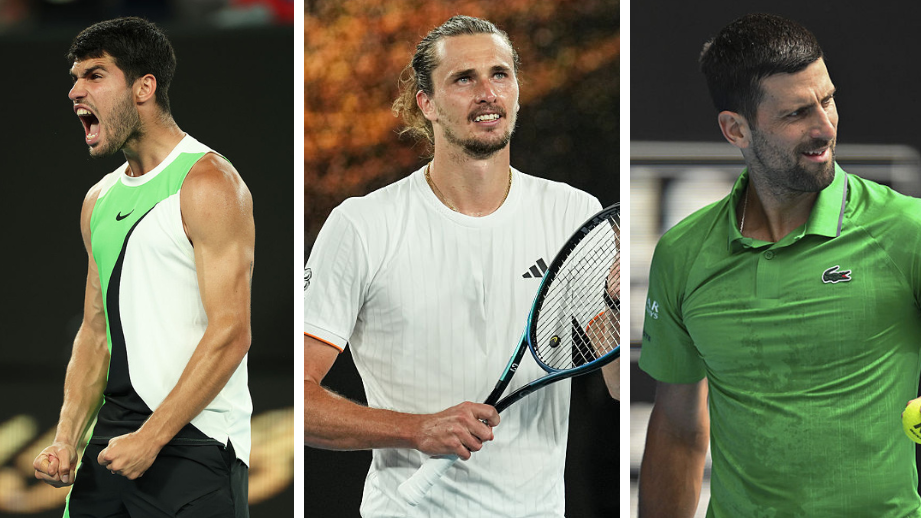
MELBOURNE, Australia—On January 30, 2026, the Australian Open men’s semifinals pulse with the raw edge of rivalry under Rod Laver Arena’s lights. World No. 1 Carlos Alcaraz takes on third-seed Alexander Zverev in the opener, their styles a blend of explosive speed and calculated power. Later, reigning champion Jannik Sinner faces 10-time Melbourne winner Novak Djokovic, a matchup echoing the tournament’s deepest lore.
Alcaraz probes Zverev’s steady fire
Carlos Alcaraz thrives on the Plexicushion’s bounce, firing inside-out forehands to stretch Zverev wide and break his baseline rhythm. The German counters with a booming first serve topping 130 mph, forcing the Spaniard into crosscourt returns that test his defensive scramble. Their head-to-head leans slightly Alcaraz’s way, but Zverev’s 80 percent service hold rate this tournament demands the world No. 1 mix in down-the-line passes to disrupt predictable patterns.
Zverev’s flat backhand slices keep Alcaraz pinned deep, yet the younger player’s footwork allows swift recoveries for winners. In the humid afternoon air, momentum could swing on net approaches, where Alcaraz’s passing shots have edged past Zverev’s volleys before. As the crowd’s energy swells, this duel pits infectious drive against quiet resolve, with fatigue from a long season lurking in every extended rally.
Sinner defends against Djokovic’s grip
Jannik Sinner’s flat groundstrokes redirect pace on these grippy hard courts, but Djokovic’s elastic returns convert break points at a 40 percent clip, turning rallies into grueling tests. The Serb’s inside-in forehand exploits Sinner’s height, pulling him off balance in the one–two exchange that has defined his 10 titles here. Sinner’s deeper returns neutralize second serves, yet Djokovic’s sliding defense extends points until the Italian’s consistency frays.
At 38, Djokovic embodies unyielding stamina, his down-the-line backhands slicing through defenses like a reminder of past dominations. Sinner mixes underspin to lure the veteran forward, aiming to force errors on the low bounce. Their battle carries the weight of a potential generational shift, with the champion’s curse pressing on the defender amid Melbourne’s mounting roar.
Women’s clash stirs privacy storm
Yesterday, top-ranked Aryna Sabalenka booked her women’s final spot for the fourth straight year, setting up a 2023 rematch with fifth-seed Elena Rybakina. Sabalenka’s thunderous serves clash with Rybakina’s clinical forehand, both thriving in quick points on this surface. Their paths underscore adaptations to Melbourne’s conditions, promising a firepower finale.
Off court, world No. 3 Coco Gauff‘s racket-smashing after her quarterfinal loss to Elina Svitolina fuels debates on player privacy. Tennis Australia CEO Craig Tiley weighed in, pushing for support that balances emotional outlets with personal boundaries. These layers amplify the semifinals’ intensity, blending tactical chess with the human strain of elite pursuit.
As Sunday’s men’s final looms, Melbourne vibrates with who claims the edge first—youth’s surge or experience’s hold—in a tournament defined by unbreakable wills.