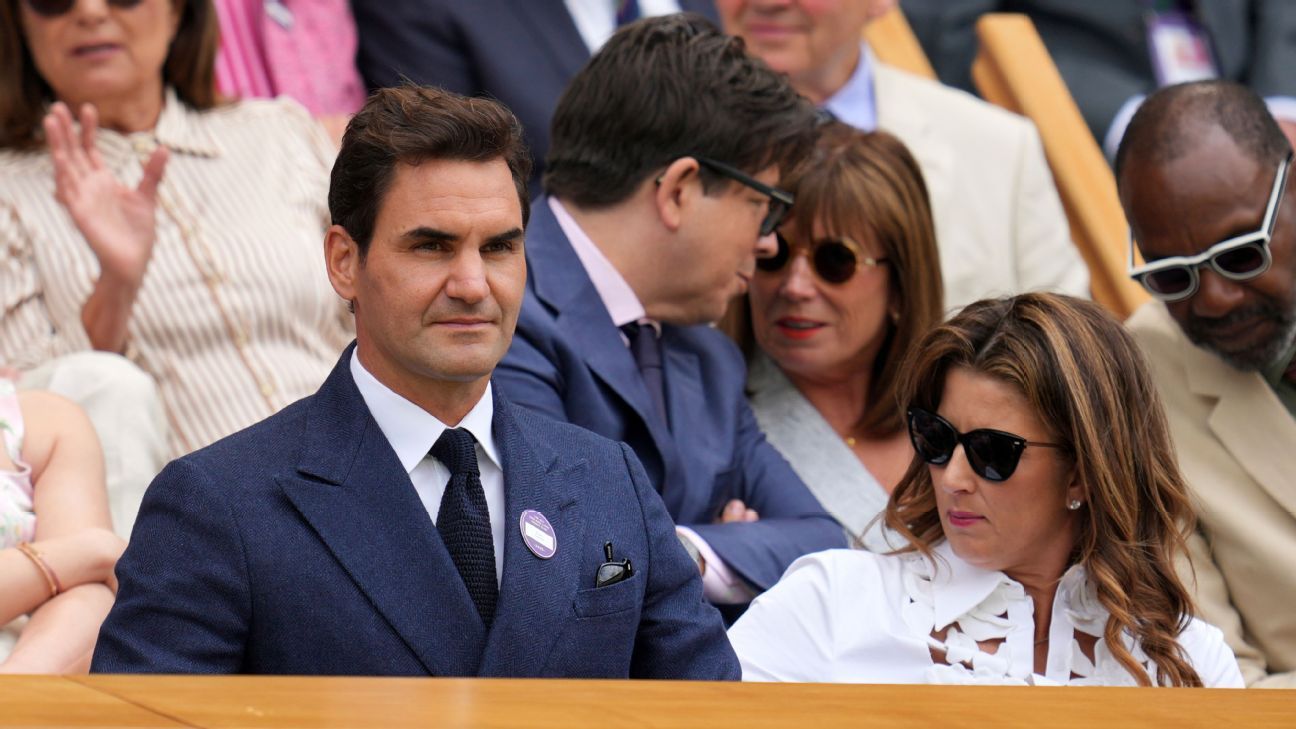
The announcement of nominees for the International Tennis Hall of Fame’s Class of 2026 spotlights Roger Federer at the top, the Swiss icon who became the first man to claim 20 Grand Slam singles titles. His era pulsed with rivalries that elevated the sport, blending balletic footwork with a forehand that carved openings like a sculptor unveiling form from marble. Under stadium lights and on sun-baked courts, he navigated the weight of expectation, turning baseline exchanges into symphonies of strategy and spirit, his legacy now poised for enshrinement.
Federer’s arsenal— a serve laced with slice to skid low and wide, an all-court game that invited volleys after deep crosscourt groundstrokes—propelled him to 103 singles trophies and 1,251 victories, totals bested only by Jimmy Connors in the Open Era since 1968. He capped five seasons as ATP No. 1, including a record 237 consecutive weeks at the summit, while steering Switzerland to the 2014 Davis Cup crown and teaming with Stan Wawrinka for doubles gold at the 2008 Beijing Olympics. Those peaks intertwined with streaks that tested his resolve: 10 straight Grand Slam finals from 2005 to 2007, securing eight, then 18 of 19 through 2010, alongside 36 consecutive quarterfinals and 23 semifinals.
“I always say it’s wonderful to be part of that selective group,” Federer told The Associated Press in 2021. “How can you compare? What’s better? To win when you’re old or when you’re young? I have no idea, you know. Is it better to win on clay or grass? don’t know. Is it better to have super dominant years or come back from injury? I don’t know. It really is impossible to grasp.”
Forging resilience amid relentless streaks
Federer’s dominance unfolded like a controlled storm, his footwork gliding across grass or hard courts to launch inside-out forehands that stretched defenses thin. The air hummed with crowd anticipation during those extended runs, the thud of balls echoing his unyielding focus as he dismantled opponents with one–two patterns— a heavy serve followed by a slicing approach. Yet beneath the fluidity lurked the grind of sustaining such rhythms, from Wimbledon’s quick bounces to the US Open’s relentless pace, where every point chipped at the mental armor built over years of scrutiny.
He broke through for his first major at the 2003 All England Club, then shattered Pete Sampras’s record of 14 Slams with a grueling 2009 Wimbledon final victory over Andy Roddick, prevailing 16-14 in the fifth set amid fading light and roaring stands. That triumph capped eight Wimbledon titles, six Australian Opens, five US Opens, and his sole French Open in 2009, completing the career Grand Slam on clay’s unforgiving red dust. His farewell came softly, last match at 2021 Wimbledon a month before turning 40, followed by a 2022 retirement doubles outing with Rafael Nadal at the Laver Cup, an event from his own management vision, the court alive with shared history under evening spotlights.
Rivalries that sharpened tactical edges
The trio’s clashes with Novak Djokovic and Nadal infused matches with electric tension, Federer adapting his aggressive lines to counter Djokovic’s retrievals on hard courts, where deep returns forced hurried down-the-line backhands or net rushes. Against Nadal’s topspin fortress on clay, he refined shorter swings for quicker takes, deploying underspin slices to disrupt the Spaniard’s rhythm and open angles for crosscourt winners, their rallies stretching like taut strings under Parisian sun. These battles, with Nadal retiring at 38 holding 22 Slams and Djokovic active at 38 with 24, overtook Federer’s count but amplified the era’s psychological depth, crowds holding breath as points tilted on subtle shifts in tempo.
Juan Martin del Potro’s surge in the 2009 US Open final exemplified such tests, his towering forehand booming inside-in lasers to shatter Federer’s five consecutive titles there—a men’s streak unbroken since. Then just shy of 21, the 6-foot-6 Argentine seemed primed for more, but wrist and knee injuries sidelined him after 22 tour titles, a No. 3 ranking, a 2018 US Open final defeat to Djokovic, and a 2016 Rio silver alongside Argentina’s Davis Cup win that year. His final major flicker, a 2019 French Open fourth round, lingered like an unanswered challenge, the baseline exchanges a reminder of how physical tolls test tactical ingenuity.
Nominees echo broader court narratives
Svetlana Kuznetsova complements the player ballot, her versatility yielding singles majors at the 2004 US Open and 2009 French Open, plus doubles at the 2005 and 2012 Australian Opens, rising to No. 2 in singles and No. 3 in doubles with 18 singles and 16 doubles crowns. She fueled three Billie Jean King Cup triumphs for Russia, her game blending baseline firepower with net poise, adapting to hard-court speed or clay’s slide much as Federer did across surfaces. In contributors, Mary Carillo’s sharp broadcast voice and Marshall Happer’s steady administration enrich the slate, their roles weaving the sport’s fabric beyond the lines.
Federer’s multilingual poise in press rooms—English, French, Swiss German—mirrored his on-court grace, an ambassador whose career, announced Wednesday for 2026 consideration, invites nominees to reflect on shared pursuits. As inductees reveal in November, his path whispers of evolutions yet to come, where new generations chase that elusive blend of mind, tactic, and timeless spark.