Milos Raonic retires after a career of thunderous serves

The Canadian powerhouse, who reached the heights of No. 3 with a serve that redefined grass-court battles, steps away at 35, his path marked by explosive highs and the quiet pull of time.
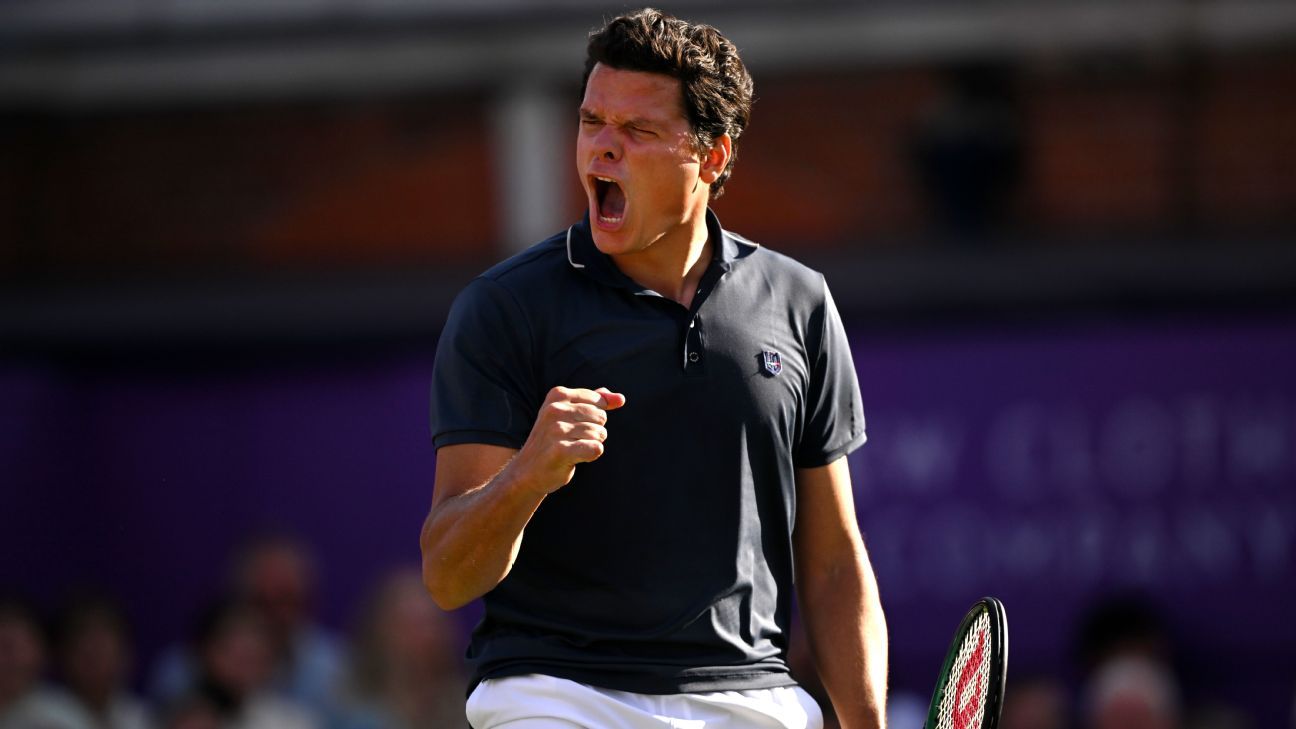
In Ottawa’s winter hush, Milos Raonic ends his professional run, the big server who turned aces into art bowing out at 35. Tennis gripped him from age eight, a lucky spark that ignited a pro career starting in 2011, yielding eight ATP titles through sheer force and fine-tuned placement. His retirement, announced on a crisp Monday, closes a chapter where every match tested the edge between dominance and doubt.
Raonic’s weapon of choice, that 140-mph serve, forced opponents into hurried returns, setting up inside-out forehands that sliced through defenses on grass. Injuries shadowed his peaks, demanding mental resets after withdrawals, yet he rebuilt with a focus that turned practice into obsession. The crowd’s roar at key moments, like Wimbledon’s charged semis, fueled his drive, even as the grind wore thin.
“The time has come, I am retiring from tennis,” the 35-year-old Canadian said on X. “This is a moment you know will come one day, but somehow you never feel ready for it. This is as ready as I will ever be. Tennis has been my love and obsession for most of my life.”
Breakthrough under Wimbledon’s pressure
Raonic’s 2016 surge peaked on grass, where his kick serves climbed high, pulling returners off balance for easy one–two patterns. He toppled Roger Federer in the Wimbledon semifinal, 6-3, 6-7(3), 4-6, 7-5, 6-3, his heavy topspin backhands countering slices to claim the first Canadian men’s Grand Slam final spot. That year also brought an Australian Open semifinal and ATP Finals qualification, capping his rise to World No. 3 amid the psychological weight of national hopes.
Opponents adapted with deeper returns to neutralize his power, but Raonic mixed flat serves down the T with body jabs, keeping points short on faster surfaces. Clay proved tougher, his underspin slices less effective against grinding rallies, yet he adjusted with crosscourt lobs to buy time. The mental toll of those surface shifts built resilience, turning near-misses into fuel for the next swing.
“I have been the luckiest person to get to live out and fulfill my dreams,” he said. “I got to show up every day and focus on just getting better, seeing where that will take me, and playing a game I was introduced to at 8 years old by complete luck. Somehow, this became my entire obsession and childhood, and then became my profession and life.”
Final fight on Olympic clay
As 2024 faded, Raonic sought one last push at the Paris Olympics, his schedule a mix of qualifiers and majors that amplified recovery’s strain. Facing Dominik Koepfer in the first round on repurposed Roland Garros courts, he held serve through a tense 7-6(2) tiebreak, only for errors to creep in during longer exchanges. The 6-7(5), 6-7(1) loss ended his career, clay’s slower pace exposing the limits of his power game against steady baseline work.
The Olympic crowd, sensing the veteran’s farewell, offered warm applause amid the summer heat, a nod to his enduring spirit. Raonic’s adjustments—deeper positioning for returns, more varied spin—showed a mind still sharp, even if the body lagged. Stepping away now, he leaves younger players a model of tactical serving, urging them to blend raw speed with strategic depth on the tour’s demanding slate.