Kyrgios Skips Singles for Doubles Fire

As Melbourne Park heats up for the 2026 Australian Open, Nick Kyrgios steps back from singles but ignites doubles with old partner Thanasi Kokkinakis, balancing recovery with the pull of home crowds and unfinished rivalries.
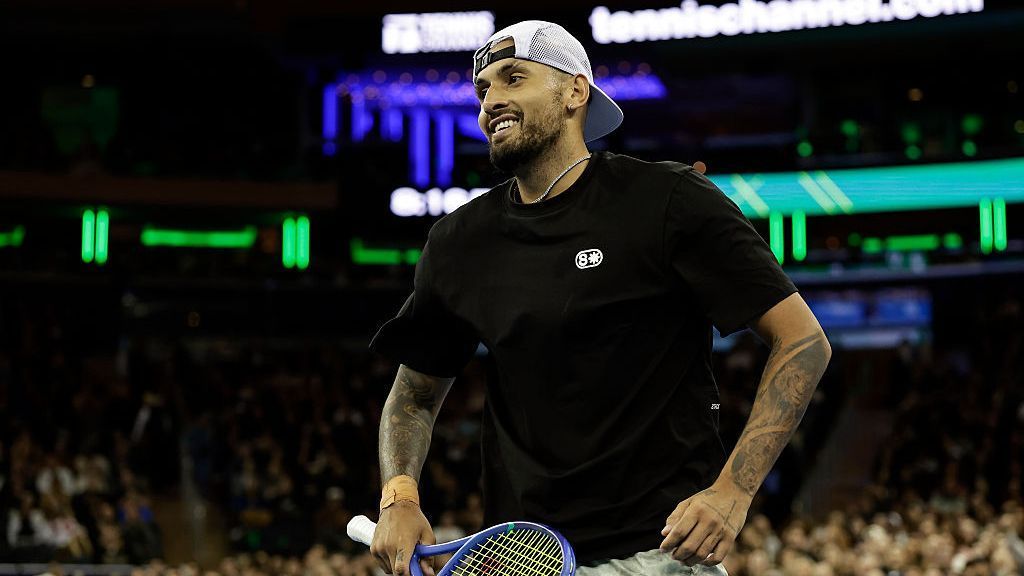
MELBOURNE, Australia—Nick Kyrgios arrives at Melbourne Park with the weight of a nation’s gaze, the hard courts baking under January sun as the Australian Open unfolds. The air crackles with baseline rallies from early matches, but for the local provocateur, the focus narrows to doubles, a deliberate sidestep from the singles grind that once defined his chaos. He’s ruled out best-of-five sets, his body still piecing together after years of fractures, yet the decision pulses with intent: conserve for the long haul while feeding off the crowd’s roar in partnership play.
This choice echoes through his recent arc, where sporadic returns have tested resolve against physical limits. Kyrgios, who eyed a wildcard entry, pulled the plug on January 9, prioritizing recovery over risk. The psychological edge sharpens here, turning potential frustration into strategic patience on a surface that rewards his flat serves and net instincts.
“After some good conversations with TA I’ve made the call to focus on doubles for this year’s AO,” Kyrgios wrote in an Instagram story. “I’m fit and back on court, but five setters are a different beast, and I’m not quite ready to go the distance yet. This tournament means everything to me, but I’d rather give my spot to someone who’s ready to make their moment count. it’s all building blocks, and I’ll be back next year and pumped to compete.”
Injuries carve a measured comeback
Kyrgios’s 2025 tour flickered with promise and pullouts, opening at the Australian Open with a straight-sets loss to Great Britain’s Jacob Fearnley, his abdominal strain muting the serve’s bite. He retired against Dutchman Botic Van De Zandschulp in Indian Wells’ opening round, the wrist ligament protesting under pressure, before scraping a win over American qualifier Mackenzie McDonald in Miami. Karen Khachanov then exposed gaps in the next match, a pattern that carried into early 2026’s Brisbane International defeat to American Aleksandar Kovacevic.
The toll traces to 2023: an ankle injury sidelined him from the United Cup and Adelaide International, followed by knee surgery for a meniscus tear and cyst. A right wrist ligament rupture—comparable to an ACL in the knee—derailed Wimbledon plans, leading to stem cell attempts and surgery; he resurfaced in a September 2024 UTS exhibition win over Casper Ruud. Abdominal issues resurfaced at the 2025 Australian Open, with wrist and shoulder pains lingering, forcing him to dial back inside-in forehands for safer crosscourt depth.
Hard courts like Melbourne’s demand explosive bursts, so Kyrgios now mixes more kick serves with underspin slices to control rallies, shortening points via serve-and-volley to ease core strain. This tactical shift, born from necessity, builds mental toughness, each practice a quiet negotiation between ambition and caution. As of January 12, 2026, he sits at No. 1277 in singles—down from a career-high No. 13 on October 24, 2016—and unranked in doubles, the numbers a stark reminder of time lost to the trainer’s room.
Doubles duo reignites Special Ks spark
Teaming with fellow Australian Thanasi Kokkinakis, the ‘Special Ks’ revive their 2022 Australian Open men’s doubles triumph, a 7-5, 6-4 final over compatriots Matthew Ebden and Max Purcell that captured home glory. Doubles alters Kyrgios’s blueprint: Kokkinakis’s returns set up poaches, allowing inside-out forehands to exploit alleys while lobs buy recovery time for the wrist. On DecoTurf, the pace suits his heavy topspin, turning the 1–2 pattern into net assaults rather than baseline wars.
Their chemistry, forged in that title run, thrives on shared aggression—Kyrgios’s volleys finishing Kokkinakis’s setups, down-the-line passes threading tight angles. This format eases the singles endurance test, letting him channel flair in bursts amid Melbourne’s humid tempo, where slips demand precise footwork. A deep run could jolt rankings and morale, bridging to full singles contention.
Exhibitions and echoes fuel the fire
Off-tour, Kyrgios topped Aryna Sabalenka 6-3, 6-3 in the December 28, 2025, “Battle of the Sexes” match at Dubai’s Coca-Cola Arena, an exhibition laced with banter that nodded to Billie Jean King’s 1973 straight-sets win over Bobby Riggs amid equal-pay fights. “I think this is a great stepping-stone for the sport of tennis,” he said afterward, the levity a counter to tour pressures. His career prize money stands at US$12,802,482 (AU$18,946,149), a haul from singles and doubles that underscores untapped potential.
During layoff, he lent voice to broadcasts: Eurosport at the 2024 Australian Open, BBC for Wimbledon, and ESPN at the US Open, blending insight with humor to stay connected. No 2025 commentary, and 2026 remains unconfirmed, but the booth honed his tactical eye, now applied to doubles adjustments like varied serve placement to evade returns.
His Melbourne singles peak hit quarterfinals in 2015, a teenage charge ended by sixth seed Andy Murray—the first such deep teen run since Andrei Cherkasov in 1990. No singles Grand Slam crowns, but Wimbledon 2022’s runner-up finish to Novak Djokovic—4-6, 6-3, 6-4, 7-6(3)—showcased peak form on grass. As ESPN’s Jake Michaels observes, this doubles pivot at the 2026 Australian Open tests resilience, with the ‘Special Ks’ eyeing a repeat amid a draw of volley specialists and baseline grinders.
Close the speculation: Kyrgios isn’t retired, just recalibrating on courts that know his roar. Watch how doubles momentum—precise poaches, sliced approaches—fuels a 2027 singles surge, the crowd’s energy syncing with his building storm.