Djokovic Holds Off Adelaide Return

With the Australian Open drawing near, Novak Djokovic opts for caution, pulling out of the Adelaide tune-up to sharpen his edge for Melbourne’s hard courts amid mounting physical demands.
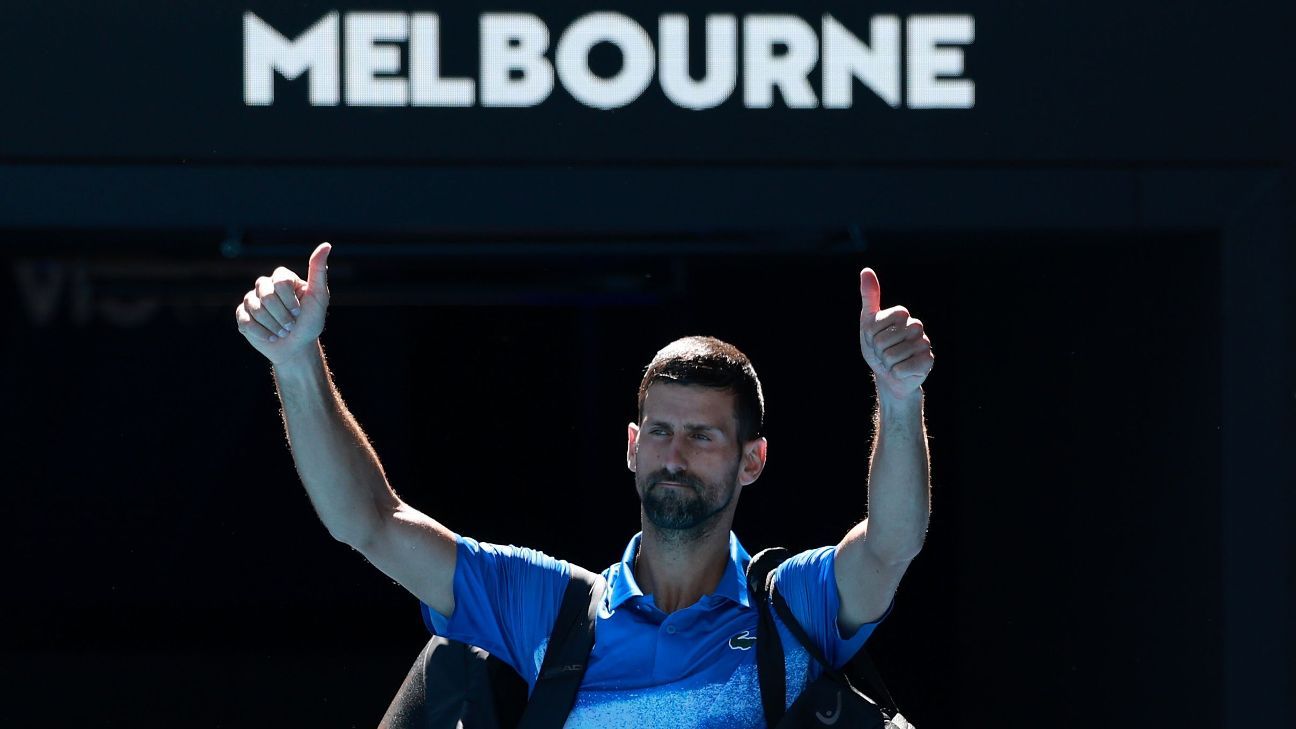
In the sweltering buildup to another Australian summer, Novak Djokovic has dialed back his schedule, withdrawing from the Adelaide International just weeks before the year’s first Grand Slam. The 38-year-old Serbian, chasing his 25th major singles title after securing a men’s-record 24, revealed he’s not yet ready to test his game in competition. This move shifts his focus squarely to Melbourne Park, where the main draw kicks off on Jan. 18, echoing the deliberate pacing that has fueled his dominance Down Under.
Djokovic last stepped onto an official court nearly two full months ago, outlasting Lorenzo Musetti in the final of the Hellenic Championship in Athens on Nov. 8. A nagging shoulder injury then sidelined him from the ATP Finals for the second consecutive year, leaving his heavy topspin forehands and elastic returns unproven in match play. Now, as he eyes a return to the tour’s rhythm, the withdrawal underscores a champion navigating the tightrope between recovery and the relentless calendar.
“To all my fans in Adelaide, unfortunately I’m not quite physically ready to compete in the Adelaide International next week,” Djokovic posted on social media. “it’s personally very disappointing to me, as I have such great memories of winning the title there two years ago. I was really excited about returning as it truly felt like playing at home.”
Adelaide’s pull meets recovery’s pull
The Adelaide courts carry a warmth for Djokovic, a venue where he once unleashed precise down-the-line backhands amid a crowd’s familiar roar, claiming the title two years back. Skipping it now means forgoing those baseline exchanges that build match toughness, forcing him to refine his 1–2 punch and crosscourt angles in quieter practice sets. Yet this restraint speaks to the mental calculus of a veteran preserving his body for the five-set wars ahead, where every slide and stretch counts on Melbourne’s medium-paced hard courts.
His words betray a mix of regret and resolve, the sting of absence tempered by the pull of bigger stages. Djokovic’s history there—channeling slice defenses to turn defense into attack—highlights why the decision weighs heavy, but the priority remains clear: arriving in Melbourne primed, not patched. As he turns inward, the psychological edge sharpens, each session a step toward recapturing the fluidity that powered his 10 Australian Open victories, the last in 2023.
Injuries linger in semifinal shadows
Last season’s semifinal finishes across all four majors painted a picture of resilience undercut by fragility, none more stark than his 2025 Australian Open exit after one set against Alexander Zverev, halted by a torn hamstring. That clash exposed vulnerabilities in his movement, where Zverev’s flat inside-in forehands exploited any lag in Djokovic’s coverage, turning potential rallies into early concessions. Now, without Adelaide’s grind to rebuild those transitions, he must simulate the pace in training, emphasizing underspin lobs and quick inside-out shifts to counter such power.
Entering 2026 at No. 4, Djokovic trails Carlos Alcaraz, Jannik Sinner, and Zverev in the rankings—a gap that amplifies the stakes for a deep Melbourne run. The field’s youth brings tactical puzzles: Alcaraz’s explosive one–two returns demanding sharper net approaches, Sinner’s baseline precision testing Djokovic’s topspin loops on the surface’s true bounce. This prep phase becomes a forge for adaptation, where mental fortitude bridges physical gaps, setting up volleys and passing shots for the cauldron of Rod Laver Arena.
The timing adds off-court layers, coming a day after Djokovic distanced himself from the Professional Tennis Players Association he helped launch, a group that challenged the sport’s power structure last year. Freed from those distractions, his energy funnels into Australian Open specifics: extending crosscourt exchanges, varying serve placement to disrupt returners thriving on the low bounce. Novak Djokovic has always thrived on such focus, turning setbacks into setups for triumph.
“My focus is now on my preparation for the Australian Open,” he wrote Monday, “and I look forward to arriving in Melbourne soon and seeing all the tennis fans in Australia.”
As January 18 approaches, the hard courts of Melbourne beckon with their humid pulse and echoing cheers, a stage where Djokovic’s legacy hangs in the balance. This calculated pause could prove the spark that reignites his fire, transforming caution into the controlled aggression that has defined his reign. In a season brimming with fresh threats, his return promises the intensity of a champion unwilling to yield.