Djokovic endures Shanghai heat for semifinal surprise

In a tournament sapping his strength, Novak Djokovic secures a vital win, now facing a qualifier whose improbable run adds fresh intrigue to the Masters draw.
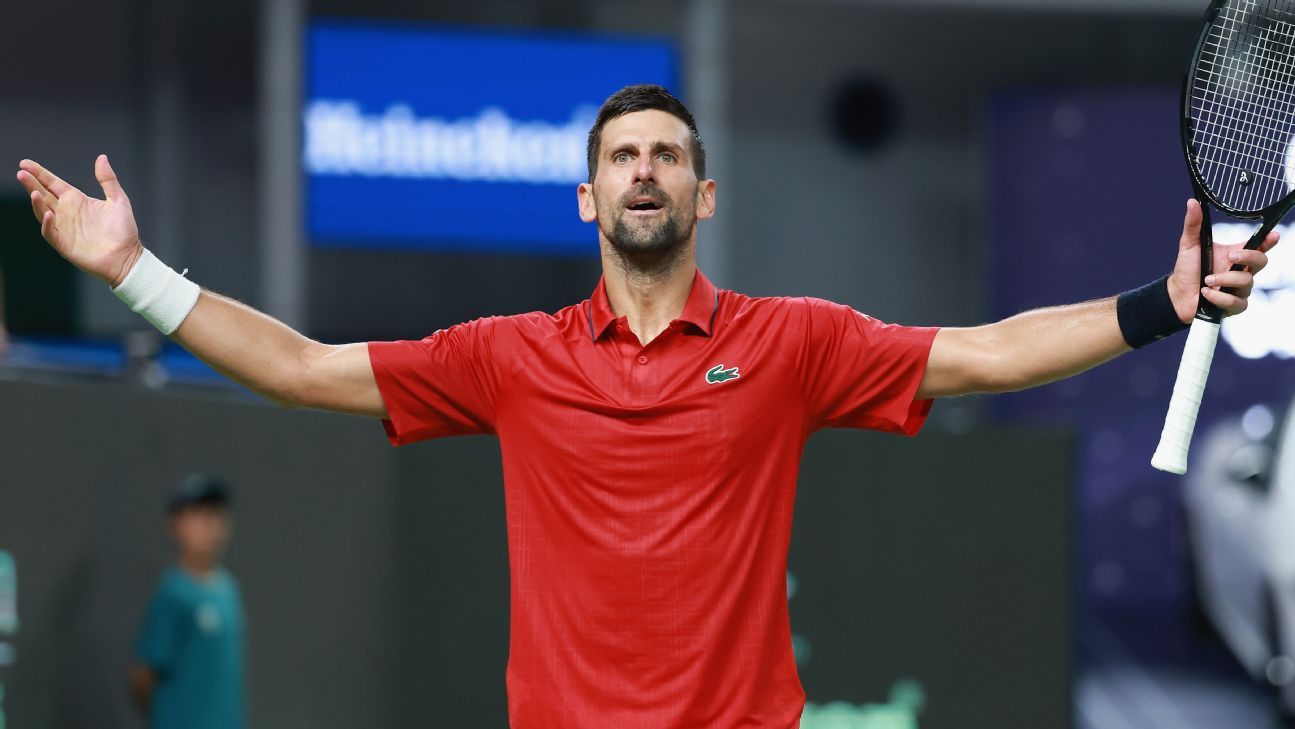
In the oppressive humidity of Shanghai, Novak Djokovic claimed a hard-fought quarterfinal victory over unseeded Zizou Bergs, 6-3, 7-5, on Thursday to advance to the Masters semifinals. The 38-year-old Serb, visibly taxed by the conditions that have marked his week, found a rhythm that propelled him past the 26-year-old Belgian in their first meeting. This result sets up an unexpected clash with No. 204-ranked qualifier Valentin Vacherot from Monaco, whose own path has been a testament to resilience on these hard courts.
Endurance battles the humid grind
Djokovic has faced Shanghai’s draining atmosphere head-on, vomiting during earlier matches and requiring medical attention after collapsing in exhaustion following a three-set duel with Jaume Munar in the prior round. Against Bergs, he leaned on tactical patterns to conserve energy, deploying deep serves followed by crosscourt backhands to pin his opponent in long rallies. The crowd’s energy pulsed with each point, the air thick with tension as the Serb built a 5-4 lead in the second set only to suffer a break, forcing him to rally for the close on his third match point.
His adjustments highlighted a veteran’s savvy, mixing inside-out forehands with underspin slices to disrupt Bergs‘s baseline game and limit unforced errors under pressure. The surface’s pace allowed for controlled exchanges, where Djokovic‘s return positioning neutralized the Belgian’s aggressive serves. Yet the physical toll lingered, turning every hold into a small victory amid the season’s broader demands.
“I should have closed out the match at 5-4,” Djokovic said. “Very challenging conditions these days for all the players, and I was just trying to stay alive on the court. I’m glad to overcome this hurdle.”
Bergs, showing respect in defeat, shared a light moment at the net, hugging his opponent with a grin that cut through the intensity.
Qualifier upends expectations against Rune
Valentin Vacherot‘s semifinal berth came via a stunning upset over 10th-seeded Holger Rune, 2-6, 7-6 (4), 6-4, marking him as the second lowest-ranked semifinalist in Masters 1000 events over the past 35 years, as noted by the ATP. Entering as an alternate uncertain of even qualifying, the Monegasque capitalized on the Dane’s third-set leg cramps, using crosscourt lobs and down-the-line passers to exploit mobility issues. The match climaxed with Rune netting a return, leaving Vacherot to drop to his knees on the baseline, hands pressed to his face in disbelief and joy.
Vacherot’s style blended defensive grit with timely aggression, employing one–two combinations of flat drives and top-spin loops to control rally geometry on the hard courts. The crowd roared as he forced errors in extended exchanges, his underspin backhands keeping Rune off-balance and amplifying the upset’s drama. This run transforms him from underdog to contender, fueled by momentum that defies his ranking.
“This is just unbelievable,” Vacherot said in an on-court interview. “I didn’t come as a qualifier, I came as an alternate. I wasn’t even sure I was going to play qualifying.”
Bergs echoed the human side of these encounters post-match, quipping to Djokovic with admiration that underscored the generational gap on display.
Semifinal probes depth and momentum
The upcoming Djokovic-Vacherot matchup promises a tactical chess match, with the Serb’s precise serve-return game likely targeting the qualifier’s backhand via inside-in approaches to open angles. Shanghai’s humidity could test both, favoring Djokovic’s experience in managing fatigue while challenging Vacherot’s untested stamina in high-stakes rallies. Expect varied patterns—crosscourt exchanges giving way to down-the-line surprises—as the veteran seeks to channel his resolve against an opponent’s raw belief.
Crowd anticipation builds for this asymmetry, where the 24-time Grand Slam champion’s calculated precision meets the Monegasque’s chaotic energy. The hard courts’ predictable bounce may amplify probing serves, but mental fortitude will decide who prevails in the heat. As Djokovic eyes deeper runs toward the ATP Finals, this semifinal offers a pivot point to convert endurance into another title push, reasserting his dominance amid the tour’s shifting tides.