Djokovic withdraws from Paris to target Turin redemption

With a sore hip and fresh leg twinge, the 24-time Grand Slam champion at 38 steps back from the Paris Masters, channeling his energy toward the ATP Finals where his tactical mastery could still dominate.
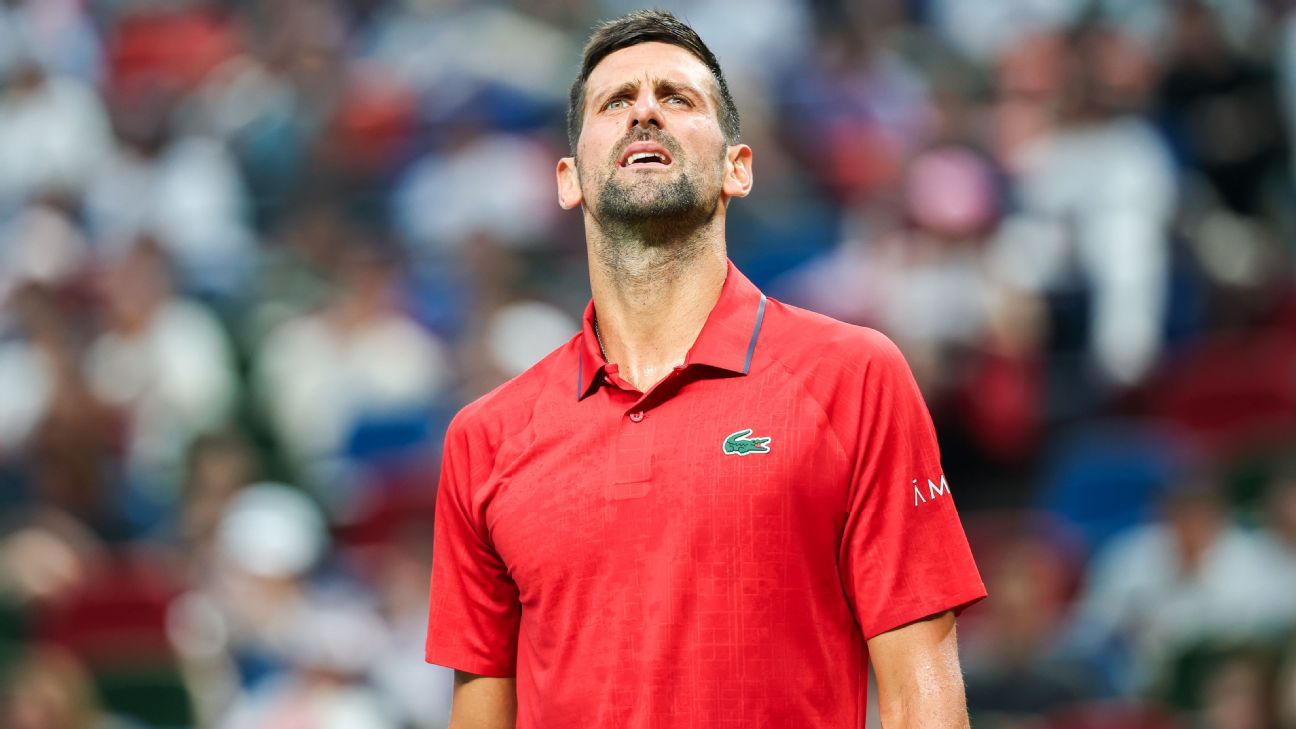
In the fading light of an autumn tennis season, Novak Djokovic has announced his withdrawal from next week’s Paris Masters. The decision, shared on social media this Tuesday, follows a leg injury that forced him to stop mid-match in an exhibition event just days ago. At 38, the Serb’s body signals caution amid a year of calculated risks, prioritizing recovery over another layer of competition.
Selective campaign sharpens his precision
Djokovic’s 2025 schedule has been ruthlessly efficient, limited to eight ATP Tour events outside the four majors. He advanced to semifinals at the Australian Open, French Open, Wimbledon, and U.S. Open, each deep run showcasing his ability to dictate rallies with inside-out forehands and crosscourt backhands that pull opponents off balance. From late May to late September, he entered only those last three Slams, a sparse calendar that allowed him to conserve energy for the high-stakes clashes where his 1–2 serve-return patterns thrive under pressure.
This approach has kept the crowds on edge, their murmurs building as he extends points with underspin slices that disrupt aggressive returns. The isolation of such selectivity amplifies the psychological stakes; every match becomes a legacy checkpoint, where the champion’s mental fortitude turns potential fatigue into focused intensity. He reports, via his social media post, that the physical demands now outweigh the Paris rewards.
Injuries disrupt familiar rhythms
His most recent official match, a semifinal loss at the Shanghai Masters, saw a sore hip slow his movements, turning seamless down-the-line passes into tentative retrieves. The injury hampered his explosive transitions, forcing reliance on defensive lobs rather than the aggressive net approaches that define his indoor game. Crowds in Shanghai watched tensely as the tempo faltered, the Serb’s usual command giving way to visible strain.
Exhibition play in Saudi Arabia’s Six Kings Slam brought further setbacks. After an opening bye, he fell to Jannik Sinner, whose flat inside-in forehands exposed any mobility lapses in their baseline exchanges. In the third-place match against Taylor Fritz, a leg injury ended proceedings after one set, cutting short tests of his slice backhands against the American’s powerful serves. These moments, under bright arena lights, blend frustration with the quiet resolve of a veteran adapting to his body’s limits.
Turin finale demands full recovery
By skipping Paris, Djokovic clears a path to heal for the ATP Finals, set for November 9 to 16 in Turin, Italy. He qualified for the event but sat out the 2024 edition, a choice that sparked questions about his drive; now, the indoor hard courts there call for his precise one–two combinations and psychological edge in round-robin battles. The enclosed atmosphere will heighten every racquet crack, favoring his experience in error-minimizing patterns over raw speed.
As he turns toward Turin, the withdrawal feels like strategic positioning rather than concession. Fans sense the pivot—the champion recalibrating for a stage where crosscourt winners and underspin disruptions can still rewrite narratives against the next generation. His return promises the tension of a poised encore, where healed hips and legs fuel one last surge of dominance.