Djokovic rallies past towering home hope at French Open

A set down to booming serves and a partisan crowd, the 39-year-old veteran adjusted patterns on clay and leaned on experience to flip momentum in his record 82nd Grand Slam.
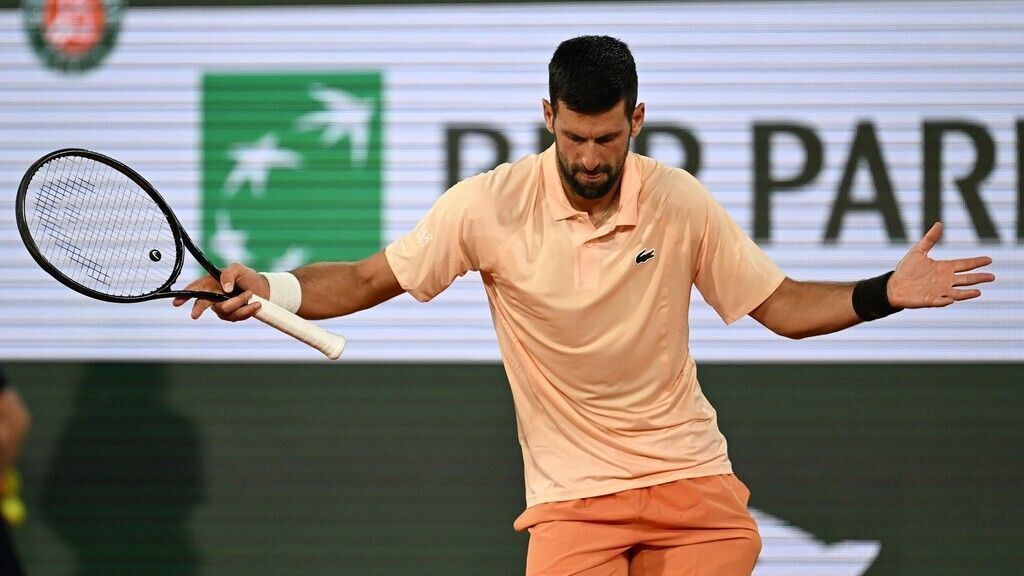
At age 39, Novak Djokovic can still wear opponents down. Even opponents nearly half his age -- and in front of a hostile crowd. The veteran came back from a set down for a 5-7, 7-5, 6-1, 6-4 victory over 22-year-old home player Giovanni Mpetshi Perricard in the first round of the French Open on Sunday in Djokovic’s record 82nd Grand Slam appearance.
Obviously playing a French player, center court at Roland Garros is never so easy. The crowd gets into it and then you feel the pressure even more. But all in all it was a good match to be part of: Three hours, just what the doctor ordered at age 39.
Opening pressure shapes early mindset
The 80th-ranked Mpetshi Perricard had plenty of crowd support, and the fans erupted into chants of “Gio-vanni, Gio-vanni, Gio-vanni” when he ripped a forehand winner on his fourth break point to conclude a long rally during a tense game at 5-5 in the first set. Mpetshi Perricard then finished the set off with consecutive aces -- the first of which clocked in at 223 kph (139 mph).
Grunting during long rallies and digging deep on the opening night session on Court Philippe-Chatrier, it wasn’t until one hour, 45 minutes in that Djokovic finally found a way to break his 6-foot-7 opponent and even the match at a set all. The crowd was pumped for a potential stunner -- after all, Djokovic hasn’t lost in the first round of a Grand Slam in 20 years. But after two tense sets, Mpetshi Perricard seemed deflated of energy.
Djokovic said afterward that Mpetshi Perricard -- who he played for the first time -- has one of the most tremendous serves in terms of precision and speed that I have ever faced in my career. In his other match on the surface this season, Djokovic lost to Croatian qualifier Dino Prižmić at the Italian Open after two months out due to a right shoulder injury.
Djokovic, on the other hand, was just getting warmed up in only his second match on clay this year. That limited preparation added another layer of internal doubt, yet the veteran refused to let the early deficit fracture his focus on constructing points with crosscourt heavy topspin before switching inside-out when openings appeared. The 80th-ranked player had leaned on a massive first serve that touched 223 kph to steal the opener, feeding off chants that echoed through the stands and forcing Djokovic into defensive positions on the return.
Experience turns momentum in later sets
Just by stepping on court two days after his 39th birthday, Djokovic set the men’s record for most Grand Slams contested -- one more than Roger Federer and Feliciano Lopez. Djokovic has won a record 24 of those 82 Grand Slams. The weight of those numbers sat alongside the immediate tactical puzzle of neutralizing a 6-foot-7 frame that covered the baseline with long strides.
Djokovic also tied French players Richard Gasquet and Antoine Gentien with a men’s record 22nd appearance at Roland Garros. He has reached at least the quarterfinals in 19 of the past 20 editions and raised the Coupe des Mousquetaires trophy in 2016, 2021 and 2023. Those repeated deep runs at the same venue supplied quiet confidence once the second set turned.
He couldn’t convert a break point until his 10th try when he concluded the second set with a drop shot that Mpetshi Perricard couldn’t get back. Then Djokovic held a hand to his ear to taunt the pro-French crowd. Late in the fourth set after he pulled off a delicate half-volley winner, Djokovic skipped back to the baseline in apparent glee. And when it was over, Djokovic performed a celebratory wiggle on the baseline.
The psychological shift was clear: early frustration from crowd noise and missed opportunities gave way to measured aggression, with slice backhands keeping rallies alive until the opponent overpressed. Djokovic adjusted his return stance deeper behind the baseline on second serves, absorbing the pace rather than blocking early. This allowed him to redirect crosscourt with heavy topspin that pulled Mpetshi Perricard wide on the forehand wing. Once the 22-year-old committed to a wider guard, Djokovic slipped an inside-out forehand down the line to seize control of the one-two pattern.
The shift paid immediate dividends in the third set as Mpetshi Perricard began to shorten his swing on clay that rewarded patience over raw velocity. Djokovic mixed slice backhands to keep the ball low, forcing the taller player to bend and generate his own pace on low-bouncing replies. The result was a string of unforced errors that opened the door for three consecutive breaks. Djokovic can’t meet top-ranked Jannik Sinner, who is on a 29-match winning streak, until the final.
Draw context fuels forward outlook
Despite his reduced schedule of late, Djokovic reached this year’s Australian Open final, where he lost to Carlos Alcaraz, and has made the semifinals or better at five straight Grand Slams. With Alcaraz, the two-time reigning French Open champion, sitting out Roland Garros and Wimbledon with an injured right wrist, Djokovic sees a chance for himself in the lower half of the draw.
Along with 2015 champion Stan Wawrinka, who is playing in his final French Open, Djokovic is the only former men’s singles champion competing in Paris. The reduced field opens tactical breathing room on slower clay where his return game and variety can stretch opponents across multiple sets.
Djokovic wasn’t the only player at an advanced age in the win column at Roland Garros on Sunday. Marco Trungelliti, who at 36 recently became the oldest man in the professional era (since 1969) to break into the top 100 of the rankings, beat Kyrian Jacquet 6-4, 6-2, 6-2. Sorana Cirstea, another 36-year-old who this week became the oldest player to make her debut in the top 20, beat 17-year-old Ksenia Efremova 6-3, 6-1.
And on Monday, 41-year-old Wawrinka will play Jesper De Jong in his final Roland Garros before retirement at the end of the year. Trungelliti partly attributed his late development to being ostracized from the tennis tour years ago when he became a whistleblower against match-fixing in the sport. The tactical discipline on clay, combined with the absence of several top contenders, positions the veteran for deeper runs if he maintains serve placement and movement efficiency.