Djokovic sheds desperation in hunt for 25th major

Melbourne’s heat builds as Novak Djokovic arrives at the Australian Open with a lighter mindset, joking about the Alcaraz-Sinner wall while plotting his path to tennis’s ultimate record.
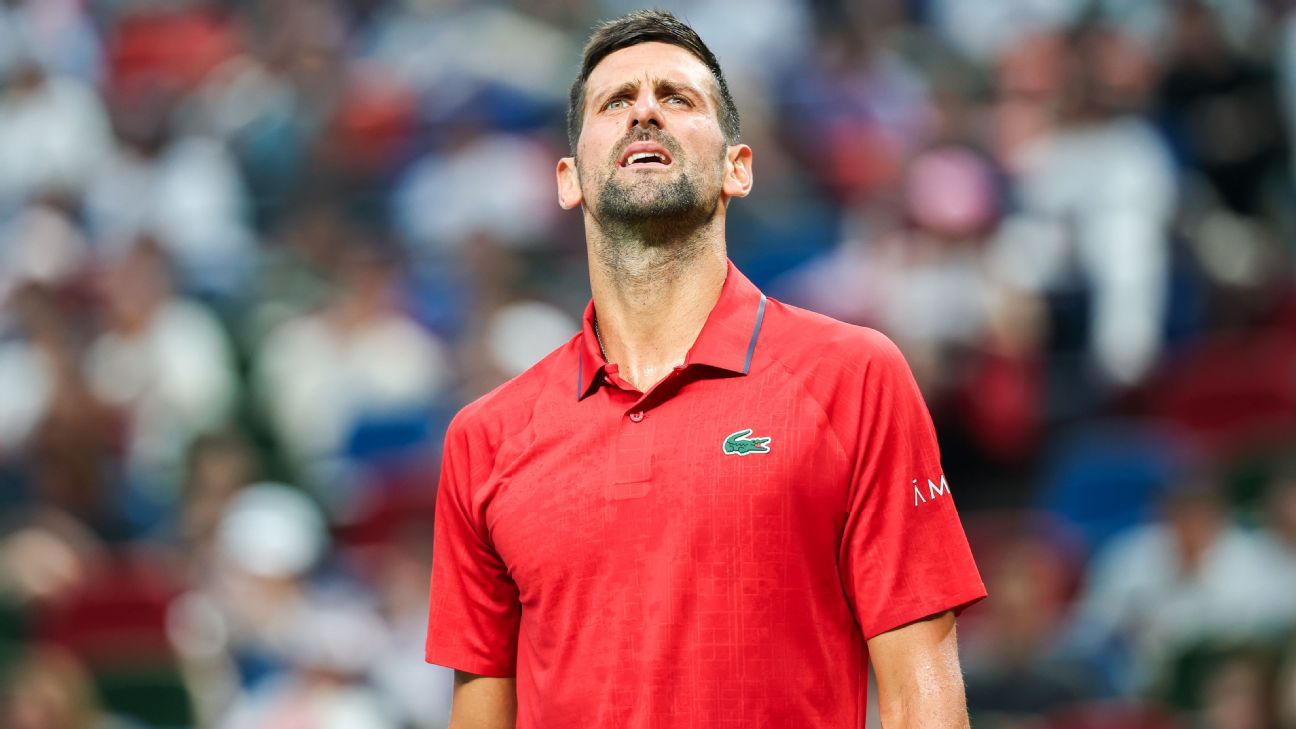
Melbourne’s summer air thickens with anticipation as the Australian Open begins, and Novak Djokovic steps forward not burdened by the weight of history, but buoyed by a subtle shift in perspective. At 38, the Serb stands tied with 24 major titles, a haul that matches Margaret Court’s all-time mark and defines the Open era. Yet for two years, Carlos Alcaraz and Jannik Sinner have claimed the spotlight, splitting the eight Slams since his last win at the 2023 US Open.
He cracks a smile when reflecting on their rise, acknowledging the losses that stung in 2025—three of four majors slipping away to one or the other. Djokovic skipped his only prep event, the Adelaide International, to guard against the drain of five-set battles on these medium-paced hard courts, where his heavy topspin thrives but recovery demands more than ever. The 10-time champion here opens Monday night on Rod Laver Arena against No. 71-ranked Pedro Martinez of Spain, seeded fourth in a draw that pairs him with top-ranked Alcaraz in the same half.
“I lost three out of four Slams against either Sinner or Alcaraz,” in 2025, he said Saturday, on the eve of the Australian Open.
“We don’t need to praise them too much,” he added, smiling. “They have been praised enough! We know how good they are, and they absolutely deserve to be where they are. They are the dominant forces of the men’s tennis at the moment.”
Releasing the now-or-never grip
Djokovic once mastered the Federer-Nadal era by turning their strengths against them—Roger Federer‘s net approaches met with laser passing shots, Rafael Nadal‘s relentless forehand countered by patient backhand redirects. Now, he adapts to this duo’s blistering pace, where Sinner’s flat groundstrokes pierce down-the-line and Alcaraz mixes drop shots with inside-in winners. Injuries marked 2025, from a hamstring tear that ended his Australian Open semifinal after beating Alcaraz in the quarters, to pulls that sapped his late-match explosiveness.
By repeating to himself that 24 majors form a legacy few touch, he eases the mental vise that once sharpened his focus but now risks fracturing it. This approach lets him enter each match with clear eyes, prioritizing pain-free play over forced heroics. On Melbourne’s courts, where consistent bounce favors his defensive depth, he can extend rallies, using crosscourt backhands to stretch opponents wide before closing with a 1–2 forehand punch.
Facing youth’s relentless surge
Sinner arrives as the two-time defending champion here, his efficient serve holding firm in straight-set finals the past two years, while Alcaraz chases the career Grand Slam with his all-surface flair. Djokovic concedes their edge—“Sinner and Alcaraz are playing on a different level right now from everybody else. That’s a fact,” he says—yet sees openings in the grind, where his retrieval turns power into errors. Without an official match since November, he focused on rebuilding, admitting recoveries stretch longer at his age, but daily aches fade against the arena’s electric hum.
The semifinal potential against Alcaraz adds tension, demanding tactical variety: feint inside-out to draw the net rush, then slice underspin to disrupt footing on the hard surface. Djokovic’s serve placement—wide to the backhand followed by body serves—could neutralize early threats from Martinez, whose steady game probes but lacks the firepower for prolonged exchanges. The crowd’s rhythmic chants under the floodlights quicken his step, fueling returns that hug the baseline in these humid nights.
Stepping back from off-court fights
Beyond the lines, Djokovic distanced himself this month from the Professional Tennis Players Association, the group he launched in 2020 with Vasek Pospisil to amplify independent voices in tennis’s ecosystem. “It was a tough call for me to exit the PTPA, but I had to do that, because I felt like my name was ... overused,” he explained, noting perceptions that tied it too closely to him alone. He still champions a 100 percent player-led organization, but the split clears his focus for the court, where patterns like his one–two approach dictate the flow.
This mental reset aligns with his physical prep, conserving juice for the majors’ late rounds—from Melbourne’s heat to Wimbledon’s grass precision. “So I like my chances always, in any tournament, particularly here,” he adds, the words carrying quiet conviction. As the night match nears, the veteran eyes not just survival, but a surge that could redefine his twilight, the hard courts waiting to echo his pursuit once more.