Djokovic fueled by icons for a career beyond 40

With two years without a major at age 38, Novak Djokovic turns to the stamina of LeBron James and Tom Brady, vowing to push his tennis legacy into uncharted territory.
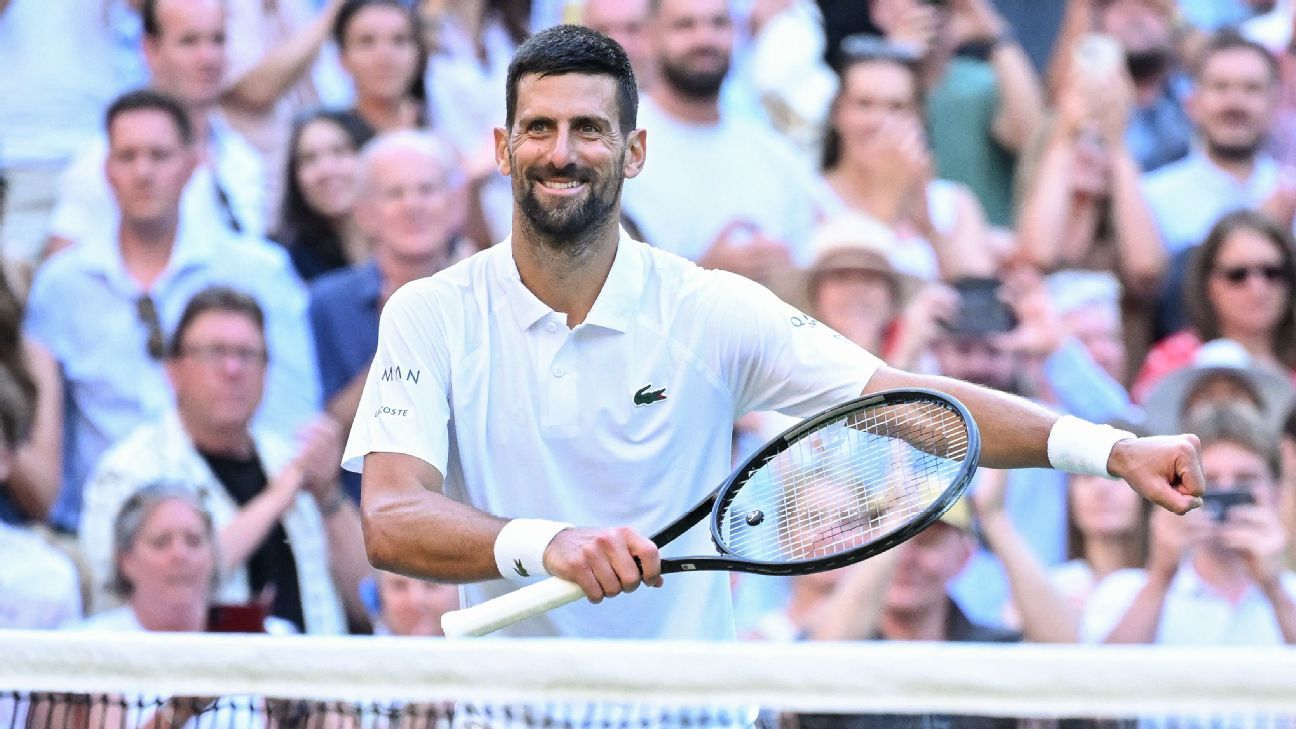
In the echoing halls of Riyadh’s Joy Forum, Novak Djokovic confronts the ticking clock of his career with a spark of unyielding ambition. At 38, the Serb feels the surge of a new generation but channels it into fuel for his pursuit of a 25th Grand Slam title, one that would stand alone in tennis history. The air hums with the prelude to the Six Kings Slam, where his words cut through like a precise down-the-line backhand, signaling no retreat from the baseline.
Drawing fire from cross-sport endurance
Djokovic reveals longevity as his core drive, inspired by athletes who redefine limits in their arenas. He points to LeBron James, still dominating at 40 with relentless court coverage and explosive drives that echo the veteran’s own rally extensions. Tom Brady’s command until 45, threading passes under duress, mirrors the tactical patience needed for five-set marathons, while Cristiano Ronaldo’s precision at the same age sharpens his vision for adaptive footwork across surfaces.
“Longevity is one of my biggest motivations. I really want to see how far I can go,” Djokovic said Thursday. “If you see across all the global sports, LeBron James, he is still going strong, he is 40. Cristiano Ronaldo, Tom Brady played until he was 40-something years old. It is unbelievable. They are inspiring me as well, so I want to keep going, that is one of the motivations I have.”
This cross-sport admiration underscores a shift in mindset, turning recent setbacks into strategic waypoints rather than endpoints.
Rebounding from rivals’ relentless rise
The past two years have tested Djokovic’s throne, with Carlos Alcaraz and Jannik Sinner claiming the majors through blistering pace and precision. Alcaraz’s inside-out forehands stretched the Serb’s defenses in straight sets at the US Open semifinals, exposing gaps in best-of-five endurance on hard courts. Sinner’s flat serves and baseline depth dismantled him at the French Open, leaving clay’s red dust with whispers of a possible farewell to Roland Garros.
Those moments carried a tone of introspection, as he questioned his edge against youth’s raw power in prolonged exchanges. Yet here in Riyadh, resolve overtakes doubt; he dismisses retirement talk, plotting a full slate of Grand Slams in 2026 to carry his campaign into 2027 and past 40. Tactical tweaks loom—sharper 1–2 combinations on grass to deflect low slices down-the-line, countering the Italians’ aggressive returns with varied crosscourt probes.
Shaping tennis’s next evolution
Beyond personal reinvention, Djokovic leverages his voice through the Professional Tennis Players Association, which he co-founded in 2020, to challenge the sport’s foundations. Top players demand larger revenue shares from Grand Slams, backing lawsuits this year against governing bodies to enforce reforms that could sustain longer careers. He hints at brewing changes, eager to witness them from the court rather than the sidelines.
“I want to also live to see—live meaning keep on playing professionally—what is coming for our sport, and I am super excited about it,” he shared. “These are things I can’t be openly speaking about at the moment, but in the next couple of years, I feel like tennis is a sport that can be greatly transformed, and I want to be part of that change.” As the Six Kings Slam ignites under desert skies, his pledge resonates, promising a veteran not just enduring but driving the game’s forward charge, where every adaptation volleys against the inevitable pull of time.