Djokovic weighs slim clay tuneup against Roland Garros hopes

A straight-sets defeat in Rome leaves the 38-year-old searching for answers just days before the French Open draw, with one abbreviated outing on clay and lingering questions about physical recovery shaping every forward thought.
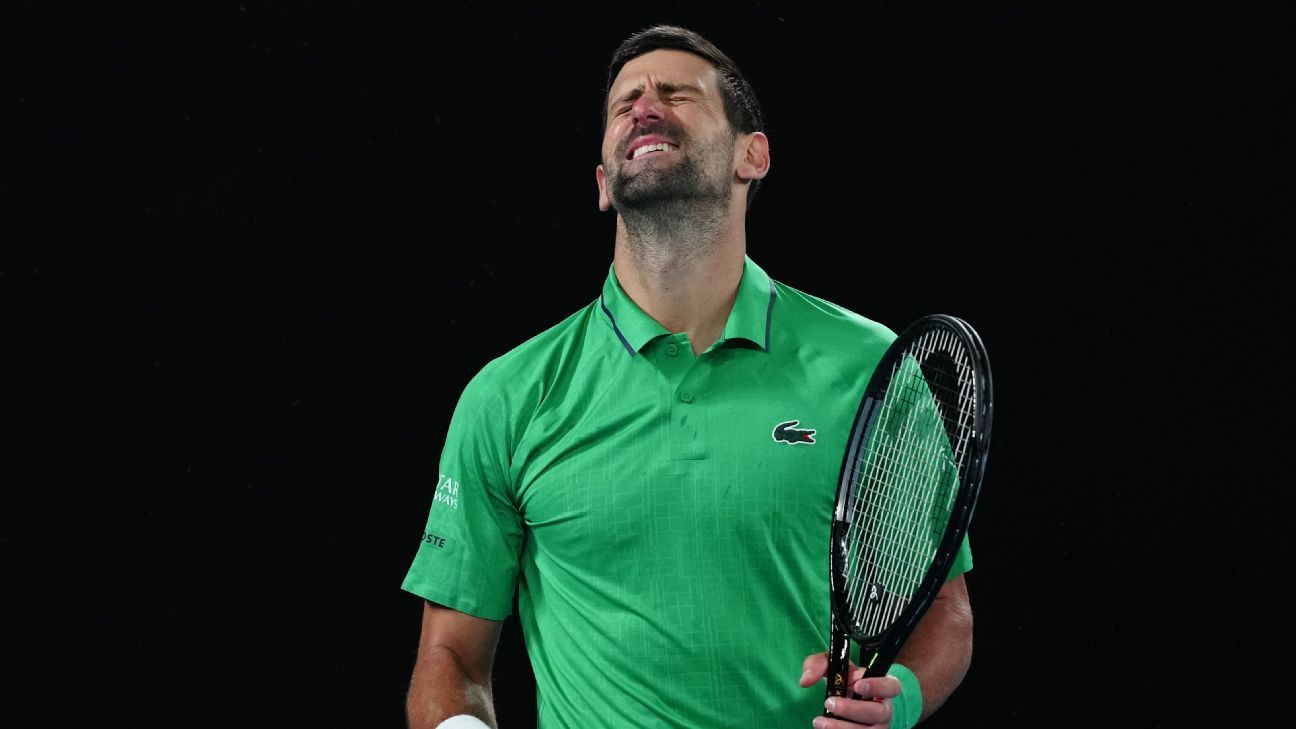
Novak Djokovic walked off the Italian Open court knowing the next stop carried far higher stakes. The loss to a qualifier 18 years younger exposed the gap between training repetitions and match sharpness, yet the real story unfolded in the quiet admission that followed.
Dino Prizmic, 20, defeated the record 24-time Grand Slam champion 2-6, 6-2, 6-4 with an ace on his first match point. The Croatian qualifier mixed flat crosscourt drives with sudden inside-out forehands that pulled Novak Djokovic wide, then finished points with a slice that skidded low.
“I want to congratulate Dino, deservedly the winner today. I came in to have a match or more. Unfortunately only a match. it’s all right. I’m pleased at least that I fought until the end.”
Early in the opener the 38-year-old Djokovic looked to dictate with a classic 1–2 pattern, but the second set revealed a different tempo as the younger player took time away and forced hurried replies. The 38-year-old Djokovic hadn’t played since losing to Jack Draper in the fourth round in Indian Wells, California, in March.
Injury limits clay court preparation
That two-month absence meant every ball in Rome carried extra weight, both literally and figuratively. He changed shirts between sets and the tape across his right shoulder became visible, a quiet signal that the injury lingered even if he chose not to discuss it.
He continued without self-pity, noting the half-step deficit that separates good tennis from elite tennis at this stage of a long career. The words landed with the weight of someone who has lived through countless comebacks yet recognizes that time and tissue do not always cooperate on schedule.
Asked directly about readiness for the French Open that begins May 24, Novak Djokovic answered simply: “I don’t know. I hope so.” The situation is as it is, he added, and the body dictates how much can be asked of it each day.
Qualifier exposes movement gaps
Those sentences captured the psychological arc more than any statistic: a player who reached the Australian Open final earlier in the year and lost to Carlos Alcaraz now measuring progress in small increments rather than bold declarations. Training hard remains the only controllable variable.
He spoke of pushing as much as the shoulder allows, then accepting whatever unfolds once the match begins. That acceptance carries its own pressure when the calendar offers almost no cushion between Rome and Paris. One abbreviated clay match hardly replicates the best-of-five-set demands that will arrive in the second week at Roland Garros.
The 79th-ranked Prizmic beat No. 6 Ben Shelton to reach the third round at the Madrid Open last month, a result that underscored the depth now testing established names. Prizmic called Novak Djokovic his idol after the victory, yet the result itself showed how quickly a confident young player can turn admiration into discomfort for a veteran.
Paris draw looms with limited matches
Second seed Alexander Zverev bounced back from his heavy loss to Jannik Sinner in the Madrid Open final last weekend by beating fellow German Daniel Altmaier 7-5, 6-3. Meanwhile Alex De Minaur was defeated by Italian Matteo Arnaldi.
Those results illustrated how the rest of the draw continues to sharpen while one of the sport’s most accomplished players searches for rhythm. The psychological weight builds from more than just the shoulder. It stems from the knowledge that every missed practice day compounds when the surface shifts and the best-of-five format rewards sustained movement.
Novak Djokovic has navigated similar stretches before, yet at 38 the margin for error narrows and the body’s feedback arrives sooner. The coming days will reveal whether the fight he showed until the final point in Rome translates into the half-step recovery he needs when the first ball is struck at Roland Garros.