Dhakshineswar Suresh’s divine intervention seals India’s Davis Cup escape

Under the weight of home expectations in Bengaluru, a 6-foot-6 college star delivers three straight wins to propel India past the Netherlands in a gripping 3-2 Davis Cup thriller.
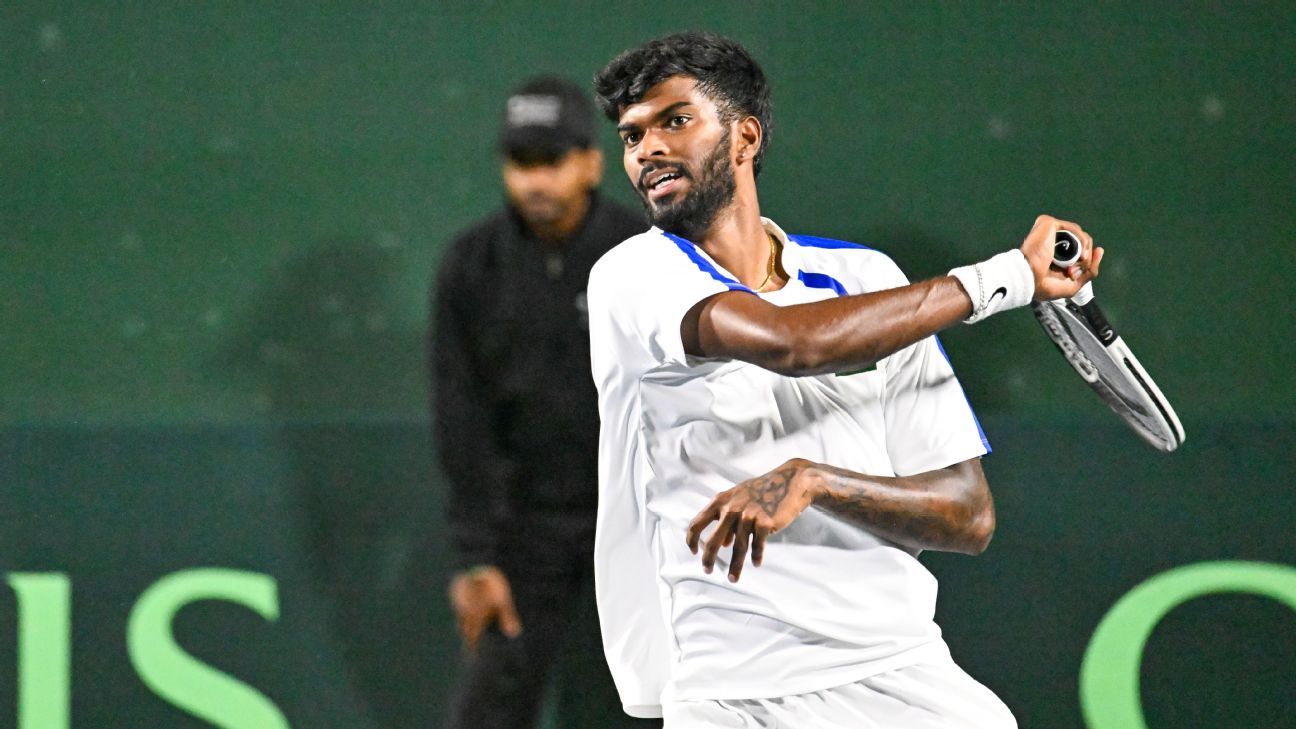
In the sweltering heat of Bengaluru’s SM Krishna Tennis Stadium, India clawed their way to a 3-2 Davis Cup 2026 Qualifier victory over the Netherlands, a result that felt like salvation after months of mounting pressure. Dhakshineswar Suresh, the 25-year-old towering at 6 feet 6 inches, emerged as the unlikely savior, his massive serve slicing through Dutch defenses in all three of his matches. Ranked 470 on the ATP but a force on the college circuit—NCAA doubles No. 1 and singles No. 3—DK turned the tide, echoing Leander Paes’s 2004 heroics against Japan by winning every rubber he touched.
The buildup to this tie had been relentless, with India navigating a season of injuries and close calls that tested the squad’s resolve. Sumit Nagal, the nation’s top singles player, arrived nursing a hip issue that sapped his power in both his losses—three-set battles against Guy den Ouden and Jesper de Jong where momentum swung wildly but never his way. Captain Rohit Rajpal’s decision to slot DK into the doubles alongside Yuki Bhambri, swapping out Sriram Balaji, wasn’t impulsive; they’d drilled together on the fast courts here, preparing for this exact pressure cooker.
“He makes us feel mortal,” said Bhambri, speaking about Dhakshineswar’s serve.
“It wasn’t a random decision,” Bhambri said after that win.
Serve overwhelms ranked underdogs
DK’s weapon of choice, that towering serve, rattled opponents from the outset, holding firm across all three rubbers without a single break. Against de Jong, world No. 88, he dispatched straight sets 6-4, 7-5, his calm composure a stark contrast to the Dutchman’s frustration as inside-out forehands pinned him back. The psychological edge sharpened in doubles, where Bhambri’s volleys and DK’s booming deliveries forced errors, securing the 2-1 lead that Sunday evening.
By the decider, den Ouden faced a barrage—15 aces in DK’s straight-sets 6-4, 7-6 (4) triumph, leaving the Dutchman groping for returns. Fans mocked his struggles with a chant: “He can’t see the ball,” turning the stadium into a cauldron of noise that fed DK’s focus. The Netherlands’ two highest-ranked singles players, Tallon Griekspoor and Botic van de Zandschulp, might have fared better, but the Dutch team had considered their second rung enough to beat India—they soon found out otherwise.
DK’s first strike came against de Jong in style, winning in straight sets with a performance that screamed calm and composure. His massive delivery, often clocking over 130 mph, forced weak returns that he punished with inside-out forehands, keeping de Jong pinned behind the baseline. Rankings math favored the Netherlands on paper, but DK’s unorthodox path, skipping the pro tour for college, masked his potency—he exploited de Jong’s tendency to loop high balls, countering with heavy topspin drives that pulled the Dutchman wide.
By match end, DK’s serve had yielded zero breaks against, a statistic that underscored how the surface’s speed rewarded his aggressive 1–2 patterns over prolonged exchanges. The fast hard courts at the SM Krishna Tennis Stadium suited his style, allowing crosscourt bombs and down-the-line winners that de Jong and den Ouden couldn’t counter. India had a literal and metaphoric ace up their sleeve, wanting him on court for as much of the tie as possible.
Scenes from an historic win for India on home soil as they beat Netherlands 3-2 in an epic encounter ������
Dhakshineswar Suresh beats Guy Ouden 6-4, 7-6 (4) to help his nation progress to Qualifiers 2nd Round ��#DavisCup (560) pic.twitter.com/8f5hhZ4KlD
- Davis Cup (@DavisCup) (560)February 8, 2026
Doubles gamble flips the script
The doubles rubber stretched into a marathon, India clinching the third-set tiebreak through Bhambri’s sizzling crosscourt winners. DK’s serve held firm, racking up aces that eased pressure on Bhambri’s returns against the Dutch tandem. This lead neutralized the Netherlands’ depth, as their top players sat unused, a miscalculation in matchup planning.
Bhambri provided an immense supporting act in that doubles tie, which India won in a third-set tie-break they dominated thanks to some sizzling groundstrokes from him. The Indian team had planned for a situation where DK may have to play the doubles, and he had even trained with Bhambri in the lead-up to the tie in Bengaluru. Bhambri’s net poaching complemented DK’s overheads, turning potential Dutch volleys into passing-shot opportunities down the line.
Post-doubles, with only three hours’ rest, DK faced den Ouden in the decider, a victory sealed by those 15 aces. Den Ouden, unaccustomed to such velocity, struggled on returns, often floating balls ripe for DK’s inside-in forehands. The tactical edge lay in the surface: Bengaluru’s hard courts, less grippy than clay, let DK’s flat serves skid low, while den Ouden’s slice backhand floated harmlessly into the net.
India’s home crowd, packed and pulsing, amplified the pressure on Dutch servers, who faced rhythmic chants mocking den Ouden’s return woes. This pivot not only secured the lead but preserved DK’s legs for the clincher, where his unbroken serve across all three matches echoed Paes’s rarity. The fast setup was no accident; it tailored to DK’s arsenal, where rankings belied his impact.
Scenes from an historic win for India on home soil as they beat Netherlands 3-2 in an epic encounter. Dhakshineswar Suresh beats Guy den Ouden 6-4, 7-6 (4) to help his nation progress to Qualifiers 2nd Round #DavisCup pic.twitter.com/8f5hhZ4KlD - Davis Cup (@DavisCup) February 8, 2026
Catharsis erupts in collective joy
As DK collapsed to the court after the clincher, mobbed by teammates, the release was palpable—a psychological unburdening after Nagal’s defeats left everything on his shoulders. Playing two matches in a day tested his endurance, yet he entered with singular intent: victory for India. The crowd, bordering on rowdy, adopted him instantly, their hymns swelling as Bhambri and others hoisted him high.
Sumit Nagal grabbed the mic from the announcer, bellowing, “DK Suresh, what a legend, what a player!” amid unrestrained celebration. This win catapults India to an away qualifier against South Korea, one step from the eight-team Davis Cup finals in Italy later in 2026. DK’s divine touch—his name meaning ‘God of the South'—not only broke the Netherlands but lifted a nation from seasonal shadows, his one-two punch of serve and topspin forehands now legend on home soil.
Without tour miles, DK’s raw power, honed in college, proved the pressure narrative’s perfect counterpoint. As Bengaluru’s roar lingered, the psychological scars of the season faded, replaced by momentum toward the finals stage. India’s path forward hinges on that Korean showdown, where DK’s freshness could again turn the psychological tide—his unbroken service games across 10 sets underscoring a mental fortitude that carried the team through doubt.
In a tie defined by arcs of tension and release, DK Suresh didn’t just win matches—he reclaimed India’s Davis Cup spirit. The 3-2 result, born of serve supremacy and smart swaps, positions them for more. With the fast surfaces amplifying his game, DK’s crosscourt bombs and down-the-line winners exposed the Dutch second-string’s vulnerabilities, their topspin-heavy approach diminished on the quick hard courts.
Nagal’s injuries left gaps, his losses swinging wildly—early breaks surrendered, late pushes fizzling on the surface. Yet DK’s composure filled the void, three wins mirroring Paes’s 2004 triple. Bhambri’s support in doubles—volleys slicing underspin to the Dutch feet—added layers, but DK’s serve remained the fulcrum, turning the weekend into a miracle on home soil.