Davenport extends captaincy for U.S. team push

The ache of a Billie Jean King Cup final defeat fades as Lindsay Davenport recommits, steering America’s rising stars toward unfinished business in international play.
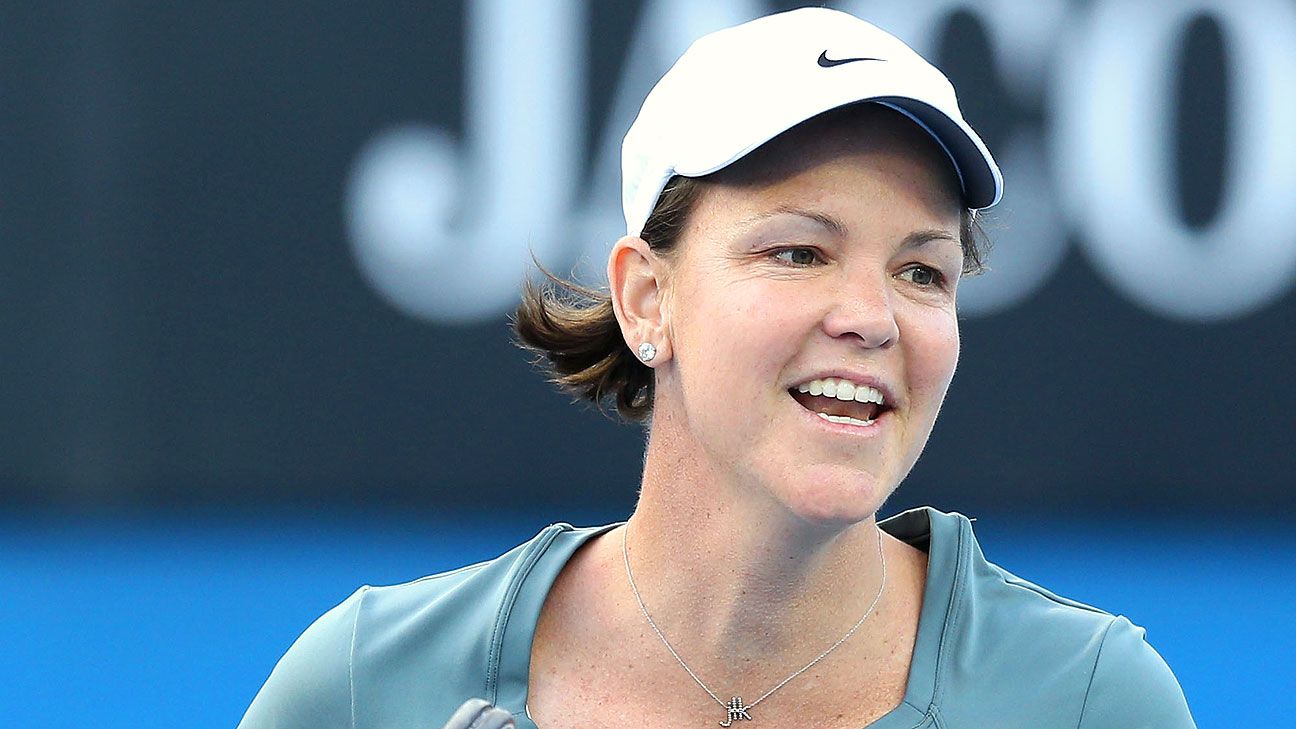
In Orlando’s subdued conference spaces, Lindsay Davenport sealed a two-year extension to captain the U.S. Billie Jean King Cup team. This renewal follows her guidance of the squad to the finals for the first time since 2018, a campaign that built through grueling qualifiers and ended in a tight loss to Italy. Her steady presence amid shifting surfaces and mounting rivalries kept the Americans competitive, blending baseline depth with net poaching to challenge Europe’s best.
Steering through finals intensity
Davenport stepped into the captaincy in 2024, inheriting a roster eager to reclaim team glory. The road to the final tested tactical flexibility, from clay-court endurance tests where crosscourt forehands stretched defenses to hard-court bursts relying on one–two combinations for quick points. She drew on her playing career—three Grand Slam singles titles, a stint at No. 1, and induction into the International Tennis Hall of Fame in 2014—to foster resilience, turning crowd roars into fuel for down-the-line winners that pierced Italian lines.
As a player, she anchored U.S. triumphs in 1996, 1999, and 2000, often using inside-out angles to disrupt opponents’ footing on faster surfaces. That era’s lessons now shape her decisions, like rotating fresh arms to counter fatigue in doubles rubbers.
“it’s an incredible honor to serve as U.S. Billie Jean King Cup Captain, and I’m thrilled and humbled to continue doing it, especially during such an amazing time for women’s tennis in America,” Davenport said in a statement.
Reviving 2004’s rankings depth
This season’s breakout placed four Americans in the year-end top 10 for the first time since 2004: Coco Gauff at No. 3, Amanda Anisimova at No. 4, Jessica Pegula at No. 6, and Madison Keys at No. 7. Back then, Davenport closed at No. 1, joined by Serena Williams, Venus Williams, and Jennifer Capriati, a powerhouse group that overwhelmed foes with serve-volley aggression and relentless returns. Today’s lineup echoes that firepower, with Gauff’s speed enabling slice defenses against power baselines and Pegula’s consistency holding up in extended rallies.
The U.S. Tennis Association announced the extension on Tuesday, highlighting how this depth allows bolder strategies, such as underspin lobs to reset points against aggressive net players. Davenport’s experience helps channel the psychological lift from these rankings into unified team play, where a single unforced error rarely unravels the whole.
Building toward April redemption
With Billie Jean King Cup qualifying matches looming in April, focus turns to surface-specific drills, refining inside-in forehands for indoor hard courts and varying serve depths to throw off returners on outdoor clay. The finals’ close margins—decided in tiebreakers—expose edges to sharpen, like quicker transitions from defense to offense that could flip rubbers next time. Her continued leadership promises to harness the season’s momentum, transforming near-misses into a championship surge as American women’s tennis surges forward.