Djokovic Eyes Record 25th Slam in Familiar Melbourne Arena

At 38, Novak Djokovic returns to the Australian Open courts he has ruled, plotting a path past Sinner and Alcaraz to etch his name alone atop the majors list with a 25th title.
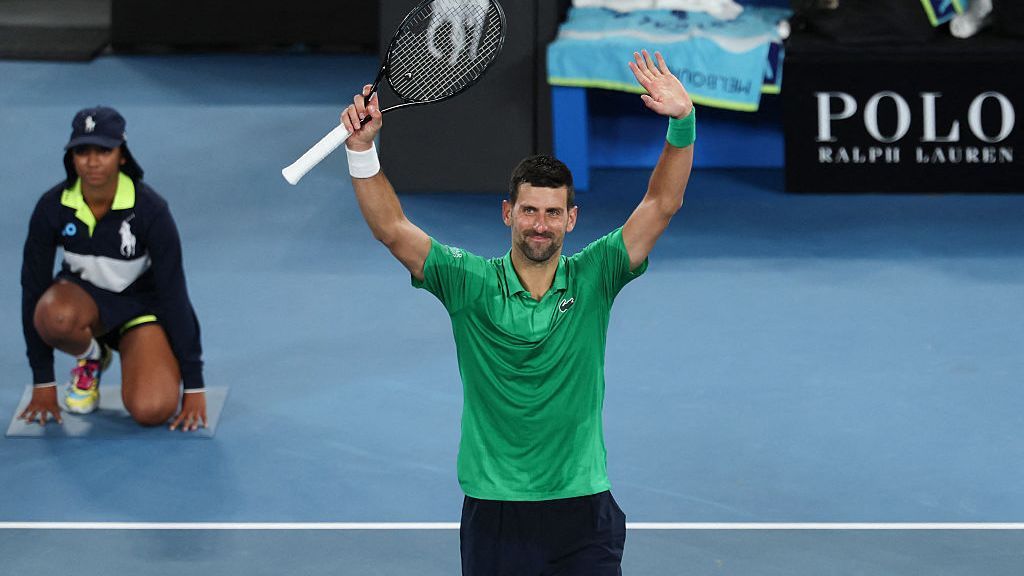
MELBOURNE, Australia—Novak Djokovic has buried more career obituaries than most players collect trophies, his 24 major titles a defiant stack against the doubters. Now 38, he arrives at Melbourne Park not as a relic but a contender, the blue hard courts his domain where a 91% win rate over 19 years whispers of unfinished business. The air thickens with the scent of fresh rubber and eucalyptus as he warms up, eyes fixed on a 25th Slam that would stand alone in history.
“I understand Sinner and Alcaraz are playing on a different level right now from anybody else. That’s a fact. But that doesn’t mean that nobody else has a chance,” a confident Djokovic explained on the eve of the Australian Open. “I like my chances in any tournament, particularly here. I know that when I’m healthy, when I’m able to put all the pieces of the puzzle together on a given day, I feel like I can beat anybody. If I don’t have that self-belief and confidence in myself then I wouldn’t be here. Right now, I’m still No. 4 in the world, still competing at the highest level. I’m just grateful to have another shot, particularly here. I always love playing in Australia.”
Dodging obituaries with renewed hunger
The skeptics’ chorus swells each year, yet Djokovic silences it with quiet resolve, his body a testament to disciplined evolution rather than decay. Last season, he reached semifinals at all four majors, one of just two men to do so, while amassing 100 career tournament wins as the second-oldest in the top 60. Here, where he has lost only six matches, the psychological weight lifts slightly; the crowd’s familiar roar on Rod Laver Arena fuels his drive, turning potential fatigue into focused fire.
Against the tide of youth, his mindset sharpens like a well-strung racket. Since his last major at the 2023 US Open, Jannik Sinner and Carlos Alcaraz have swept the next eight Slams, their dominance a stark shift. Sinner’s five straight wins over him, including semifinals at this event, the French Open, and Wimbledon, sting, but Djokovic’s 2-2 record with Alcaraz since 2024 offers tactical footholds—moments where a deep return or slice backhand flipped the script.
The underdog’s shadow suits him now, freeing mental space as the young pair chase milestones that amplify their pressure. Sinner eyes a third consecutive Australian Open, matching only Djokovic in the Open era, while 22-year-old Alcaraz hunts a career Slam as the youngest ever. Djokovic absorbs this, his experience a buffer against the fortnight’s grind, where every extended rally tests recovery under Melbourne’s humid sun.
Tactical edges on home hard courts
The plexicushion surface here, with its moderate speed and high bounce, plays to Djokovic’s strengths, rewarding his heavy topspin forehand and elastic defense in baseline exchanges. He envisions a 1–2 pattern to open points: a wide serve to the deuce side followed by an inside-out forehand that pins foes deep, exploiting the court’s grip on flatter shots from Sinner. Against Alcaraz’s explosive variety, he plans underspin slices to disrupt net approaches, setting up down-the-line passes that have carved through defenses before.
Energy conservation becomes his quiet weapon, especially after last year’s leg drain in late-stage majors. He prioritizes body care, building momentum without waste, perhaps mixing in serve-and-volley bursts to shorten rallies on a court that favors patience over pure pace. The draw’s early rounds demand precision—aggressive returns on second serves to snag breaks—while saving juice for potential five-setters against the duo who have lapped the field.
Novak Djokovic draws on a post-35 surge: four Slams, 11 major semifinals, two ATP Finals, Olympic gold, and 59 weeks at No. 1. This longevity isn’t luck; it’s tactical adaptation, like looping high topspin lobs to counter Alcaraz’s speed or varying return depth against Sinner’s consistent baseline game. In the electric hum of practice sessions, his footwork snaps with purpose, a signal that Melbourne’s stage still bends to his will.
Legacy chase amid shifting pressures
No outcome this fortnight diminishes his unparalleled run; at this age, fringe title talk alone stuns. He sidesteps the 25th’s hype, grounding in gratitude for a career that shattered records and spanned the globe. The psychological pivot lies in playing spoiler, unburdened while Sinner and Alcaraz navigate history’s glare—their every error magnified under the southern lights.
“My priority is really taking care of my body, building momentum and not spending unnecessary energy,” said Djokovic. “[Last year] I was missing a little bit of juice in my legs, to be able to compete with these guys at the latter stages of a Grand Slam. But I’m definitely giving my best and I think I have challenged them on their route to the titles. We know how good they are and they absolutely deserve to be where they are. Hopefully I can go far again and get a chance to play them.”
“There has been a lot of talk about the 25th, but I try to focus on what I have achieved, not what I’m possibly achieving,” said Djokovic. “I’m the last guy that should complain or regret anything. I mean, I have broken pretty much any record there is to break in this sport and I’m eternally grateful to tennis for giving me the opportunity to travel the world and live my dream. I’m still living my dream, to be honest. I hope it comes to [25], but 24 is also not a bad number!”
As the tournament unfolds, Djokovic’s path hinges on those pivotal clashes, where a single inside-in winner or crosscourt redirection could unravel the new era’s grip. The crowd’s energy, pulsing through the stands, often sways tight sets in his favor here. Whether he claims the trophy or pushes deep, his presence reaffirms a legacy that defies time, setting the stage for whatever chapter follows in 2026.
By Jake Michaels, a Melbourne-based sports writer who has covered Grand Slam tennis for ESPN since 2013.