Gauff’s Melbourne Path Loops Back to Williams

The Australian Open draw revives a six-year-old rivalry as Coco Gauff eyes a second-round clash with Venus Williams, while Sinner and Djokovic brace for a semifinal showdown on these hard courts.
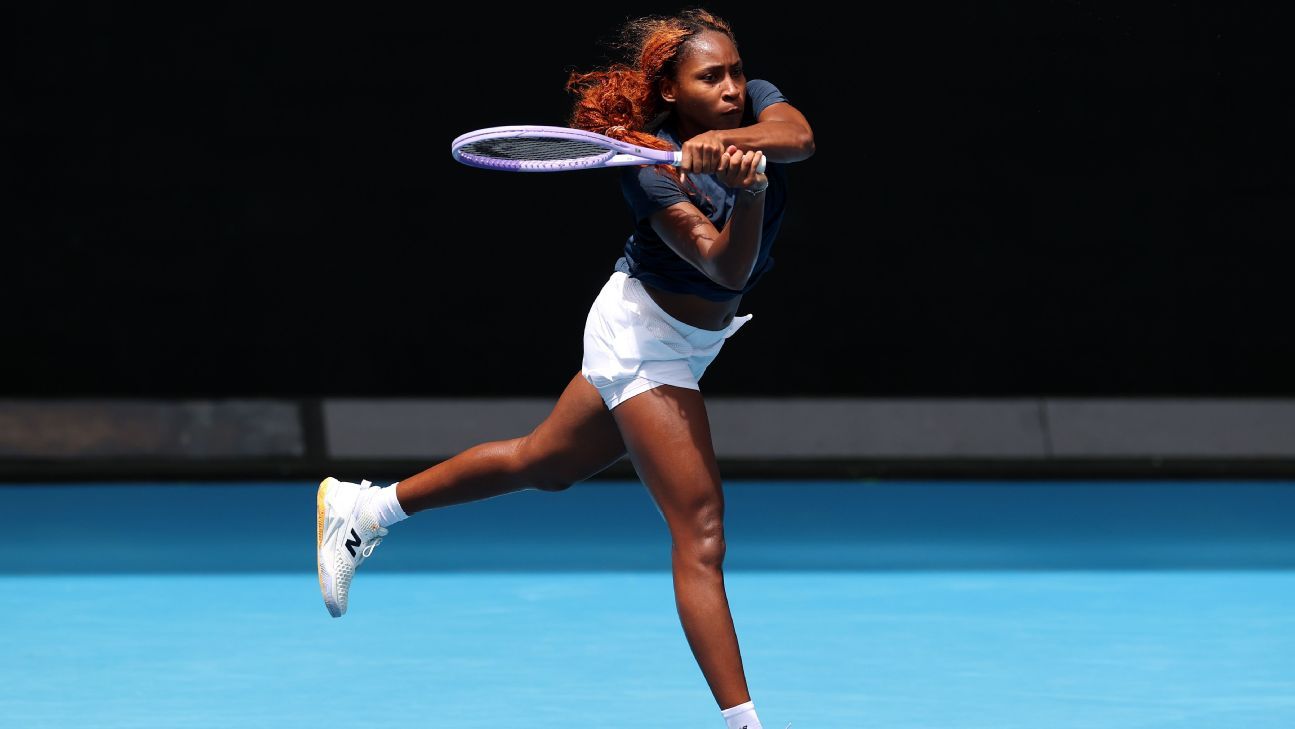
In the electric hum of Melbourne Park, the Australian Open draw ceremony Thursday sets the stage for the year’s first major, starting Sunday under the southern sun. Coco Gauff, seeded No. 3 and a two-time major champion, could face Venus Williams in the second round, more than six years after Gauff’s stunning debut upset over the seven-time major winner at Wimbledon in 2019. At 15 then, Gauff’s flat groundstrokes cut through Williams’s defenses; now, at 22, she opens against No. 91-ranked Kamilla Rakhimova, her heavy topspin forehand ready to dictate from the baseline on these pacey hard courts.
Williams returns with record in sight
Williams, at 45 with a wild-card entry and ranked No. 576, steps onto Melbourne’s courts for the first time in five years, set to become the oldest woman in the main draw, surpassing Japan’s Kimiko Date’s 44-year mark from 2015. She’ll start against No. 68-ranked Olga Danilovic, leaning on her vintage flat serves and inside-out forehands to navigate the heat and quicker bounce. The crowd’s roar will carry a mix of awe and anticipation, as her slice backhands disrupt rhythms in longer rallies, testing younger legs early.
This potential rematch stirs deeper currents: Gauff‘s improved net approaches and one–two punch could force Williams into defensive lobs, but the veteran’s down-the-line passing shots remain a threat on a surface that rewards precision. Both share the top half with top-ranked Aryna Sabalenka, whose back-to-back titles here ended in last year’s final loss to Madison Keys. Sabalenka eyes a third-round clash with 2021 US Open winner Emma Raducanu, where crosscourt bombs meet all-court finesse, amplifying the quarter’s tactical intensity.
Bottom half packs redemption arcs
Defending champion Keys draws into a loaded quarter alongside No. 6 Jessica Pegula and No. 4 Amanda Anisimova, setups primed for grinding exchanges where Pegula’s steady returns counter Anisimova’s aggressive inside-in forehands. No. 2-ranked Iga Swiatek anchors the bottom quarter, her potential fourth-round against Naomi Osaka pitting clay-court consistency against big-serving power adapted to hard-court speed. Osaka’s kick serves could jam returns wide, but Swiatek’s topspin loops pin opponents deep, turning points into endurance tests amid Melbourne’s rising humidity.
The women’s draw pulses with personal stakes—Williams’s defiance, Osaka’s resurgence, Raducanu’s versatility—each rally a bid to reclaim momentum in a season of shifting hierarchies. Gauff’s path demands early focus on Rakhimova‘s baseline steadiness, widening patterns with inside-out shots to avoid getting pulled off the court. As the first balls fly Sunday, these alignments promise swings on micro-adjustments, from serve placement to lateral quickness, under lights that sharpen every shadow.
Sinner-Djokovic semifinal simmers
Over on the men’s side, Jannik Sinner and Novak Djokovic land in the same half, teeing up a potential semifinal between the defending champion and the 24-time major winner. Sinner’s precise inside-in forehands clash with Djokovic’s elastic returns, a duel where flat backhand slices redirect pace on these true-bouncing hards. Djokovic’s down-the-line lasers will probe second serves, forcing Sinner to mix kick and slice for variety, every point building psychological pressure in the humid air.
Top-ranked Carlos Alcaraz pulls the opposite half, his explosive crosscourt winners and drop shots suiting the surface’s grip, clearing a path to the final if he sustains rhythm against deep runs. The bracket’s balance heightens the narrative: youth chasing mastery, with practice sessions in Melbourne’s heat forging edges for those high-stakes moments. As the tournament unfolds, these draws weave tactics and temperament into a hard-court saga, where a single pattern shift could redefine legacies.