Djokovic chases redemption against Sinner at Wimbledon

Two rivals with unfinished business collide on Centre Court after a spring of shocks and a summer of renewed belief.
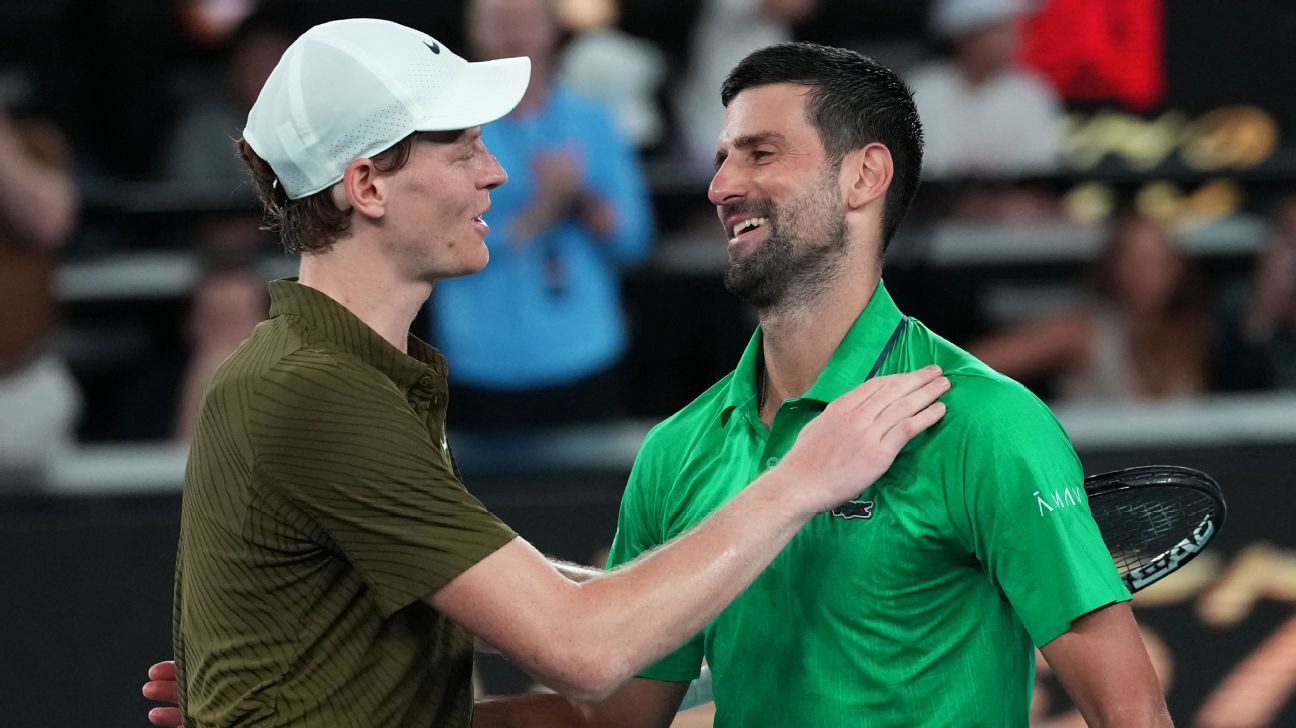
The grass at the All England Club has rarely hosted a semifinal carrying this much unresolved tension as Jannik Sinner prepares to meet Novak Djokovic.
Carlos Alcaraz absence from the French Open had once framed a narrative of opportunity for both, yet the path collapsed when Sinner was stunned in the second round by Juan Manuel Cerundolo and Djokovic was defeated the following day by Joao Fonseca.
I thought I was losing easily before I stepped onto the court.
Shintaro Mochizuki captured the aura Sinner projects even on days when his game is not at peak. That presence stems from a 30-match win streak earlier in the year that spanned hard courts and clay, only to end abruptly in Paris.
Early exits reshape mental preparation
Both players used the weeks after Roland Garros to recalibrate. Sinner addressed heat tolerance after losing 18 straight points in the French sun, while Djokovic focused on recovery protocols that allowed him to extend rallies against younger opponents. The All England Club schedule offered limited grass preparation, forcing each to rely on internal adjustments rather than match play. Miomir Kecmanovic tested Sinner in the opening round, where a toenail issue forced the Italian to fight through five sets and nerves that surfaced as defending champion.
Subsequent rounds against Shintaro Mochizuki and Jan-Lennard Struff showed returning dominance, though tiebreaks revealed moments where composure was required. Djokovic navigated a longer path that included Arthur Rinderknech and Stefanos Tsitsipas. His quarterfinal against Felix Auger-Aliassime stretched five hours and fifteen minutes, featuring a controversial roof closure and an apparent calf concern that he overcame through precise serving and neutralising rallies in the decider.
Head-to-head history fuels internal dialogue. Sinner holds a 6-5 career edge and has taken five of the last six encounters, including last year’s straight-sets Wimbledon semifinal. Andy Roddick remains the only other player with a winning record against Djokovic across multiple meetings. That ledger places extra weight on every service game and return pattern this time around.
Djokovic’s Australian Open victory over Sinner in five sets demonstrated he can still impose a 1–2 pattern when fresher, yet the surface shift to grass and the compressed recovery window alter the equation. Temperatures near 90 degrees on Friday could amplify any residual fatigue from the Auger-Aliassime marathon. Quotes from both camps underscore the mental recalibration underway. Sinner spoke of fighting for every ball without overthinking the opponent’s history at the tournament. Djokovic framed the run as another chance to prove he belongs on the biggest stage against the fittest players, echoing sentiments after his longest Wimbledon match to date.
Forehand patterns dictate early exchanges
The grass at Wimbledon rewards precise ball striking and quick decision making as the defending champion prepares to face the seven-time champion in the semifinals. Their paths diverged sharply after the French Open draw placed them on opposite sides with Carlos Alcaraz sidelined. Sinner was stunned in the second round by Juan Manuel Cerundolo while Djokovic was defeated the following day by Joao Fonseca. Both players used the intervening weeks to recalibrate their games for the faster surface. Sinner emphasized training sessions in elevated temperatures to counter the effects that hampered him earlier. Djokovic leaned on his proven ability to extend rallies and force errors in prolonged exchanges.
Sinner relies on heavy topspin crosscourt to pull opponents wide before finishing with inside-out forehands. In his quarterfinal against Jan-Lennard Struff he converted key service holds under high-80s heat and closed out a 7-5 7-6(4) 6-3 win. The 24-year-old showed composure after facing set point by redirecting pace down the line. Djokovic counters with slice backhands that stay low on the grass and disrupt rhythm. His 1–2 pattern often begins with a wide serve followed by an inside-in forehand that exploits the shorter bounce. The seven-time champion needed five sets and more than five hours to defeat Felix Auger-Aliassime in a match that tested endurance limits.
Rankings math favors Sinner as the top seed yet Djokovic’s seven Wimbledon titles provide historical context that cannot be ignored. The Serbian has already navigated past Arthur Rinderknech and Stefanos Tsitsipas without dropping sets in straight victories. Surface considerations tilt toward quicker points where experience in tiebreaks becomes decisive. Heat and recovery shape late-match decisions. Friday temperatures near 90 degrees will test both men’s conditioning. Sinner has added specific drills to handle warmer conditions after his earlier struggles. Djokovic arrives with two full days of rest following his marathon quarterfinal and has repeatedly shown he can neutralize attacks until opponents err.
Heat and recovery shape late-match decisions
Andy Roddick remains the only other player with a winning record against Djokovic across multiple meetings. Sinner holds a 6-5 edge overall and has won five of the last six encounters including last year’s Wimbledon semifinal. The grass may compress that margin by rewarding Djokovic’s low slice and varied serve placement. Both players know the match will hinge on small adjustments in the third and fourth sets. Sinner’s ability to maintain depth on crosscourt exchanges meets Djokovic’s willingness to extend rallies until the younger player presses. The outcome will clarify whether current form or accumulated major experience carries greater weight on this surface.
The quarterfinal against Struff exposed Sinner to high-80s conditions on No. 1 Court, where he saved a set point before dominating the tiebreak with inside-out forehands and heavy crosscourt pressure. That efficiency suggests improved handling of warmth, though the semifinal will demand sustained focus across potentially longer exchanges. Djokovic, at 39, has shown he can absorb pressure in 10-point tiebreaks by forcing opponents into extra shots until errors appear. His recent form at this venue, combined with two full days of rest, offers a narrow window to exploit any dip in Sinner’s movement late in sets. The psychological arc of the season now converges on Centre Court. One player carries the memory of an interrupted career Slam pursuit; the other seeks to extend a record that once seemed inevitable. The outcome will hinge on who converts small tactical edges into decisive breaks when the score reaches its tightest moments. Djokovic knows he does not have too many more opportunities for 25 and he will do everything he can to not let this one slip away at his favorite tournament. The crowd will hold its breath through every extended rally, waiting to see which player finds the extra shot when fatigue begins to show.