Andreeva surges past Sakkari with eight-game start

In Melbourne’s evening heat, Mirra Andreeva turned Maria Sakkari’s shaky start into a swift 6-0, 6-4 Australian Open victory, her tactical edge shining through 27 unforced errors and a resilient fightback.
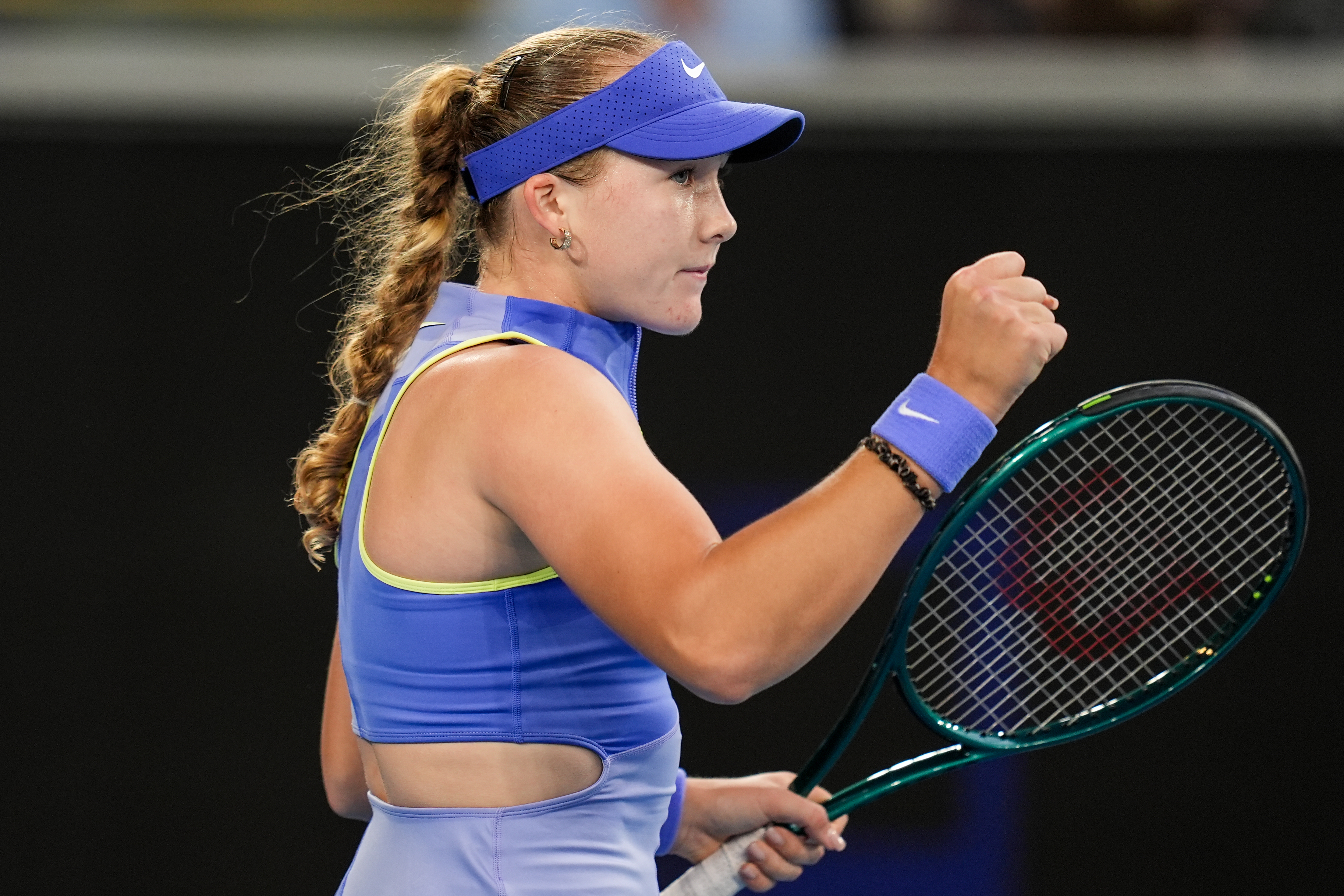
MELBOURNE, Australia—Mirra Andreeva arrived at Margaret Court Arena as the No. 8 seed, her 2026 season already humming with five straight-sets wins in six matches. Facing Maria Sakkari, the World No. 51 whose power had edged out Leolia Jeanjean in the opener, the 18-year-old Russian wasted no time. She ripped through eight straight games under the floodlights, blending aggressive returns with steady baseline depth to claim a 6-0, 6-4 win in 67 minutes and advance to the third round of the Australian Open.
Sakkari’s errors spark Andreeva’s dominance
Andreeva pounced on Sakkari’s first serve right away, winning points on 85% of those deliveries in the opening set as the Greek netted or sailed shots long. Sakkari’s unforced errors piled up to 27 by the end, her forehands lacking the control to counter Andreeva’s crosscourt redirects and inside-out forehands that pulled her wide on the hard court. The teenager dictated longer rallies, outlasting Sakkari 12-7 in exchanges of nine shots or more, while both split the mid-length points 14 apiece in battles of five to eight shots.
This bagel marked Andreeva’s first since her 2025 US Open opener against Alycia Parks, a sign of her growing comfort on fast surfaces. She broke Sakkari five times overall, using low slices on second serves to keep the ball skidding low and forcing weak replies. For the latest updates, check the Scores, Draws, or Order of play.
Fightback fades under pressure
Down 0-2 in the second set and facing break point at 0-15, Sakkari ignited with 12 straight points, her down-the-line backhands landing deep to flip the score to 3-2 and stir the crowd. Andreeva, who had joined Maria Sharapova, Nicole Vaidisova, and Coco Gauff as the fourth player since 2000 with 30 Grand Slam wins before turning 19, absorbed the shift without panic. She reset with a 1–2 pattern—deep serve into a forehand winner down the line—to break back at 5-4, her eighth Australian Open victory the most among active players under 19.
Sakkari tallied just seven winners, none in the first set and 20 fewer than against Jeanjean, as her first-serve points won climbed to 41% too late. Andreeva’s efficiency showed in short rallies, claiming 19 of 29 points in four-shot-or-fewer exchanges out of her total 55 points won. The Greek’s frustration built visibly, but Andreeva’s mental edge held, turning the humid night into a showcase of her poise.
Stats cement a rising force
Andreeva’s returns thrived on the Melbourne hard courts, where the pace amplified her aggressive baseline game and exposed Sakkari’s inconsistencies. In rallies, she edged key moments, her 11 winners underscoring clean execution amid the Greek’s error-strewn play. This straight-sets dispatch eases early-season pressure, positioning the teenager for a deep run after a 2025 that vaulted her into the top 10.
Ahead lies Elena-Gabriela Ruse, who upset Ajla Tomljanovic 6-4, 6-4 in the second round—their first WTA meeting. Andreeva’s blend of tactical variety and stamina, honed in high-stakes majors, suggests she can navigate such tests. As the draw unfolds, her command against Sakkari signals a hard-court threat ready to build on that prodigious Slam tally.